
Beautiful Plants For Your Interior
Beautiful Plants For Your Interior
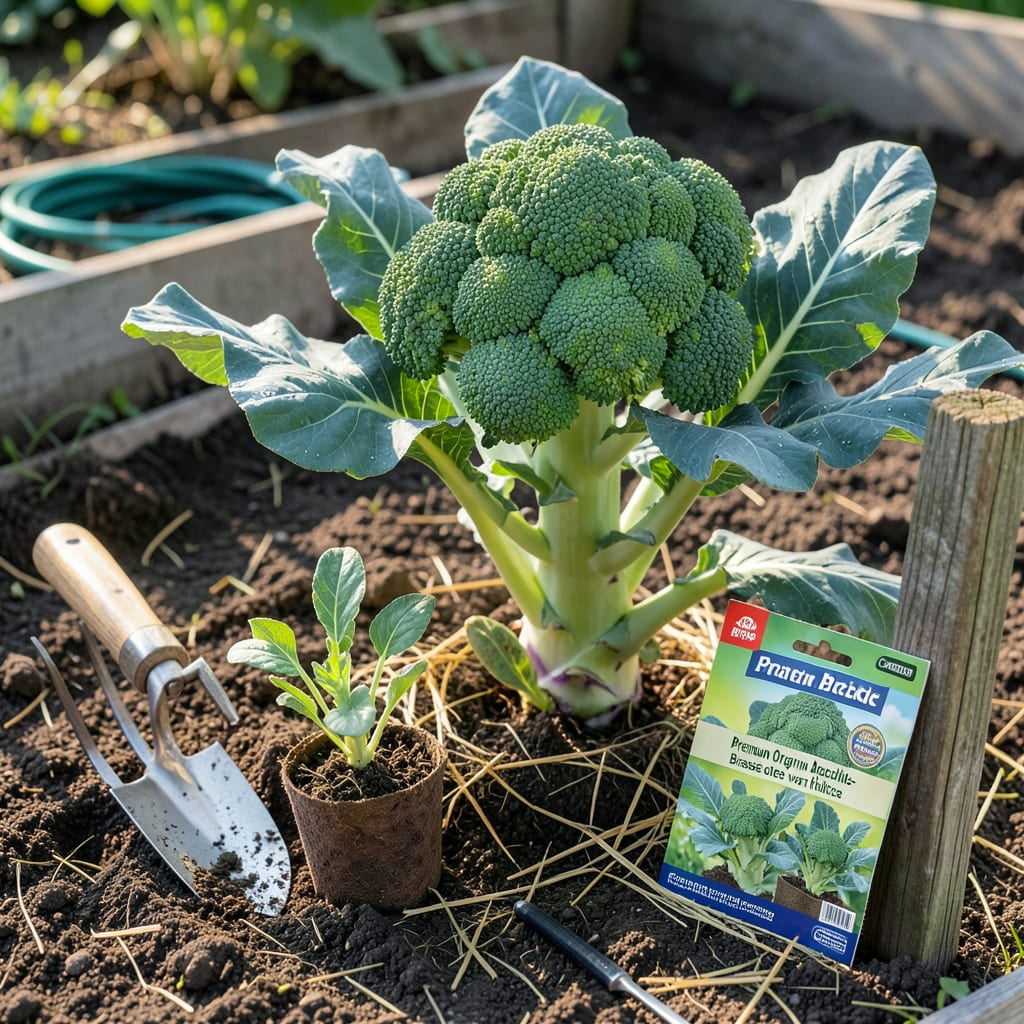
Timing your broccoli planting in Michigan can feel like a gamble—plant too soon, and frost might wipe out your seedlings. Wait too long, and summer heat turns those crisp 🥦 heads into bitter, flowering disappointments. I’ve seen both scenarios play out in my own garden.
The good news? With the right schedule, you can harvest perfect broccoli twice a year—once in early summer and again in fall. Let me break down the exact windows for Zone 5 success, so you never miss your planting sweet spot again.
Michigan’s Zone 5 climate gives us two prime windows for planting broccoli: early spring and late summer. The key is working around our last frost date (around May 15 in most areas) and avoiding summer’s scorching heat that triggers bolting.
For spring planting, aim to transplant seedlings 2-3 weeks before your last frost. If direct-sowing, wait until soil temps hit 40°F+. Fall plantings need to go in 60-80 days before your first frost to mature properly.
| Season | Planting Window | Method | Harvest Time | Notes |
|---|---|---|---|---|
| Spring | April 1–May 15 | Transplant seedlings | June–July | Start seeds indoors 6-8 weeks before last frost |
| Spring | April 15–May 1 | Direct sow | July–August | Soil temp must be ≥40°F |
| Fall | July 15–August 15 | Transplant seedlings | October–November | Plant 80 days before first frost |
| Fall | July 20–August 10 | Direct sow | October–November | Use fast-maturing varieties like ‘De Cicco’ |
In the Upper Peninsula (Zone 4-5), push your dates 1-2 weeks later due to cooler temps. Southern Michigan gardeners can often plant 7-10 days earlier than the dates above. Always check your local frost dates for precision.
For spring transplants, I harden off my seedlings for 7-10 days before moving them outside. This prevents shock when temps still dip into the 30s°F at night. A floating row cover can add extra protection during unexpected cold snaps.
Fall plantings require extra attention to timing. Count backward from your first frost date and add 10-14 days for harvest flexibility. If you’re in Detroit, aim for July 20-30 planting. In Traverse City, wait until early August.
Soil prep matters too! Broccoli thrives in well-draining soil with a pH of 6.0-7.0. I mix in 2-3 inches of compost before planting and add a balanced fertilizer (10-10-10) at transplanting. Consistent moisture is critical—1-1.5 inches per week keeps heads from becoming bitter.
Watch for cabbage worms in late summer. I use row covers or plant thyme and dill nearby as natural deterrents. If you see yellowing leaves, it’s often a sign of nutrient deficiency—a foliar spray of fish emulsion can help.
For container gardeners, choose compact varieties like ‘Green Magic’ and use 5-gallon pots minimum. Place containers where they’ll get full sun (6+ hours) but afternoon shade in peak summer to prevent bolting.
Remember: Broccoli is a cool-season crop. If daytime temps consistently exceed 80°F, your plants may bolt prematurely. In hot summers, I’ve had success with partial shade cloth (30-40%) to extend the season.
Pro tip: Succession plant every 2-3 weeks in spring for a continuous harvest. For fall, a single planting usually suffices since cooler temps slow growth. Always mulch heavily (2-3 inches) to regulate soil temp and retain moisture.
🌱Even experienced Michigan gardeners can sabotage their broccoli harvests with simple oversights. After years of trial and error, I’ve pinpointed the four most common mistakes that turn promising broccoli plants into disappointing flops. Let’s fix them before they wreck your crop.
The biggest culprit? Ignoring soil temperature. Broccoli seeds won’t germinate in cold soil below 40°F, and transplants stall if soil is under 50°F. I’ve lost entire trays of seedlings by rushing them into chilly ground. Always use a soil thermometer—it’s a game-changer.
Another silent killer is poor spacing. When I first grew broccoli, I crammed plants 12 inches apart to save space. Big mistake! Crowded broccoli develops small, loose heads and suffers from powdery mildew. Now I give each plant 18-24 inches and thin seedlings ruthlessly.
Watering inconsistencies also wreck harvests. Broccoli needs 1-1.5 inches weekly, including rain. I learned this the hard way when my spring crop developed bitter, hollow stems after a dry spell. A drip irrigation system on a timer solved my moisture problems—no more guesswork!
The final pitfall? Ignoring pest pressure. Michigan’s cabbage worms and aphids can decimate broccoli overnight. My go-to defense is floating row covers from planting until harvest, plus companion planting with thyme and nasturtiums to repel pests naturally.
Here’s my pro tip: Track your microclimate. Coastal areas near Lake Michigan stay cooler longer, while inland spots heat up faster. I keep a garden journal with daily temps and adjust planting dates yearly. Last season, this helped me avoid bolting by planting 10 days earlier than usual.
Remember, broccoli thrives on consistency. Test your soil, monitor temps, and stick to the spacing rules. With these fixes, you’ll sidestep the mistakes that frustrate most Michigan gardeners—and enjoy those crisp, sweet heads all season long. 🌱
Michigan’s short growing season demands broccoli varieties that mature quickly and handle cool temps. After testing dozens over the years, I’ve found the top performers for our Zone 5 climate—focus on cold-hardy types that resist bolting when summer heat sneaks in.
For spring plantings, I swear by ‘Waltham 29’ (90 days) for its frost tolerance and ‘De Cicco’ (48-65 days) for its heat resistance and side-shoot production. Both thrive in Michigan’s unpredictable springs when temps swing from 30s°F at night to 70s°F by day.
| Variety | Days to Harvest | Cold Hardiness | Heat Tolerance | Best For | Notes |
|---|---|---|---|---|---|
| Waltham 29 | 85-90 | ❄️❄️❄️❄️ | 🌡️🌡️ | Fall crops | Handles light frosts; large heads |
| De Cicco | 48-65 | ❄️❄️❄️ | 🌡️🌡️🌡️ | Succession planting | Small heads but prolific side shoots |
| Green Magic | 57-63 | ❄️❄️❄️ | 🌡️🌡️🌡️ | Containers | Compact 1.5-2 ft plants; disease-resistant |
| Belstar | 65-70 | ❄️❄️❄️❄️ | 🌡️🌡️ | Early spring | Tolerates 25°F frost; uniform heads |
| Packman | 53 | ❄️❄️ | 🌡️🌡️🌡️ | Quick harvest | Hybrid with 7″ domed heads |
For fall plantings, ‘Belstar’ and ‘Waltham 29’ are my go-tos because they handle early frosts without sacrificing flavor. I’ve harvested ‘Belstar’ as late as November 15 in Lower Michigan with row covers—it just keeps producing!
If you’re short on space, ‘Green Magic’ is your best bet. Its compact size (18-24″ wide) makes it perfect for containers or small raised beds. Plus, it’s disease-resistant, which matters in our humid summers when powdery mildew lurks.
For organic gardeners, ‘Calabrese’ (58-80 days) is an heirloom favorite with excellent flavor, though it needs more babysitting. I pair it with ‘De Cicco’ for a staggered harvest—the ‘De Cicco’ comes in first, followed by ‘Calabrese’ 2-3 weeks later.
Pro tip: Always check the “days to maturity” rating and count backward from your first frost date. In Detroit, I stop planting varieties over 70 days after August 1. Up north? Cut that off by July 15 to be safe. 🌱
Both methods work, but transplanting gives you a 2-3 week head start in spring. Direct sowing is best for fall crops when soil is already warm. For spring, start seeds indoors 6-8 weeks before your last frost date.
Use floating row covers or cloches to shield young plants when temps dip below 32°F. I also recommend hardening off seedlings for 7-10 days before transplanting to reduce shock from temperature swings.
This usually happens from poor spacing (plant 18-24″ apart) or heat stress (temps above 80°F). Ensure consistent moisture (1-1.5″ weekly) and use shade cloth if summer heat arrives early.
Choose compact varieties like ‘Green Magic’ and use 5-gallon containers minimum. Place pots where they’ll get 6+ hours of sun daily, and water more frequently than in-ground plants.
