
Beautiful Plants For Your Interior
Beautiful Plants For Your Interior
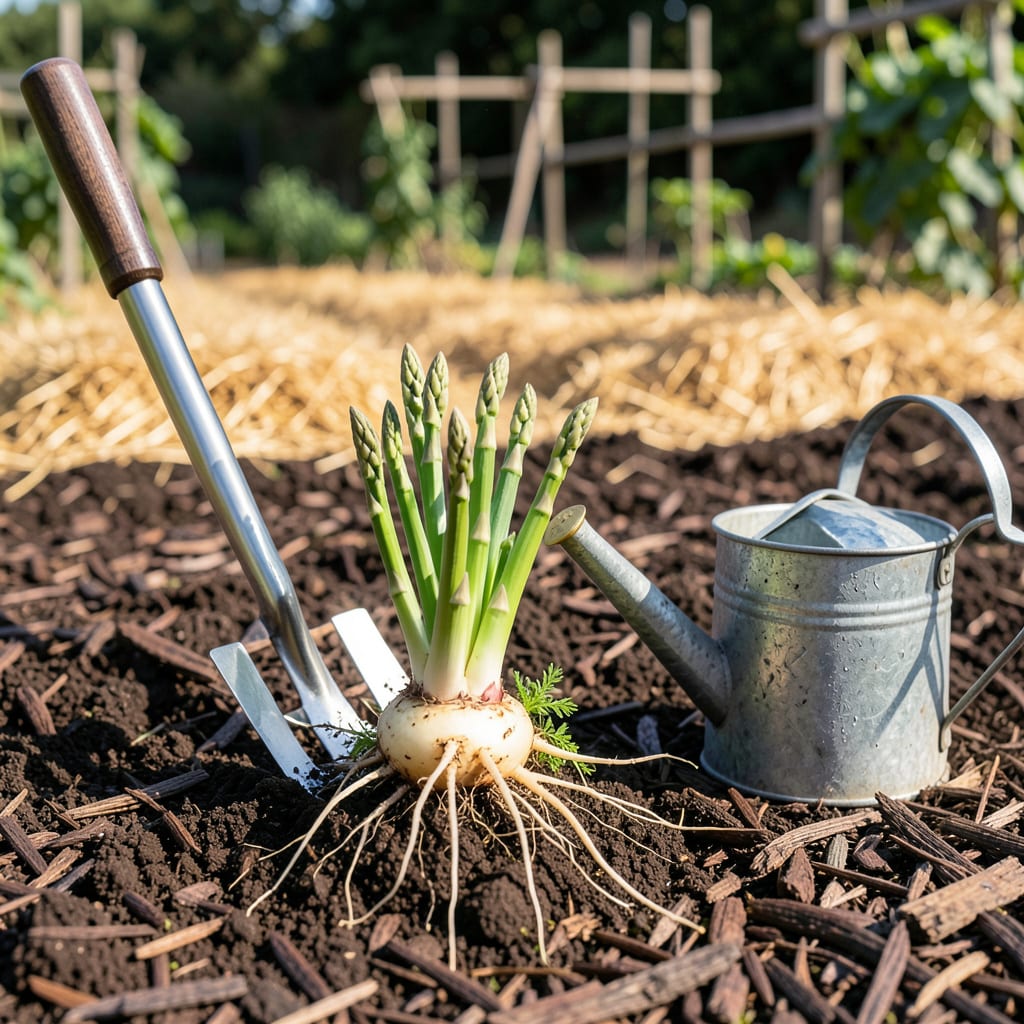
Timing isn’t just important with asparagus—it’s everything. Plant those crowns too early in Texas, and a late freeze could wipe out your patch. Wait too long, and the scorching heat will stress your plants before they even get started.
Get it right, and you’re looking at 20+ years of fresh 🥦 spears every spring. I’ll show you the perfect window for your region—whether you’re in the Panhandle or the Gulf Coast—and how to set your asparagus up for decades of success.
Texas spans four distinct growing zones, so your asparagus planting window depends on where you live. In North Texas (Zones 7-8), aim for late February to early March, while Central Texas gardeners can push into mid-March.
Down in South Texas (Zone 9), you’ve got more flexibility—plant as early as January or as late as early April. The key is soil temperature: wait until it hits 50°F at 6 inches deep. I’ll break it down region by region.
| Region | Zone | Ideal Planting Window | Last Frost Date |
|---|---|---|---|
| North Texas | 7-8 | Late Feb–Early March | March 15 |
| Central Texas | 8a-8b | Early–Mid March | March 1 |
| East Texas | 8a-9a | Late Feb–Early March | March 10 |
| South Texas | 9a-9b | January–Early April | February 1 |
If you’re in East Texas, your timeline mirrors North Texas, but watch for heavy rainfall—asparagus hates soggy roots. I recommend raised beds if your soil drains poorly. South Texas gardeners can even sneak in a fall planting in October.
Pro tip: Check your local soil temps with a thermometer. Asparagus crowns rot in cold, wet soil, so don’t rush it. In Austin or San Antonio, mid-March is your sweet spot. Up in Amarillo? Stick to early March to avoid late frosts.
Remember, asparagus is a perennial crop—what you do in Year 1 affects harvests for 20+ years. If you miss your window, wait until next year. Rushing leads to weak plants and sparse spears. Patience pays off with this one!
For coastal areas like Houston or Corpus Christi, humidity is your biggest challenge. Plant in well-draining sandy loam and space crowns 18 inches apart to improve airflow. This prevents fungal issues that thrive in our muggy springs.
If you’re in the Panhandle, watch for late freezes—cover new plantings with frost cloth if temps dip below 28°F. Your short growing season means every day counts, so prep your beds in late winter for immediate planting.
No matter where you are, avoid planting when daytime temps exceed 85°F. Asparagus crowns struggle to establish in heat. If you’re running late, wait until fall (October) for cooler soil—just give plants extra mulch for winter.
Want to double-check your timing? Use the Texas A&M AgriLife Extension frost date calculator for hyper-local advice. And mark your calendar: Year 1 is all about root growth—no harvesting allowed! That first season builds the foundation for future bounty.
Next up, I’ll walk you through exactly how to plant those crowns for maximum yield—because timing is just the first step. Proper depth, spacing, and soil prep make all the difference in your asparagus patch’s longevity.
🌱Now that you know when to plant, let’s dig into the how. Asparagus isn’t like your average veggie—it’s a long-term investment. Get the planting process right, and you’ll reap rewards for 20+ years. I’ll walk you through each critical step.
Start by choosing 1-year-old crowns from a reputable nursery. Avoid seeds—they add 2 extra years before your first harvest. Look for plump, disease-free roots with healthy buds. In Texas, varieties like ‘Mary Washington’ or ‘Jersey Giant’ thrive in our heat.
| Step | Action | Texas-Specific Tip |
|---|---|---|
| 1 | Dig trenches 6–8 inches deep, 12–18 inches apart | Add 2 inches of compost to sandy Texas soil |
| 2 | Soak crowns in lukewarm water for 15 minutes | Use rainwater if possible—lower chlorine stress |
| 3 | Place crowns 12–18 inches apart in trenches | Wider spacing in humid East Texas for airflow |
| 4 | Cover with 2 inches of soil, water gently | Use drip irrigation to avoid fungal issues |
| 5 | Gradually fill trench as spears grow, 6–8 weeks total | Mulch with straw to retain moisture in heat |
Your soil prep makes or breaks this crop. Texas soils vary wildly—from clay-heavy in Dallas to sandy in the Hill Country. Aim for a pH of 6.5–7.5. Test your soil and amend with lime (to raise pH) or sulfur (to lower it).
Here’s a Texas trick: Mix in expanded shale (10% by volume) to improve drainage in clay soils. For sandy areas, add composted manure to boost water retention. Remember, asparagus hates wet feet—raised beds are ideal in East Texas or low-lying areas.
Watering is critical those first 2 weeks. Keep soil evenly moist but never soggy. I use a soaker hose on a timer—1 inch per week, split into 2–3 sessions. Morning watering prevents fungal diseases in our humid climate.
First-year care is all about patience. Let those ferns grow tall and bushy—they’re feeding next year’s harvest. Resist the urge to cut them back until they turn brown in fall. Apply balanced fertilizer (10-10-10) lightly in June and August.
Mark your calendar: No harvesting in Year 1 or 2! Let plants establish. In Year 3, harvest spears for 2–3 weeks only. By Year 4, you’ll enjoy 6–8 weeks of spears. This patience pays off with thicker, sweeter asparagus for decades.
🌱Even with perfect timing, small errors can sabotage your asparagus patch for years to come. I’ve seen Texas gardeners make these three costly mistakes—and they all lead to weak plants and disappointing harvests. Let’s fix them before you plant.
The biggest blunder? Planting too late in spring. When soil temps climb above 85°F, crowns struggle to establish roots. In Central Texas, this means mid-March is your cutoff. South Texas gardeners have until early April, but don’t push it.
| Mistake # | The Problem | Texas-Specific Fix |
|---|---|---|
| 1 | Planting in cold, wet soil (below 50°F) causes crown rot | Use a soil thermometer—wait for consistent 50°F at 6″ depth |
| 2 | Ignoring soil pH (asparagus needs 6.5–7.5) | Test soil! Add lime (for clay) or sulfur (for alkaline) pre-planting |
| 3 | Harvesting too soon (before Year 3) | Let ferns grow un-cut for 2 full seasons to build root strength |
Another silent killer is poor weed control. Asparagus can’t compete with Texas weeds like nutgrass or bermudagrass. I recommend mulching with straw (3–4 inches thick) immediately after planting. This suppresses weeds while keeping soil moist in our hot winds.
Many gardeners also skimp on trench depth. In Texas, you must plant crowns 6–8 inches deep to protect them from heat. Shallow planting leads to stunted spears and early die-back. Dig your trenches, add compost, then place crowns with buds facing upward—this isn’t the time to cut corners.
Finally, over-fertilizing is a common Texas mistake. Our soils are often nutrient-rich, so go easy. I use half-strength 10-10-10 in June and August—nothing more. Too much nitrogen = lush ferns but fewer spears. Remember, asparagus is a marathon plant, not a sprint.
Here’s your Texas asparagus mantra: “Deep trenches, perfect pH, patience for 2 years.” Follow this, and you’ll avoid 90% of the problems I see in Texas gardens. The payoff? Thick, sweet spears for decades with minimal yearly maintenance. 🌱
Yes, but only in South Texas (Zone 9). October plantings can work if you provide thick mulch for winter protection. Other regions should stick to late winter/early spring for best results.
Use a soil thermometer at 6-inch depth—plant when temps hit 50°F consistently. In most of Texas, this happens 2-3 weeks before last frost. Morning readings are most accurate.
Not recommended. Asparagus needs deep roots (5+ feet) and permanent space. Containers restrict growth and reduce yields. If space is limited, try raised beds instead.
This usually means the plants are too young or overcrowded. Never harvest in Year 1-2, and ensure 18-inch spacing. Thin spears can also signal poor soil nutrients—test your pH!
Patience is key! Wait 2 full years before harvesting to let roots establish. Year 3 allows 2-3 weeks of light harvesting; full production starts in Year 4. This ensures decades of bountiful spears.
