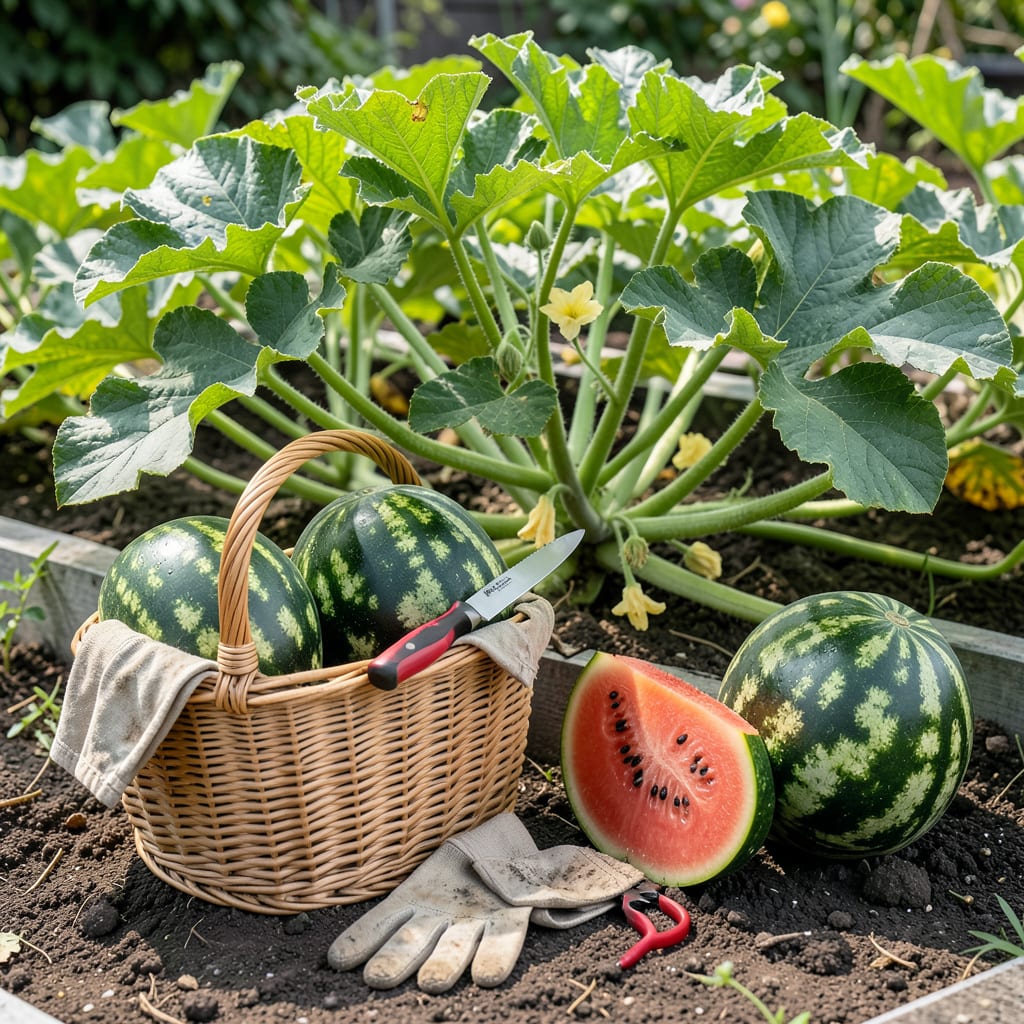
That moment when you slice into a watermelon you grew yourself—only to find it underripe—is heartbreaking. I’ve been there, staring at a pale, mealy mess instead of that perfect, juicy red flesh we all crave. The difference between disappointment and delight? Knowing the 5 surefire signs your 🍉 is ready to come off the vine.
Timing isn’t just luck; it’s science mixed with a little garden intuition. From the hollow thump of a ripe melon to the telltale yellow spot on its underside, I’ll show you exactly what to look (and listen) for. No more guessing—just sweet, flawless watermelons every time.
Style 3: Not Ready vs Ready – Watermelon
❌ Not Ready
🟢 Green stem end
🔍 Pale color
📏 Firm when pressed
✓ Pick Now!
🟡 Yellow ground spot
✅ Deep uniform color
✂️ Slight give when pressed
5 Visual and Physical Signs Your Watermelon Is Ready to Pick
After months of tending your watermelon vines, the moment of truth arrives: determining perfect ripeness. Unlike other fruits, watermelons don’t continue ripening after picking, so timing is everything. I’ve learned through years of gardening that visual cues and physical tests are far more reliable than guesswork.
The most common mistake I see is relying solely on size or color—these can be misleading depending on the variety. Instead, I focus on a combination of five key indicators that nature provides. These signs work for most watermelon types, from classic ‘Crimson Sweet’ to compact ‘Sugar Baby’ varieties.
Curled Tendril Turns Brown Check the small curly stem (tendril) nearest the fruit. When it dries and turns brown and brittle, the watermelon is typically ripe. This happens because the plant stops sending nutrients to the fruit.
Rind Loses Its Shine A ripe watermelon’s skin transforms from glossy to dull. Run your fingers over the surface—it should feel slightly rough, not slick. This texture change occurs as the fruit reaches peak sugar content.
number”>4
number”>5
Watermelon Ripeness by Variety: Key Differences to Watch For
Not all watermelons ripen the same way—what works for a seedless hybrid might mislead you with an heirloom variety. I’ve learned the hard way that ‘Sugar Baby’ melons turn deep black when ripe, while ‘Crimson Sweet’ stays striped but develops a buttery yellow underside. 🌱
Even the days to maturity vary wildly: icebox types like ‘Golden Midget’ can be ready in 70 days, while giant heirlooms may need 90+ days. That’s why I always check the seed packet first—then watch for variety-specific cues like rind texture changes or tendril browning patterns. ☀️
Watermelon Variety Ripeness Guide
Variety
Days to Maturity
Key Ripeness Sign
Crimson Sweet
85-90
Striped rind dulls + tendril browns completely
Sugar Baby
75-80
Skin turns deep black-green; yellow ground spot appears
Seedless Hybrid
80-85
No tendril browning—watch for rind roughness + hollow sound
Moon & Stars
90-100
Yellow spots intensify; heavy for size
I’ve found that heirloom watermelons like ‘Moon & Stars’ give more obvious visual clues—those yellow star-like spots darken dramatically when ripe. But modern seedless varieties can be trickier; I rely on the tap test (a deep, hollow thump) and weight comparison between similar-sized fruits. ✂️
Climate plays a role too: In hotter zones (like my Arizona garden), melons often ripen 5-7 days faster than the seed packet predicts. I keep a harvest journal to track how my local conditions affect each variety—last year, my ‘Charleston Gray’ melons were ready a full week early thanks to a heatwave! 🌡️
For icebox watermelons (those cute little 5-pounders), don’t wait for the tendril to brown—it often stays green. Instead, I check for a creamy yellow underside and a slight give when pressed at the blossom end. These small varieties can go from perfect to overripe in just 2-3 days, so I monitor them daily once they hit 6 inches wide. ⏰
If you’re growing orange-fleshed varieties like ‘Orange Crisp’, the rind won’t darken as dramatically. I look for a matte finish instead of glossy, and the ground spot turns more golden than yellow. And here’s a secret: These often taste sweeter if left on the vine an extra 2-3 days past the “standard” ripeness signs! 🍉
Common Mistakes That Ruin Watermelon Harvest Timing
Even experienced gardeners sometimes misjudge watermelon ripeness. The most common mistake I see is picking too early—especially when we get excited about that first big fruit. Remember, watermelons won’t ripen further once picked, so patience is key. That bright green color might look tempting, but it’s a dead giveaway for immaturity.
Another critical error is ignoring the ground spot—that area where the melon rests on the soil. If it’s still pale green or white, your watermelon needs more time. I’ve found that hot weather can accelerate ripening, while cool spells slow it down. Always factor in your local climate when timing your harvest.
⚠️
Avoid These Harvest Killers
Thumping too hard – Can bruise the fruit and mask true sound
Judging by size alone – Some varieties stay small but ripen perfectly
Harvesting after rain – Wet fruits sound different when tapped
Ignoring the tendril – It should be brown and crispy, not green
I’ve also seen gardeners make the mistake of harvesting all melons at once when they spot one ripe fruit. Watermelons on the same vine can mature at different rates—sometimes 2-3 weeks apart. Check each one individually using the tendril test and ground spot color as your guides.
A less obvious but costly mistake is picking in extreme heat. Watermelons harvested during peak afternoon sun (above 90°F) can develop internal heat damage, leading to mealy texture. I always recommend harvesting in the early morning when temperatures are cooler and the fruits are crisp.
If you’ve already picked a watermelon too early, don’t despair. While it won’t sweeten further, you can improve texture by storing it at room temperature for 2-3 days. For slightly underripe melons, I’ve had success placing them in a paper bag with a banana—the ethylene gas can help soften the flesh slightly.
Frequently Asked Questions
1
How can I tell if a watermelon is ripe without cutting it?
Check three key signs: the tendril nearest the fruit should be brown and dry, the underside (ground spot) should be creamy yellow, and the melon should produce a hollow sound when tapped. A dull rind color also indicates ripeness.
2
Does the size of the watermelon determine when to harvest?
Size alone isn’t reliable—some varieties stay small but ripen perfectly. Instead, focus on days to maturity (usually 70-90 days) and the ripeness signs. A 6-8 inch diameter is typical, but check your seed packet for variety-specific guidance.
3
What happens if I pick a watermelon too early?
Watermelons won’t ripen further once picked, so early harvesting means bland, pale flesh. If you’ve already picked one too soon, store it at room temperature for 2-3 days to soften slightly—but flavor won’t improve.
4
Can weather affect when to pick watermelons?
Hot weather speeds up ripening, while cool spells slow it down. After heavy rain, wait a day or two before testing—wet melons sound different when tapped. Always harvest in early morning for best texture.