
Beautiful Plants For Your Interior
Beautiful Plants For Your Interior
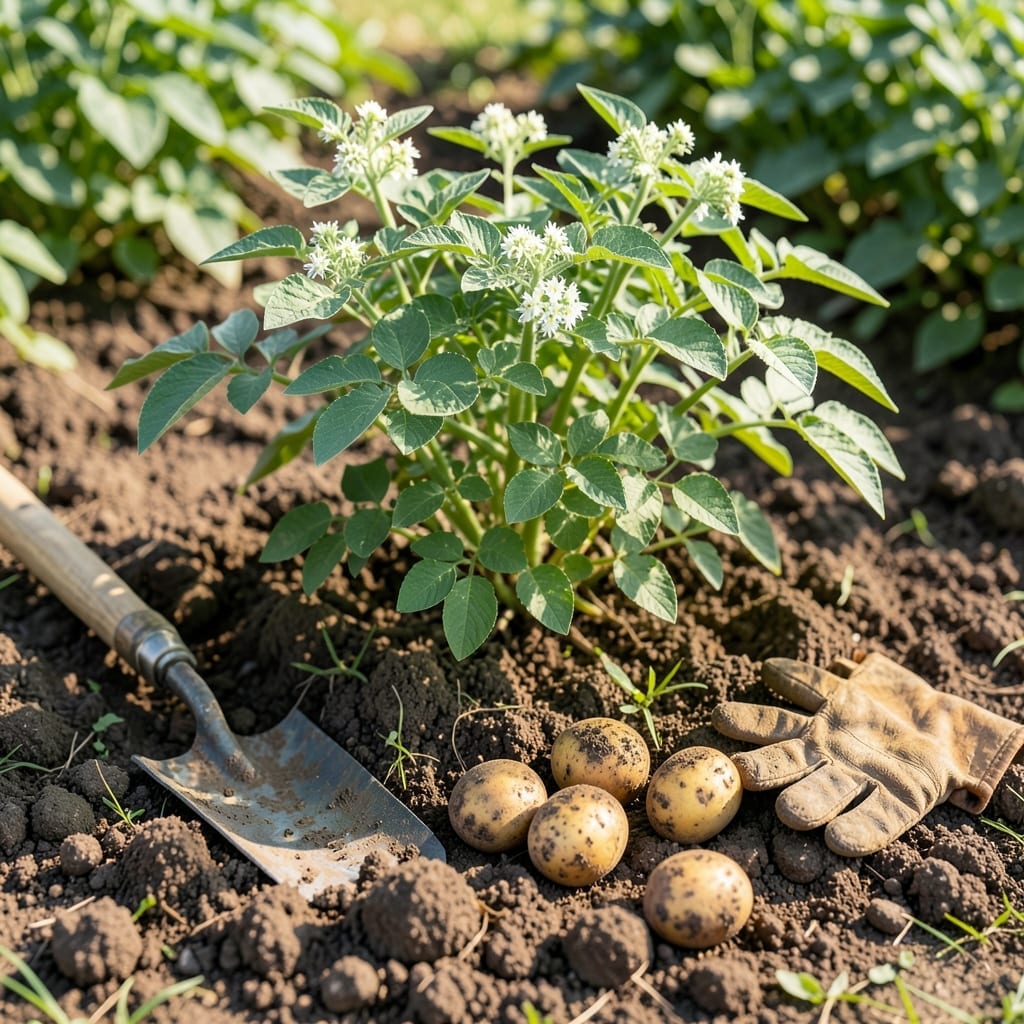
Knowing exactly when to pick Potato 🥔 after planting can mean the difference between a bountiful harvest and a disappointing yield. Timing is everything when growing in zone 6.
Dig too early, and you’ll get small, underdeveloped spuds; wait too long, and they might rot or become tough. The right moment is all about watching for nature’s signals.
Whether you’re planting in March – April or aiming for a June – August harvest, understanding the growth stages is the key to success. I’ll show you what to look for in your garden.
Discover how to read your plants’ signs and pull up perfectly mature Potatoes every time. Let’s get started.

Timing your potato harvest perfectly starts with understanding the growth stages. Early varieties mature in 60-90 days, while late varieties can take up to 120 days. Each stage offers unique visual cues to guide your decision.
I always watch for the first signs of maturity: flowering signals the start of tuber formation, while yellowing foliage indicates the plant is nearing the end of its cycle. These are nature’s way of telling you it’s time to check on your spuds.
| Growth Stage | Timeframe | Visual Cues |
|---|---|---|
| Early | 60-70 days | First flowers appear, small tubers form |
| Mid | 70-90 days | Foliage begins yellowing, tubers grow rapidly |
| Late | 90-120 days | Foliage dies back, skin hardens |
| New Potatoes | 2-3 weeks after flowering | Small thin-skinned tubers |
For new potatoes, you can start harvesting when plants flower. These young spuds have thin skins and a delicate texture. I love digging a few out for an early taste while letting the rest mature.
Mature potatoes need more time. The foliage turning yellow is your first sign, but wait until it dies back completely for the best storage potatoes. The skin should be thick and resist peeling when rubbed.
Different potato varieties have unique timelines. Yukon Golds typically mature in 80-90 days, while Russets may take 100-120 days. Always check your seed packet for variety-specific guidance.
I recommend testing a few tubers before harvesting the whole plant. Gently dig around the base and feel for size. If they’re 2-5 inches in diameter, they’re likely ready. Smaller spuds can be left to grow larger.
Weather conditions also play a role. In hot climates, potatoes may mature faster. If frost threatens, harvest immediately as frozen tubers won’t store well. I’ve learned to keep an eye on the forecast as harvest time approaches.
For the best flavor and storage life, let harvested potatoes cure in a dark, well-ventilated area for 1-2 weeks. This allows the skin to toughen and minor bruises to heal. Store in a cool, dark place with good airflow.☀️
Remember, the size of your harvest depends on both timing and care. By understanding these growth stages and visual cues, you’ll consistently pull up perfect potatoes from your garden.🌱
Harvesting potatoes at the right time ensures the best flavor and storage life. I always wait until the foliage dies back and the skin sets hard, which usually happens 90-120 days after planting. This is your sign that the tubers are mature and ready.
Before digging, I check the weather forecast for a stretch of dry days. Wet soil can make harvesting messy and increase the risk of rot or disease. Early morning is my preferred time to start, as the soil is firmer and easier to work with.
For new potatoes, which are smaller and more tender, I start checking 2-3 weeks after the plants have flowered. These can be harvested gently by hand, leaving the rest of the plant to continue growing for a later harvest.
If the soil is too compact or rocky, I recommend using a broadfork to loosen it before planting. This makes harvesting much easier and reduces the risk of cutting tubers with your tools.
After harvesting, I always cure my potatoes in a dark, well-ventilated area for 1-2 weeks. This helps the skin toughen up, which extends their storage life significantly.
Finally, store your potatoes in a cool, dark place with good airflow. A root cellar is ideal, but a cardboard box in a basement or garage works well too. Just avoid the refrigerator, as the cold can turn the starches into sugars, altering the taste. ✂️