
Beautiful Plants For Your Interior
Beautiful Plants For Your Interior
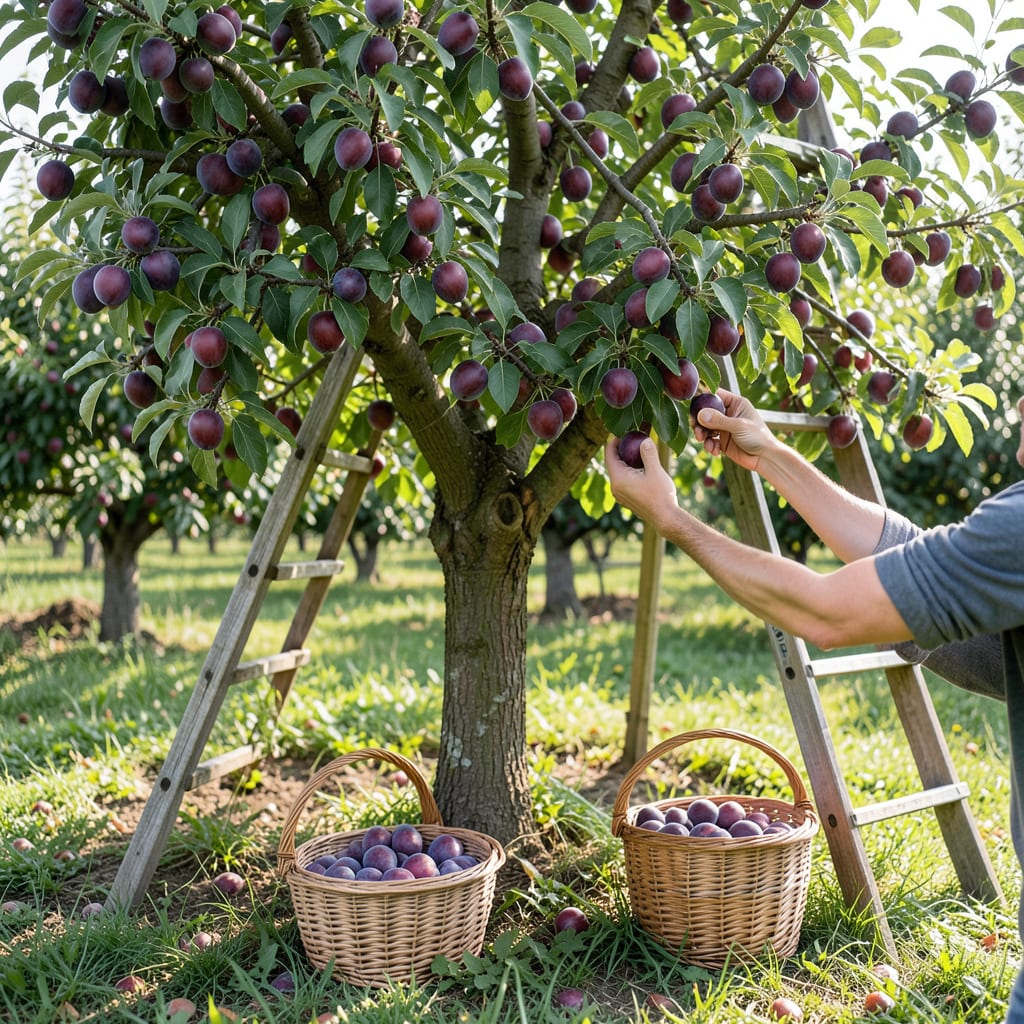
Picking plums at the perfect moment ensures the juiciest, sweetest fruit from your 🍑 Plum Tree. Timing it wrong can leave you with tart, underripe harvests or mushy, overripe ones.
I’ll share the foolproof signs to determine exactly when your plums are ready. From color changes to texture tests, you’ll learn how to pick them at peak ripeness every time.


Knowing when to pick plums starts with observing their color transformation. Most plum varieties shift from green to deep purple, red, or yellow as they ripen. But don’t rely on color alone—European plums often need a full, rich hue before they’re ready.
I always check the fruit’s texture next. A ripe plum yields slightly to gentle pressure when squeezed. If it’s rock-hard, it’s not ready. For Japanese plums, this softness appears earlier than in damson varieties.
| Variety | Color Change | Texture Test |
|---|---|---|
| European Plums | Deep purple/blue | Firm with slight give |
| Japanese Plums | Red or yellow | Softer earlier |
| Damson Plums | Dark purple | Firm until fully ripe |
| Harvest Time | July-September | Gentle twist separates easily |
The stem check is another foolproof method. A ripe plum separates easily from the tree with a gentle twist. If you’re struggling to pull it off, it’s not ready. This is especially true for damson plums, which cling tightly when unripe.
Don’t forget the aroma test. Ripe plums emit a sweet, fruity scent near the stem. If there’s no smell, or it’s grassy, your fruit needs more time. I find this works best in the early morning when scents are strongest.
For early varieties, you might start seeing ripe fruit in late June, while most plums peak in July through September. Climate plays a role too—warmer regions may see earlier harvests, while cooler areas might need to wait a bit longer.
I’ve noticed that plums on the tree’s sunny side often ripen first. This is because they receive more direct sunlight and heat. So, check those areas first when you’re testing for ripeness.
If you’re growing multiple varieties, keep a journal. Note which trees ripen first and last. This helps you plan your harvest more efficiently in future years. My Stanley plums always ripen about two weeks before my Santa Rosa variety.
Finally, taste is the ultimate test. Pick a sample plum and try it. If it’s sweet and juicy, the rest are likely ready. If it’s tart or bland, give them a few more days on the tree.
Remember, plums won’t ripen further once picked, so timing is everything. With these signs in mind, you’ll never wonder when to pick plums off tree again 🌳
Many gardeners make the critical mistake of picking plums based on color alone. Just because a plum looks purple doesn’t mean it’s ripe—some varieties maintain a greenish tint even when fully mature.
Another common error is waiting for plums to fall naturally. By the time they hit the ground, they’re often overripe and bruised. I learned this the hard way with my first Stanley plum tree.
⚠️ Warning: Never judge ripeness by color alone. European plums often need extra time to develop their full sweetness even after reaching mature color.
Ignoring weather impact can also sabotage your harvest. A heat wave can speed up ripening, while cool, rainy days may delay it. I always adjust my harvesting schedule based on the 10-day forecast.
Many growers miss the short harvest window for certain varieties. Damson plums, for example, have a very narrow ripe period. If you blink, you might miss it entirely.
Picking too early based on size alone is another pitfall. Some plums reach full size weeks before they’re actually ripe. I’ve seen Japanese plums look ready but taste disappointingly tart.
Finally, don’t overlook the stem connection. If a plum requires significant force to separate from the tree, it’s definitely not ready. This simple test has saved me from many premature harvests.
Remember, plums don’t ripen after picking, so these mistakes can mean the difference between a bountiful harvest and a basket of inedible fruit 🌳
When I’m unsure about plum ripeness, I use the gentle squeeze test first. A ripe plum should have a slight give when pressed lightly between your fingers. If it feels hard, it needs more time on the tree.
The stem check is my second go-to method. A ripe plum will separate easily with a gentle twist. If you’re pulling hard, the fruit isn’t ready yet. This works especially well for damson plums, which can be stubborn when unripe.
The taste test is the most reliable method. Pick a sample plum and check its flavor. If it’s sweet and juicy, the rest are likely ready. If it’s tart, wait a few more days.
I’ve found that early morning is the best time for these tests. The fruit is firmer and cooler, making it easier to detect the subtle softness of a ripe plum. Plus, the aroma is strongest at this time.
Remember, plums don’t ripen after picking, so these tests are crucial. With practice, you’ll recognize the signs instantly and enjoy perfectly ripe plums every harvest season 🌳
Check for a deep, uniform color with no green patches. Gently squeeze—ripe plums yield slightly. They should also emit a sweet aroma near the stem.
No, timing varies by type. Japanese plums often ripen earlier (June-July), while European and damson varieties peak in August-September. Climate also affects timing.
They’ll stay tart and hard. Unlike some fruits, plums don’t ripen after picking. Always wait for full color and slight softness to ensure sweetness.
No—once picked, plums won’t ripen further. Focus on proper tree care (water, sunlight) to encourage natural ripening on the branch.
