
Beautiful Plants For Your Interior
Beautiful Plants For Your Interior
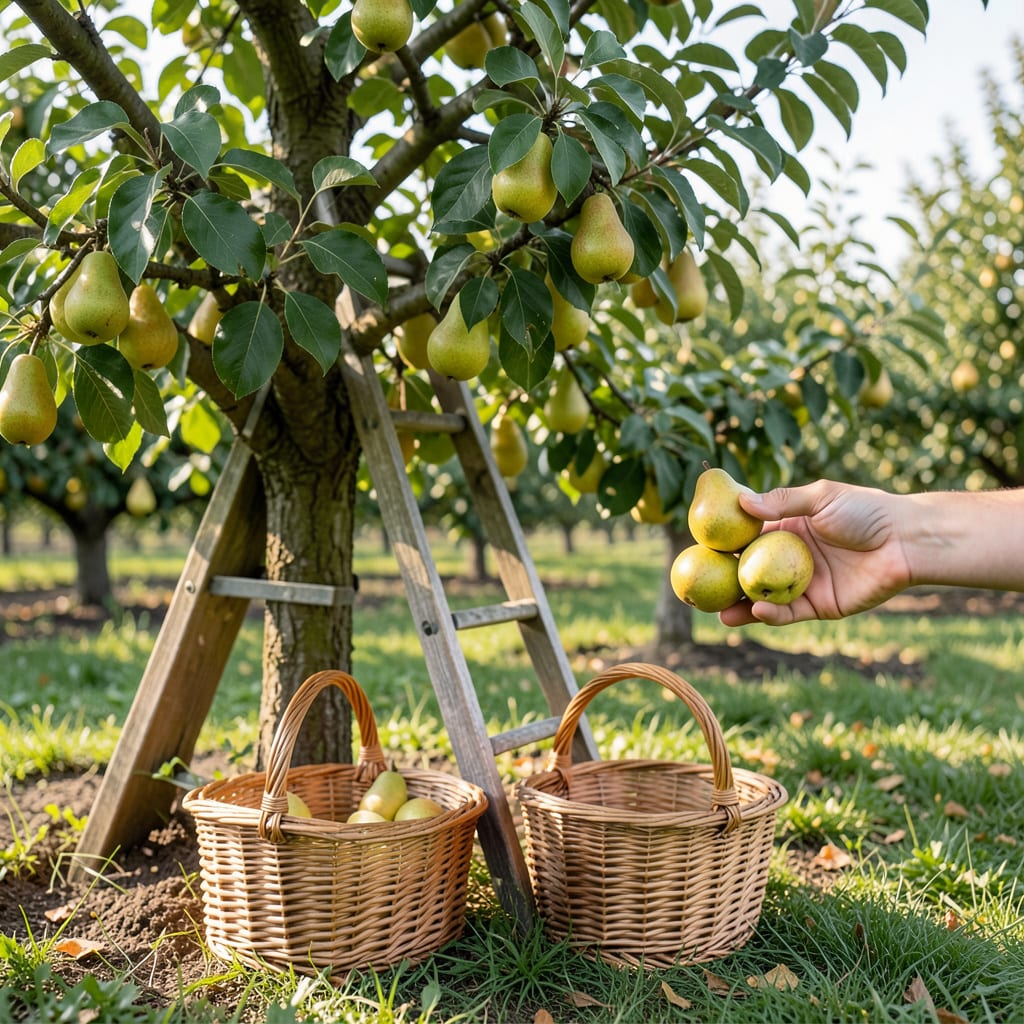
Picking pears too early or too late can mean the difference between a sweet treat and a mealy disappointment. Unlike many fruits, pears ripen best after they‘re off the tree.
I’ll show you the simple signs to look for on your 🍐 Pear tree and the easy tests to confirm they’re ready for harvest. Let’s get it right the first time.


Timing your pear harvest right is crucial because these fruits ripen best off the tree. If you wait until they’re fully soft on the branch, they’ll be overripe and mushy by the time you eat them.
I’ve found that most pear varieties show clear signs when they’re ready. Look for color changes, a slight give near the stem, and how easily they separate from the branch.
| Variety | Harvest Signs | Season |
|---|---|---|
| Bartlett | Yellow color, slight softness | Late summer |
| Bosc | Russet skin, firm but stem separates | Early fall |
| Anjou | Green to yellowish, slight give | Early fall |
| Comice | Blush color, sweet aroma at stem | Late summer |
The color change is often the first clue. For Bartlett pears, this means shifting from green to yellow. Other varieties like Bosc develop a russet brown hue when ready.
Next, do the thumb test. Gently press near the stem—if it gives slightly, it’s likely ready. But don’t squeeze too hard, or you’ll bruise the fruit.
The tilt test is my favorite. Hold the pear and tilt it horizontally. If it separates easily from the branch with a gentle twist, it’s ready to pick. If it resists, leave it for another week.
For Bosc and Anjou, which don’t change color dramatically, rely more on the stem separation and firmness tests. These varieties often need a bit more time on the tree.
Don’t forget the aroma check. Ripe pears emit a sweet fragrance near the stem end. If you don’t smell anything, they’re probably not ready yet.
Weather plays a role too. A warm, dry summer can speed up ripening, while cool, wet conditions may delay it. Always check your fruit a few days earlier if temperatures have been high.
If you’re unsure, pick one or two and let them ripen indoors at room temperature. This is the best way to test without risking your entire crop. 🌳
Even if your pear tree shows some mature color, I always run a few quick tests to confirm ripeness. These methods help avoid picking underripe or overripe fruit and ensure the best flavor.
Start with the thumb test—gently press near the stem. If it gives slightly, the pear is likely ready. But remember, don’t squeeze too hard or you’ll bruise the fruit.
The tilt test is my go-to method. Hold the pear and tilt it to a horizontal position. If it separates easily with a gentle twist, it’s ready to harvest.
For the aroma check, smell near the stem end. A sweet fragrance means the pear is ripe or nearly so. If there’s no smell, wait a few more days.
If you’re still unsure, do a sample test. Pick one or two pears from different parts of the tree and let them ripen indoors. This gives you a clear idea without risking the entire crop.
Avoid picking after heavy rain or during extreme heat, as these conditions can mask the true ripeness signs. Early morning is the best time to test and harvest. 🌳
Once you’ve harvested your pears, proper post-harvest care ensures they reach peak flavor. Unlike some fruits, pears often need time to ripen fully after picking.
I always start by inspecting each pear for bruises or damage. Damaged fruit should be used first, while perfect specimens can be stored for later ripening.
Store pears at room temperature to ripen, then refrigerate to slow further ripening. Check daily for softness near the stem.
For faster ripening, place pears in a paper bag with a ripe banana or apple. The ethylene gas they emit speeds up the process.
If you need to slow ripening, move them to the refrigerator once they’ve reached your desired softness. They’ll keep for 1-2 weeks this way.
Watch for overripening signs like excessive softness, wrinkled skin, or a fermented smell. These pears are best used immediately for preserves or baking.
Remember that Bartlett pears ripen quickest, while Bosc and Anjou can take a bit longer. Adjust your storage method based on the variety. 🌳
Pears ripen best after picking because they’re climacteric fruits. This means they continue ripening after harvest, unlike some fruits that only ripen on the plant.
Most varieties take 1-3 days at room temperature to ripen fully. Bartletts are fastest, while Bosc and Anjou may need up to 5 days. Check daily for softness near the stem.
Yes, but only for varieties like Anjou that don’t change color much. Use the tilt test or thumb test to confirm ripeness. Green Bartletts are likely underripe.
Early morning is ideal when temperatures are cool. This helps preserve fruit firmness during picking and reduces stress on the tree.
