
Beautiful Plants For Your Interior
Beautiful Plants For Your Interior
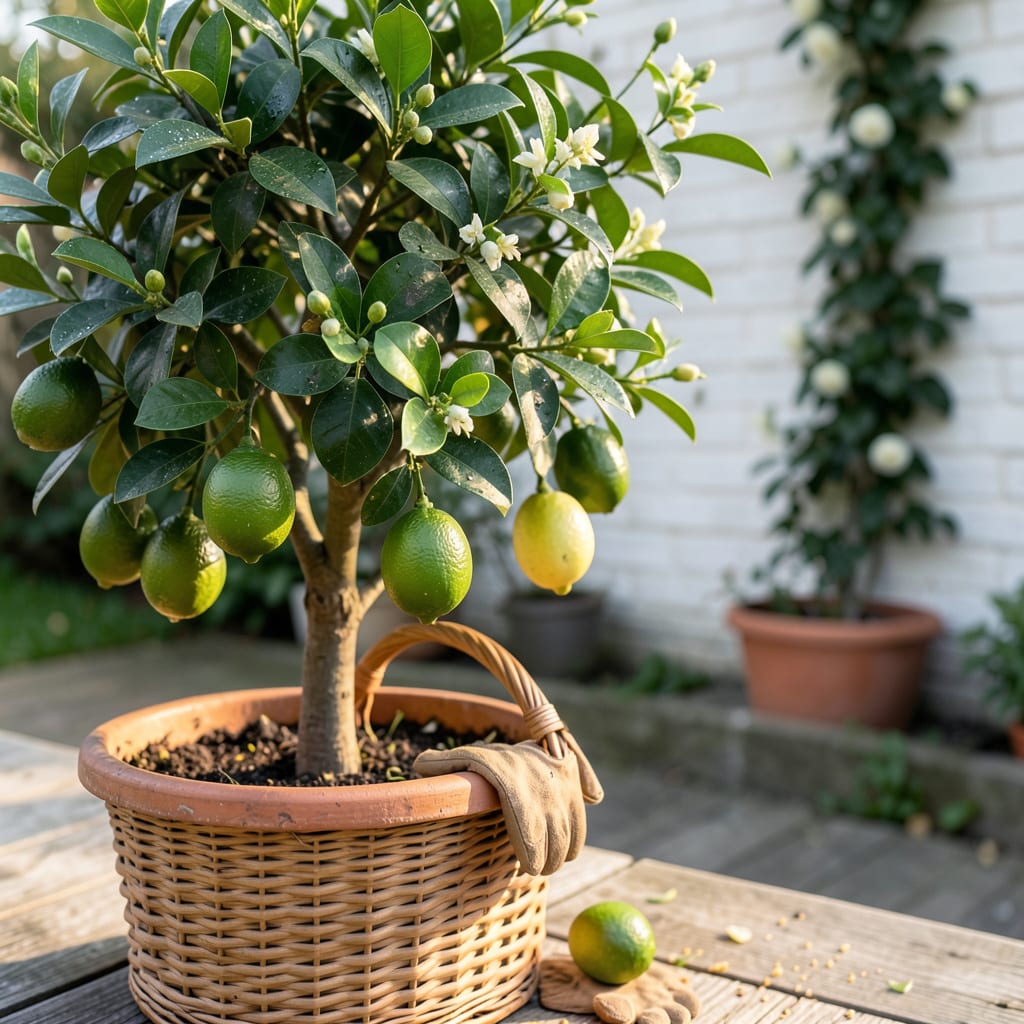
There’s nothing worse than cutting into a lime only to find it’s still sour and underripe—especially when you’ve babied that potted tree for months. But how do you know when your 🍈 Limes are truly ready for harvest?
The secret lies in subtle cues most gardeners miss. I’ll show you exactly what to look for—from color shifts to the perfect “twist test”—so you never waste another fruit. Let’s make sure your next harvest is bursting with flavor.


Your potted lime tree might be loaded with fruit, but looks can be deceiving. Many gardeners assume limes should turn yellow before picking, but that’s a myth for most varieties. The real clues are in the color intensity, texture, and how easily they detach.
Unlike ground-planted trees, potted limes often ripen slower due to root restriction. That means you’ll need to watch for subtle changes like a glossy sheen on the skin or a slight softness when squeezed. Let’s break down the exact signs to look for.
| Ripeness Sign | What to Look For |
|---|---|
| Color | Bright green (not pale) with a slight glossy finish |
| Size | 2-3 inches in diameter (varies by variety) |
| Texture | Slight give when gently squeezed (not rock-hard) |
| Scent | Strong citrus aroma when held near your nose |
| Twist Test | Detaches easily with a gentle twist (no tugging needed) |
One of the biggest mistakes I see is waiting for limes to turn fully yellow. While some varieties (like Key limes) may develop a yellow tint, most Persian limes stay green even when ripe. Focus on the glossiness instead—ripe limes have a waxy sheen.
Another telltale sign is the ease of detachment. If you have to yank the lime off the tree, it’s not ready. A ripe lime will come off with a gentle twist, almost like it’s offering itself to you. This is especially important for potted trees, which can be more sensitive to premature picking.
Don’t forget the scent test! A ripe lime will have a strong citrus fragrance even before you cut into it. If it smells weak or grassy, give it more time. Potted limes often need an extra week or two compared to ground-grown ones due to limited root space.
If you’re still unsure, try the taste test on one lime. Cut it open and check the juice content. Ripe limes will be juicy with a balanced tartness, while underripe ones taste harsh and dry. Remember, potted trees can produce fruit year-round, so don’t rely on season alone.
For Key limes, watch for a yellowish blush at the stem end—this is a dead giveaway they’re ready. Persian limes, on the other hand, stay green but develop a slightly bumpy texture when ripe. Always check multiple signs before harvesting.
If your limes are taking forever to ripen, check your tree’s light exposure. Potted limes need 6-8 hours of direct sun daily. Without enough light, they’ll stay small and sour. Move your pot to a south-facing window or supplement with grow lights if needed.
Finally, don’t stress if your limes ripen at different times. Potted trees often have staggered harvests, so you might pick a few ripe ones while leaving others on the tree. This is normal—just keep monitoring and enjoy the freshest limes possible! 🍈
Timing your lime harvest depends heavily on your tree’s variety and where you live. A Persian lime in Florida might ripen in June, while the same tree in a potted setup in California could take until August. Climate and container size play huge roles.
Potted limes often follow slightly different schedules than in-ground trees. The restricted root space can delay ripening by 2-4 weeks, so don’t panic if your neighbors are harvesting before you. Let’s look at the most common varieties and their typical harvest windows.
| Lime Variety | Typical Harvest Window | Potted Adjustment | Key Ripeness Sign |
|---|---|---|---|
| Persian Lime | June–September | +2–3 weeks later | Glossy green skin, 2.5–3″ size |
| Key Lime | July–October | +3–4 weeks later | Yellow blush at stem end |
| Kaffir Lime | Year-round | Staggered harvests | Bumpy skin, strong aroma |
| Bearss Lime | May–August | +1–2 weeks later | Thin, smooth skin |
For cold-climate gardeners, potted limes often ripen later due to less sunlight and cooler temps. If you’re growing indoors, supplement with grow lights for 12–14 hours/day to speed up ripening. Outdoor potted trees in USDA Zones 9–11 will align closer to the “typical” windows.
If your limes are taking longer than expected, check your fertilizer routine. Potted citrus needs balanced 6-6-6 fertilizer every 6–8 weeks during growing season. A potassium boost (like 0-10-10) can help ripening if fruits stall at green but full-size.
Remember that container size affects timing too. Trees in 5-gallon pots ripen slower than those in 15+ gallons. Upgrade pot size if your tree’s roots are circling. Also, black or dark-colored pots absorb more heat, potentially speeding ripening in cooler climates.
For year-round harvests (like with Kaffir limes), keep your tree under consistent conditions. Avoid moving it between extreme temps, which can cause fruit drop. Maintain 65–85°F and 50% humidity for steady production. 🍈
Even experienced gardeners make critical errors when harvesting potted limes. The most common? Picking too early—resulting in sour, juice-less fruit. But waiting too long has consequences too, like dry, pithy texture that ruins your harvest.
Another frequent mistake is ignoring tree stress signals. Yellowing leaves, leaf drop, or stunted fruit often mean your tree lacks nutrients or water. These issues directly delay ripening, leaving you with limes that never quite reach their prime.
Many gardeners also overlook container size constraints. A lime tree in a 5-gallon pot will ripen fruit much slower than one in a 15-gallon container. Roots need space to absorb nutrients—without it, your limes may stay small and tart indefinitely.
Light exposure is another silent harvest killer. Potted limes need 6-8 hours of direct sun daily. Without it, they’ll produce fruit that’s pale, hard, and sour. Move your pot to a south-facing window or add grow lights if natural light is limited.
Finally, don’t forget the post-harvest reset. After picking, give your tree a balanced fertilizer to encourage the next flush of flowers. Skipping this step can lead to smaller, delayed harvests next season. Keep your tree happy, and it’ll reward you with juicier limes! 🪴
Potted limes typically take 180-240 days from flowering to harvest. Dwarf varieties in containers may ripen slightly faster than standard trees, but expect a 2-4 week delay compared to ground-planted trees due to root restriction.
Most lime varieties (especially Persian limes) stay green when ripe. Look for a glossy sheen and slight give when squeezed. The twist test is key—ripe limes detach easily with minimal effort.
Slow ripening usually means your tree needs more sunlight (6-8 hours daily) or potassium. Try moving to a south-facing window or adding a 0-10-10 fertilizer. Container size matters too—upgrade if roots are circling.
Store at room temperature for up to a week, or refrigerate in a plastic bag for 2-3 weeks. For longer storage, juice and freeze in ice cube trays. Avoid washing until ready to use to prevent mold.
Unlike some fruits, limes won’t ripen further after picking. They may soften but won’t develop more sugar or juice. Always perform the twist test and check glossiness before harvesting for best flavor.
