
Beautiful Plants For Your Interior
Beautiful Plants For Your Interior
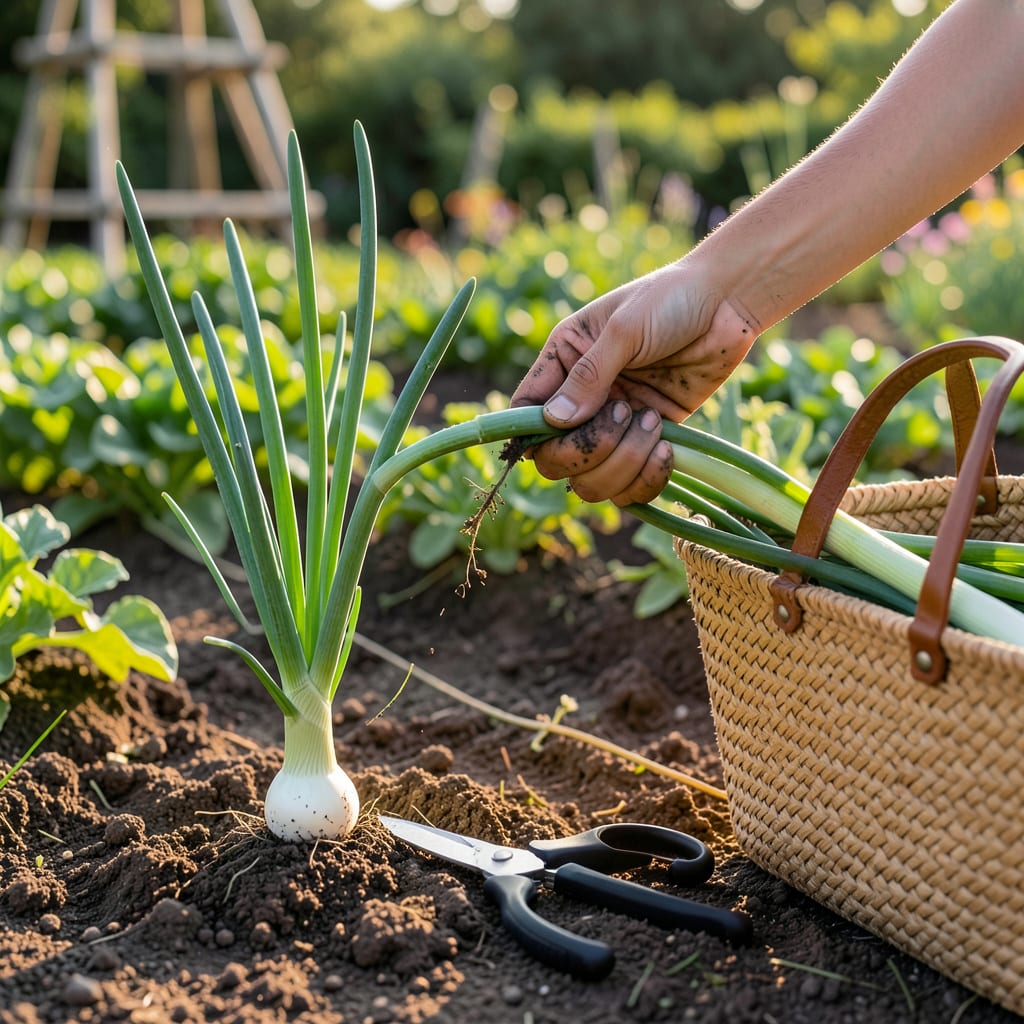
There’s nothing like snipping fresh green onions straight from your garden—crisp, vibrant, and bursting with flavor. But timing is everything. Pull them too soon, and you’ll get thin, mild shoots; wait too long, and they turn tough or bolt into flowers.
I’ve learned the sweet spot lies in watching for two key signs: stems about pencil-thick and leaves reaching 6–8 inches tall. Stick with me, and I’ll show you how to harvest them at their peak—plus how to keep them coming back for months of fresh cuts.


Timing your green onion harvest is all about watching for visual cues and growth milestones. I’ve found that most varieties reach their prime when the tops hit 6–8 inches tall and the stems thicken to pencil width. This usually happens 60–90 days after planting.
Don’t just rely on height—check the color and texture too. Mature green onions have deep green leaves and firm white bases. If the stems still look thin or pale, give them a few more days. The perfect harvest window is short, so I check mine every 2–3 days once they’re close.
| Sign | Not Ready | Ready to Harvest |
|---|---|---|
| Stem Thickness | Thinner than a pencil 🟢 | Pencil-thick or wider 🟡 |
| Leaf Height | Under 6 inches 🌱 | 6–8 inches tall ✅ |
| Base Firmness | Soft or mushy 🤏 | Firm with slight give 👍 |
| Color | Pale green or yellowish 🟢 | Vibrant green tops, white bases 🟡 |
💡 Pro Tip: Harvest in the early morning for the crispest texture and highest sugar content.
If you’re growing from seeds, expect a longer wait—75–90 days is typical. But if you planted sets or transplants, you might harvest in as little as 60 days. I always mark my calendar when I plant so I know when to start checking.
Watch for bolting—when a flower stalk emerges. Once this happens, the stems turn bitter and woody. If you see a thick central stalk forming, harvest immediately, even if they’re slightly smaller. Cool weather helps delay bolting, so spring or fall crops often last longer.
For regrowing green onions, focus on the white bulb area. If it’s 1–2 inches long and firm, your plant has enough energy stored to regrow after cutting. Smaller bulbs mean the plant needs more time to mature before its first harvest.
I like to do the “snap test”: Gently bend a stem near the base. If it snaps cleanly, it’s ready. If it bends without breaking, wait a few more days. This trick works especially well for thicker varieties like ‘Evergreen Hardy White’.
Don’t forget to consider your climate. In warmer zones, green onions mature faster—sometimes in as little as 50 days. Cooler areas may need the full 90 days. Adjust your expectations based on your local last frost date and growing season length.
Once harvested, trim the root ends and store in a glass of water on your countertop for up to a week, or refrigerate in a damp paper towel for 10–14 days. For continuous harvests, leave 1–2 inches of stem above the soil so they can regrow.
If you’re growing bunching onions (like ‘Tokyo Long White’), they’ll regrow 3–4 times from the same plant if harvested correctly. For single-harvest varieties, pull the entire plant once the bulbs reach 1 inch in diameter.
Harvesting green onions the right way means you can enjoy multiple cuts from the same plant. I always use sharp scissors or pruners to make clean cuts—this prevents jagged edges that invite disease. The key is knowing where to cut and how much to leave behind.
For continuous harvests, cut the stems about 1–2 inches above the soil. This leaves enough of the plant intact to regrow. If you pull the entire plant, you’ll get a single harvest—but if you cut carefully, you can get 3–4 harvests from the same bunch.
💡 Pro Tip: Harvest in the early morning when stems are most hydrated and crisp.
If you’re growing bunching onions (like ‘Tokyo Long White’), they’ll regrow faster than standard varieties. For these, I harvest every 2–3 weeks during peak season. Single-harvest types (like ‘White Lisbon’) should be pulled entirely when the bulbs reach 1-inch wide.
Avoid yanking stems—this can damage roots and stunt future growth. Instead, use a gentle twisting motion if you’re pulling the whole plant. For container-grown onions, loosen the soil slightly with a fork first to prevent root breakage.
After harvesting, I always feed my plants with a balanced fertilizer (like 5-5-5) to replenish nutrients. This keeps them productive for multiple harvests. If you notice yellowing leaves, it’s a sign they need more nitrogen or water.
In hot climates, harvest more frequently to prevent bolting. I’ve found that cutting back every 2 weeks keeps plants from flowering prematurely. Cooler weather allows for less frequent harvests—every 3–4 weeks works well in spring/fall.
For indoor-grown green onions, the same rules apply, but growth may be slower. Ensure they get 6–8 hours of light daily (a south-facing window or grow light works). Indoor plants often need more frequent watering since containers dry out faster.
Even experienced gardeners can make mistakes when harvesting green onions. The most common error I see is waiting too long—once those stems turn woody, the flavor becomes bitter and the texture tough. I’ve learned that timing is everything with these quick-growing plants.
Another big mistake is cutting too close to the base. If you trim below 1 inch from the soil, you risk damaging the growth point, which means no regrowth. Always leave that critical 1–2 inch stub to give your plant a fighting chance to bounce back.
💡 Quick Fix: If stems get too thick, peel the outer layer to reveal tender inner shoots.
Many gardeners forget to check soil moisture before harvesting. Dry soil stresses plants, making recovery slower. I always water my green onions a day before harvesting to ensure they’re hydrated and resilient. But avoid waterlogging—soggy roots lead to rot, especially after cutting.
Here’s a mistake I made early on: harvesting all stems at once. Instead, take only 1/3 of the stems from each plant at a time. This keeps the plant productive and reduces shock. For bunching varieties like ‘Tokyo Long White,’ you can harvest every 2–3 weeks if you rotate which stems you cut.
Don’t overlook post-harvest care. After cutting, I give my plants a light fertilizer boost (like fish emulsion) to replenish nutrients. Skip this, and you’ll notice weaker regrowth. Also, remove any yellowing leaves immediately—they sap energy from new growth.
Finally, watch for pests after harvesting. Fresh cuts attract aphids and thrips. I spray my plants with neem oil or insecticidal soap after harvest to protect the new growth. Keep an eye out for whiteflies too—they love stressed onion plants.
Most varieties are ready when they reach 6–8 inches tall. This height ensures the stems have developed enough flavor while staying tender. If they grow taller, check for woodiness at the base.
Cut the tops 1–2 inches above soil to preserve the bulb. This method allows 3–4 regrowth cycles from the same plant. Use sharp scissors for clean cuts.
Overmature stems become woody and bitter, especially if flowering begins. Harvest immediately if you see a central stalk forming. Most varieties peak at 60–90 days after planting.
Container-grown onions follow the same rules: look for pencil-thick stems and vibrant color. They may mature slightly faster due to warmer soil. Check moisture daily—pots dry out quicker.
Yes! Place the white root end in a glass with 1 inch of water. Change water every 2–3 days, and you’ll see new growth in about a week. Keep in bright, indirect light.
