
Beautiful Plants For Your Interior
Beautiful Plants For Your Interior
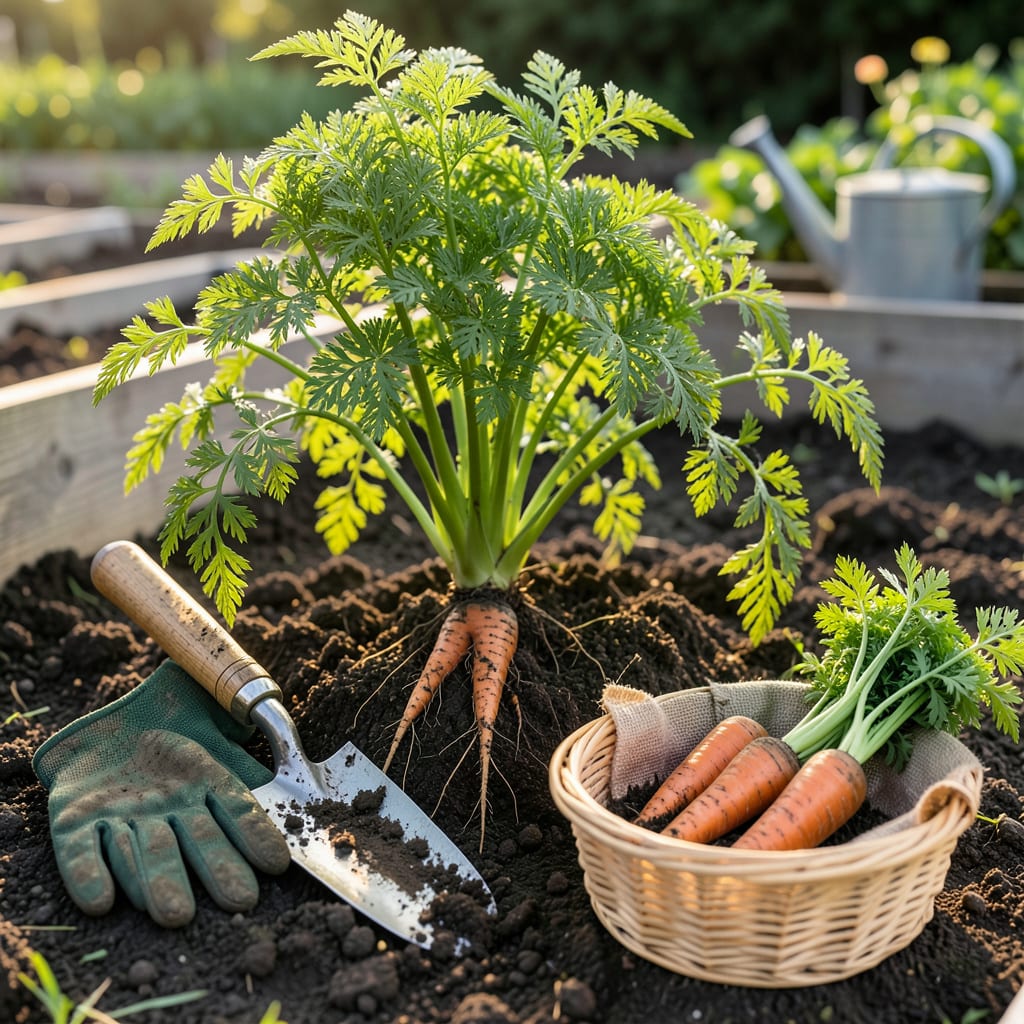
There’s nothing quite like pulling a perfect carrot from the soil—crisp, sweet, and just the right size. But timing that harvest? That’s where many gardeners second-guess themselves. Too soon, and you’ll get thin, flavorless roots; too late, and they turn woody or split.
I’ve learned the hard way that visual cues and a little patience make all the difference. Whether you’re growing in Zone 6a or experimenting with fall plantings, I’ll show you exactly how to tell when your 🥕 are at their peak—no guesswork required. Let’s dig in.


Nothing beats the satisfaction of pulling a perfectly ripe carrot from the soil—crisp, sweet, and bursting with flavor. But timing is tricky! I’ve learned the hard way that waiting too long can turn those beauties into woody disappointments. Let’s break down the visual clues and timing tricks I rely on.
First, forget the calendar—your carrots won’t check it! Instead, focus on root diameter and foliage health. Most varieties are ready when their shoulders (the top of the root) reach ½ to 1 inch wide. Baby carrots can be harvested earlier, while storage types need more time.
| Sign | Ready for Harvest | Needs More Time |
|---|---|---|
| Root Diameter | ½–1 inch ✅ | <¼ inch 🔴 |
| Root Length | 6–8 inches 🟡 | <4 inches ❄️ |
| Foliage Color | Bright green ✂️ | Yellowing 🟢 |
| Days to Harvest | 60–80 days ☀️ | <50 days ⏰ |
*Check variety specifics—some baby carrots mature in 30 days!
Here’s my foolproof trick: Gently brush away soil at the root’s shoulder to check its width. If it’s pencil-thick, it’s go time! For longer varieties like ‘Danvers,’ wait until the roots reach 8 inches. Pro tip: Harvest after a dry spell—wet soil makes pulling harder.
Watch the foliage too! Healthy, vibrant green leaves signal a happy carrot. If tops start yellowing or wilting, your roots might be overmature. I once left mine too long, and they turned bitter and fibrous—lesson learned! For fall carrots, a light frost can actually sweeten them.
Don’t forget the “shoulder test”: If the root’s top pushes slightly above soil, it’s likely ready. For container-grown carrots, check if roots are circling—they’re begging for space! I harvest in stages, pulling the largest first to give others room to grow.
Timing varies by carrot type. Nantes (my favorite!) are ready in 60–70 days, while Chantenay take 70–80 days. Always check your seed packet—it’s your best guide! And remember, morning harvests mean crisper carrots with higher sugar content.
If you’re unsure, do the “thumb test”: Press gently near the root’s top. If it feels firm, it’s ready. Soft or spongy? Give it 5 more days. I’ve found that consistent watering prevents cracking, so keep soil evenly moist until harvest day.
For storage carrots, leave them longer—up to 90 days—but watch for pest damage. Carrot rust flies love overripe roots! If you see tiny holes in foliage, harvest immediately. I lost a whole batch once by waiting too long.
Finally, trust your instincts! If the roots look plump and the tops are lush, it’s time. Grab the foliage near the base, wiggle gently, and pull straight up. Resist the urge to yank—slow and steady wins the race. Now go enjoy that homegrown crunch! 🥕
Timing your carrot harvest isn’t just about size—it’s about working with your local climate and growing season. In cooler zones like USDA 3-5, carrots thrive in late spring or early fall, while warmer zones (USDA 7-10) can grow them year-round with care. The key is watching temperature swings and daylight hours.
For most gardeners, spring-planted carrots are ready in 60–80 days, while fall crops (sown in late summer) often taste sweeter after light frosts. I’ve found that succession planting every 3 weeks extends the harvest window, ensuring fresh carrots for months. Let’s break down the best times by zone.
Spring: Late June–July
Fall: Before hard frost (Oct)
Spring: May–June
Fall: Sept–Nov (after frost)
Winter: Nov–Feb
Spring: Feb–April (avoid summer heat)
Pro Tip: Use row covers in zones 3–6 to extend fall harvests by 2–3 weeks! 🌡️
If you’re in a hot climate (zones 8–10), focus on winter growing—carrots struggle in temperatures above 80°F, turning bitter or bolting. I’ve had success with shade cloth (30–40%) to protect late-spring crops. For cooler zones, mulch heavily in fall to prevent soil freezing.
Watch the weather forecast before harvesting. A light frost (28–32°F) actually sweetens carrots by converting starches to sugars, but a hard freeze (below 25°F) can damage roots. In my garden, I harvest fall carrots after the first frost but before the ground freezes solid.
The time of day matters too! Harvest in the early morning when roots are plump with moisture. Avoid pulling carrots after rain—soggy soil makes them prone to breaking. If your soil is compacted, use a garden fork to loosen the area before gently tugging the greens.
For storage carrots (like ‘Danvers’ or ‘Chantenay’), leave them in the ground until just before a hard freeze, then store in damp sand at 32–40°F. Baby varieties (‘Paris Market’) are best picked young—around 50–60 days—for tender, sweet roots. Always taste-test one before harvesting the whole row! ✂️
Timing your carrot harvest can feel like a guessing game, but picking too soon or waiting too long both come with consequences. Harvest baby carrots before they mature, and you’ll end up with thin, pale roots that lack sweetness. Wait too long, and your carrots may turn woody or bitter—especially in hot weather.
I’ve learned the hard way that overgrown carrots lose their crisp texture and develop a tough core. Meanwhile, underdeveloped roots often snap when pulled, wasting your efforts. The key is finding that sweet spot where the roots are plump but not fibrous.
If you’ve already harvested early carrots, don’t toss them! These smaller roots are perfect for quick pickling or adding to stir-fries where texture isn’t critical. For overgrown carrots, peel the outer layer to remove bitterness, then slice thinly for roasting or soups.
Weather plays a role too. A light frost can actually sweeten carrots by converting starches to sugar, but a hard freeze damages roots. In hot climates, I check my carrots every 2-3 days once they near maturity—heat speeds up growth and bitterness.
Pro tip: If you’re unsure, do a test pull! Gently brush soil from the carrot’s shoulder (where it meets the soil). If the diameter is ½ to 1 inch and the color is deep, it’s go time. Still thin? Give it 3-5 more days and check again.
Remember, succession planting lets you enjoy carrots all season. Sow new seeds every 2-3 weeks for a continuous harvest, and you’ll never face an all-or-nothing dilemma again! 🪴
Gently brush away soil from the carrot’s shoulder (where it meets the stem). If the diameter is ½ to 1 inch and the color is vibrant, it’s ready. For baby varieties, aim for ¼-inch thickness and 4-5 inches in length.
A light frost actually sweetens carrots by converting starches to sugar, making them tastier. However, a hard freeze can damage the roots. In cold climates, harvest before the ground freezes or mulch heavily to extend the season.
Harvest in the early morning when soil is moist but not soggy. This makes pulling easier and reduces stress on the plants. Avoid midday heat, which can cause roots to wilt or become limp.
Yes! Overgrown carrots become woody, bitter, or split. In warm weather, check every 2-3 days once they near maturity. In cooler climates, they’ll hold longer, but flavor declines after 80 days.
Trim the greens to ½ inch to prevent moisture loss, then store unwashed in a perforated bag in the fridge. They’ll stay crisp for 2-3 weeks. For long-term storage, layer in damp sand in a cool, dark place.
