
Beautiful Plants For Your Interior
Beautiful Plants For Your Interior
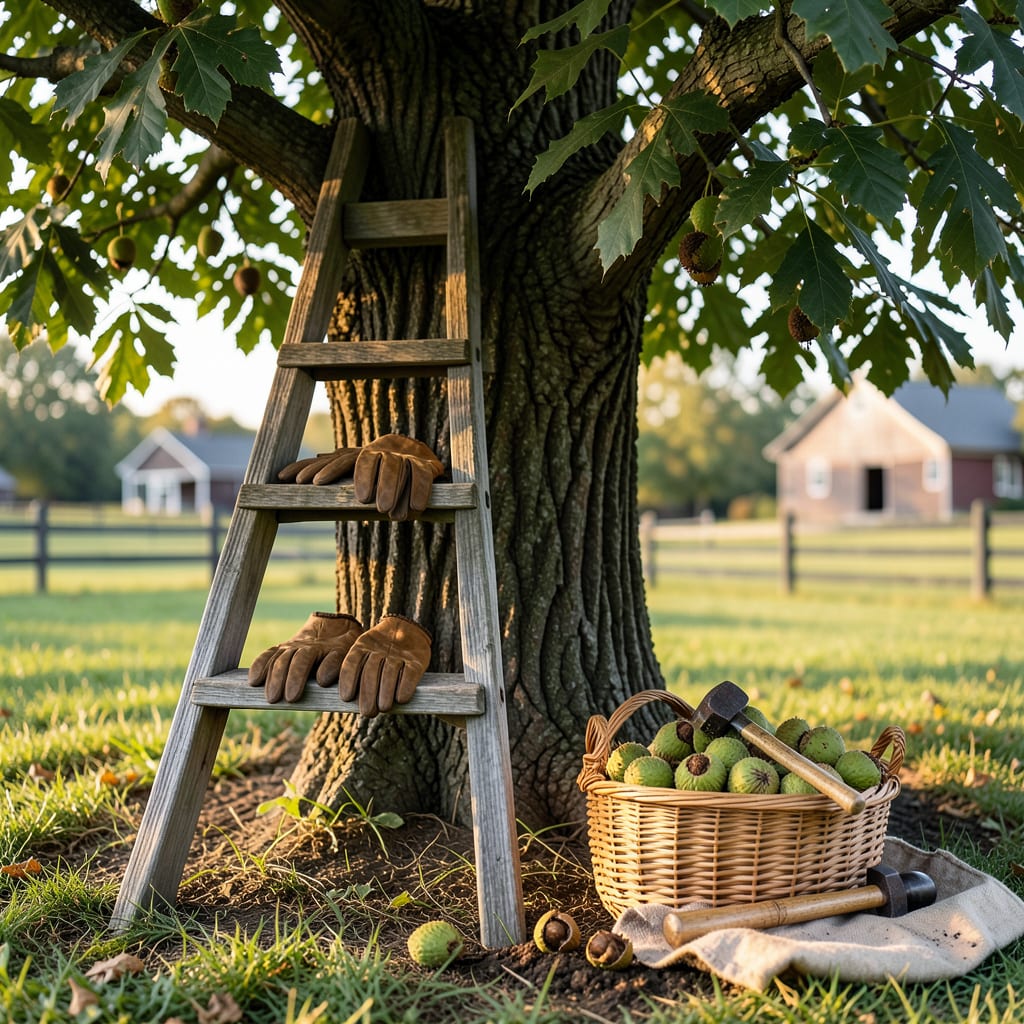
That moment when your black walnuts are perfectly ripe—but miss the window, and you’re left with bitter disappointments. I’ve seen gardeners collect buckets of nuts only to realize too late they picked them weeks too early or after they’d already spoiled on the ground.
Timing isn’t just important—it’s everything with these hard-shelled treasures. Whether you’re harvesting your first crop or refining your technique, I’ll show you the exact signs to watch for and when to act. No more guessing games, just rich, buttery flavor every time.


Nothing beats the satisfaction of harvesting black walnuts at their peak—but timing is tricky. I’ve seen gardeners rush to pick them too early, only to struggle with rock-hard husks and bitter flavors. The secret lies in watching for subtle changes in the hull color and texture.
As summer fades, the green husks begin to yellow and soften. By late September, they’ll turn a dull brownish-black and develop a slightly spongy feel. This is your first clue! But don’t grab them just yet—wait until they start dropping naturally from the tree.
| Sign | What to Look For |
|---|---|
| Hull Color | Shifts from green to yellow-brown |
| Hull Texture | Softens like an overripe banana |
| Natural Drop | Nuts fall without shaking |
| Squish Test | Husk leaves stains on fingers |
Here’s my foolproof squish test: Press the husk gently. If it leaves a dark stain on your fingers, the nut is ready. Unripe husks stay firm and pale. Another telltale sign? The aroma shifts from grassy to earthy and slightly sweet.
Don’t confuse early drops with ripeness! A few nuts may fall in late August due to wind or pests, but these are usually underdeveloped. True ripeness arrives when 70% of the crop starts hitting the ground—typically between late September and mid-October.
Pro tip: Wear heavy-duty gloves when handling black walnuts. The husks contain juglone, a compound that stains skin (and can irritate it). I keep a bucket of soapy water nearby to rinse my hands between batches.
If you’re still unsure, check the nut inside. Crack open a test sample—the kernel should be plump and creamy-white, not shriveled or dark. Overripe nuts develop a rancid smell, while underripe ones taste astringent.
Weather plays a role too. A dry autumn may delay ripening by a week or two, while excessive rain can cause husks to rot prematurely. I’ve found that nuts harvested after the first light frost often have the richest flavor.
Once you’ve confirmed ripeness, act fast! Black walnuts left on damp ground for more than 24 hours risk mold. Gather them daily, especially after storms. Use a nut gatherer or sturdy rake to save your back.
Remember, patience pays off. I once rushed a harvest in early September and ended up with nuts so bitter I fed them to the squirrels. Now I wait for that perfect yellow-brown hue and the telltale thud of nuts hitting the soil. That’s when you know it’s time. 🌰
Black walnuts don’t ripen on a calendar—they follow nature’s schedule, which shifts dramatically across climates. I’ve harvested nuts in early September in Michigan and as late as November in Georgia. Your location dictates everything.
In Northern regions (Zones 4-5), expect ripening between late September and mid-October. The first light frost often triggers the final push. Southern growers (Zones 6-8) get an extended window, with nuts dropping from early October through November.
| Region | Typical Harvest | Climate Impact |
|---|---|---|
| Northeast | Sept 20–Oct 10 | Early frosts speed ripening |
| Midwest | Sept 25–Oct 15 | Dry falls delay harvest |
| South | Oct 10–Nov 5 | Warm falls extend season |
| Pacific NW | Oct 1–Oct 20 | Rain increases mold risk |
Coastal areas with mild autumns often see delayed ripening. I track my harvest by watching the husk color—when 50% turn yellow-brown, I start daily ground checks. Mountain regions may need to adjust for elevation: add 1 week per 1,000 ft.
Rainfall is the wild card. Wet autumns mean husks rot faster, forcing earlier harvests. During dry spells, I’ve successfully left nuts on the tree an extra week for maximum flavor. Always prioritize dry collection days to prevent mold.
Urban heat islands can accelerate ripening by 7-10 days. If you’re gardening near concrete or asphalt, monitor your tree closely. Rural trees often follow the traditional timeline more reliably.
For precise timing, I recommend keeping a harvest journal. Note your first nut drop date each year—you’ll spot patterns after 3-4 seasons. My trees in Zone 6 consistently peak around October 5th, give or take 5 days.
Remember: When in doubt, wait for the drop. Black walnuts won’t ripen further once picked, so patience ensures the sweetest, most flavorful kernels. That first satisfying crunch of a perfectly timed nut makes the wait worthwhile. 🌰
Timing your black walnut harvest wrong can turn a bountiful crop into a frustrating disappointment. I’ve made both mistakes—picking too early leaves you with nuts so hard they’ll crack your teeth, while waiting too long invites mold and rancidity.
The consequences are immediate. Early-harvested nuts have underdeveloped kernels that taste bitter and astringent. Their husks cling stubbornly, making processing a nightmare. I once spent hours trying to remove husks from premature nuts, only to end up with stained hands and wasted effort.
Late-harvested nuts present different challenges. Once black walnuts hit the ground, they become a magnet for squirrels and mold. I lost an entire crop one year by waiting “just a few more days” for the last nuts to drop—only to find them covered in fuzzy gray spores.
The sweet spot lasts about 10-14 days. During this window, nuts develop their signature buttery richness while husks soften enough for easy removal. Miss it, and you’re either fighting with unripe nuts or salvaging spoiled ones. I mark my calendar when the first nuts drop, then plan to harvest within two weeks.
There’s one silver lining: slightly early nuts can be salvaged by drying them longer (4-6 weeks). Late-harvested nuts with minor mold can sometimes be cleaned and dried quickly. But prevention is key—I now do daily ground checks during peak season and process nuts within 24 hours of collection.
Remember, black walnuts won’t ripen off the tree. That perfect harvest window is your one chance to capture their full flavor. When in doubt, test a few nuts first—your taste buds will thank you for the patience. 🌰
Never leave them more than 24 hours, especially after rain. Damp conditions accelerate mold growth. Collect daily during peak season to prevent spoilage and squirrel theft.
Yes! Essential gear includes heavy-duty gloves (juglone stains skin), a nut gatherer, and a 5-gallon bucket. A sturdy rake helps with ground collection. Avoid bare hands—the husks release irritating compounds.
No, black walnuts won’t ripen off the tree. Picking early locks in bitterness. Wait for natural drop or perform the squish test (dark finger stains = ready). Patience ensures maximum flavor development.
First, remove husks and rinse. Then dry in mesh bags (or spread on screens) in a well-ventilated area for 2-3 weeks. Store in airtight containers with desiccant packs to prevent moisture buildup.
Early drops are usually unripe—caused by wind, pests, or drought stress. These nuts have pale husks and bitter kernels. Focus on the main harvest window (late September–October) for quality results.
