
Beautiful Plants For Your Interior
Beautiful Plants For Your Interior
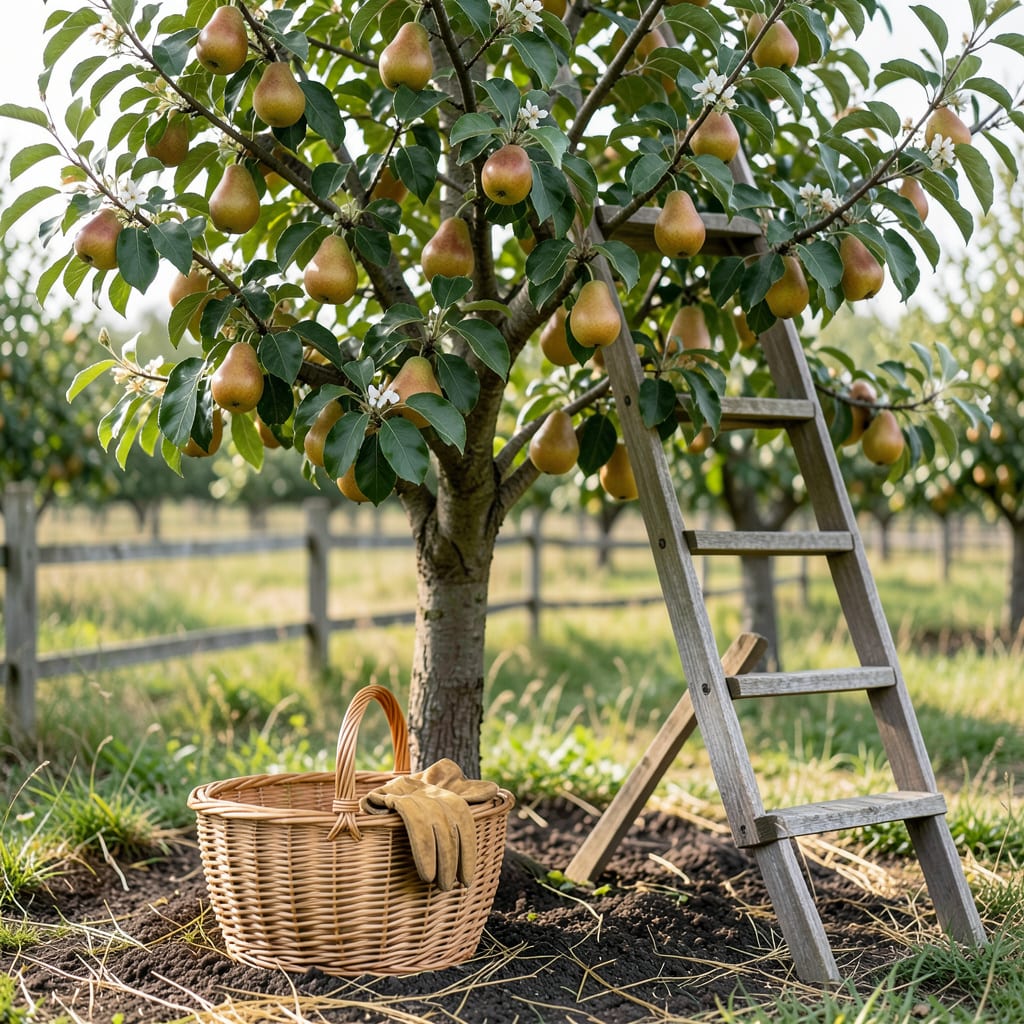
That moment when your 🍐 Asian pears are perfectly ripe—but how do you know it’s time? Miss the window, and you’ll either get rock-hard fruit or mushy disappointments. I’ve been there, staring at my tree wondering if today’s the day.
Here’s the good news: your Asian pears actually tell you when they’re ready. From subtle color shifts to that telltale twist-off ease, I’ll show you the foolproof signs to guarantee sweet, crisp bites every time. No guesswork, just perfect pears.


Your Asian pears won’t fall off the tree when ripe like apples—they need a gentle nudge. The first clue is color change: most varieties shift from bright green to a golden-yellow hue, though some (like Shinseiki) stay green even when ready. Don’t rely on color alone!
Next, give the fruit a gentle squeeze. A ripe Asian pear yields slightly under pressure—think of pressing a firm avocado. If it’s rock-hard, it’s not ready. If it’s soft, you’ve waited too long. The sweet spot is firm but slightly giving, like a tennis ball with a little flex.
Test 2–3 pears per tree—ripeness can vary even on the same branch!
Here’s the twist test I swear by: cup the pear in your palm, tilt it upward, and give it a quarter-turn. If it pops off cleanly, it’s ready. If it resists, leave it for 2–3 more days. Asian pears ripen from the inside out, so this test prevents premature picking.
Don’t ignore the calendar either. Most Asian pears ripen 120–150 days after flowering, typically from late July to early September, depending on your climate. In cooler zones (like USDA 6), add 7–10 days to the estimate. Warm climates (Zone 9+) may see fruit 2 weeks earlier.
Pro tip: Taste-test one! Asian pears ripen on the tree, so if the first sample is sweet and juicy, the rest are likely ready. If it’s starchy or bland, wait a few days. Remember, unlike European pears, they won’t ripen further once picked—so timing is everything.
Watch the weather too. A heavy rain right before harvest can cause fruit to crack or split. If rain’s forecasted, pick pears 1–2 days early and let them finish ripening indoors at room temperature. They’ll still sweeten up nicely.
Lastly, check the seeds. Cut open a test pear—if the seeds are dark brown, it’s ripe. Light-colored seeds mean it needs more time. This is my secret trick for varieties like Hosui, which stay green even when ready to eat.
Once you’ve picked, handle them like eggs—Asian pears bruise easily. Store them in the crisper drawer of your fridge for up to 3 weeks, or enjoy them fresh within a few days for maximum crunch. Now go grab that ladder and get picking!
Still unsure? Snap a photo of your pears and compare it to variety-specific ripeness charts (I love the ones from Dave Wilson Nursery). When in doubt, err on the side of slightly early—you can always let them sit on the counter for a day or two.
Not all Asian pears ripen at the same time—your tree’s variety dictates the harvest window. Early-season types like Shinseiki can be ready by late July, while late-season Ya Li might hang on until mid-September. Knowing your variety is half the battle!
Climate plays a huge role too. In cooler zones (USDA 6-7), add 7-10 days to the estimated ripening time. Warm climates (Zones 8-10) often see fruit 1-2 weeks earlier. Even microclimates matter—a south-facing tree ripens faster than one in partial shade.
Note: Tree age affects timing—young trees (under 5 years) often ripen 1 week later.
Here’s my regional ripening rule: For every 10°F below 70°F in your average summer temp, add 3 days to the harvest estimate. In hotter areas (avg. 85°F+), subtract 2-3 days. This adjustment prevents picking pears that look ready but taste underripe.
Don’t forget tree age! A mature tree (10+ years) often ripens fruit 5-7 days earlier than a young tree. I learned this the hard way when my 3-year-old Hosui tree produced pears that needed an extra week compared to my neighbor’s established tree.
If you’re growing multiple varieties, stagger your checks. Start testing Shinseiki in late July, then move to 20th Century by early August. Keep a harvest journal with dates and weather notes—it’ll help you predict next year’s window with laser precision.
When in doubt, check the seeds. Early-season varieties often have lighter seeds at harvest, while late-season pears (like Ya Li) develop deep brown seeds when fully ripe. This trick saved my harvest last year when unexpected rain made the skin color unreliable.
Remember, Asian pears don’t ripen off the tree like European pears. If you pick too early, they’ll stay starchy no matter how long they sit on your counter. That’s why I always do the twist test on a few pears from different branches—ripeness can vary!
After picking, let pears rest at room temperature for 1-2 days to reach peak sweetness. Then store them in the fridge’s high-humidity drawer (with a damp paper towel) to keep them crisp for up to 3 weeks. Now you’re ready to enjoy that perfect crunch!
Even experienced gardeners can ruin a perfect Asian pear harvest with simple oversights. The biggest mistake? Picking too early. If your pear feels like a baseball when squeezed, it’s still full of starch. Wait for that slight give—it’s the difference between crunchy sweetness and disappointing hardness.
On the flip side, leaving pears too long is just as bad. Overripe Asian pears turn mealier inside and lose their signature crispness. I once waited for my Hosui pears to turn soft like a Bosc pear—big mistake! They ended up grainy and bland instead of juicy and sweet.
Bonus: Always use two hands when picking—one to support the fruit, one to twist. Prevents stem damage!
Weather is another silent harvest killer. A sudden heatwave can speed up ripening by 3-5 days, while cool spells slow it down. I lost half my 20th Century crop one year by sticking to the calendar instead of watching the daily temps. Now I adjust my harvest date based on the 10-day forecast.
Here’s a trick for perfect timing: Start checking pears when one or two fall to the ground naturally. That’s your cue to test the rest. But don’t wait for a windfall—Asian pears rarely drop when ripe. Instead, they’ll just get overripe on the branch, attracting wasps and birds.
Finally, storage matters post-harvest. Never stack pears—they bruise under their own weight. Spread them in a single layer in a cool, dark place for 1-2 days to let sugars develop, then refrigerate. Skip the plastic bags (they trap ethylene and speed decay). A damp paper towel in the crisper drawer keeps them crisp for weeks.
Early-harvested Asian pears stay starchy and hard no matter how long they sit. They lack the signature sweetness and juiciness. Unlike European pears, they won’t ripen further off the tree, so timing is critical.
Check your tree’s tag or purchase records. Common varieties include Shinseiki (early, green), 20th Century (mid-season, yellow), and Hosui (late, honey-sweet). When unsure, snap a photo and compare it to nursery guides.
Avoid harvesting wet pears—they’re prone to splitting and rot. If rain is forecasted, pick fruit 1-2 days early and let them finish ripening indoors. Always handle wet pears gently to prevent bruising.
Sun exposure, branch location, and even individual fruit size affect ripening. Pears on sun-facing branches often mature 2-3 days earlier than shaded ones. Test fruit from different areas of the tree for consistency.
At room temperature, they’ll keep for 3-5 days. For longer storage, refrigerate in the crisper drawer (with a damp paper towel) for up to 3 weeks. Avoid plastic bags—they trap moisture and speed up spoilage.
