
Beautiful Plants For Your Interior
Beautiful Plants For Your Interior
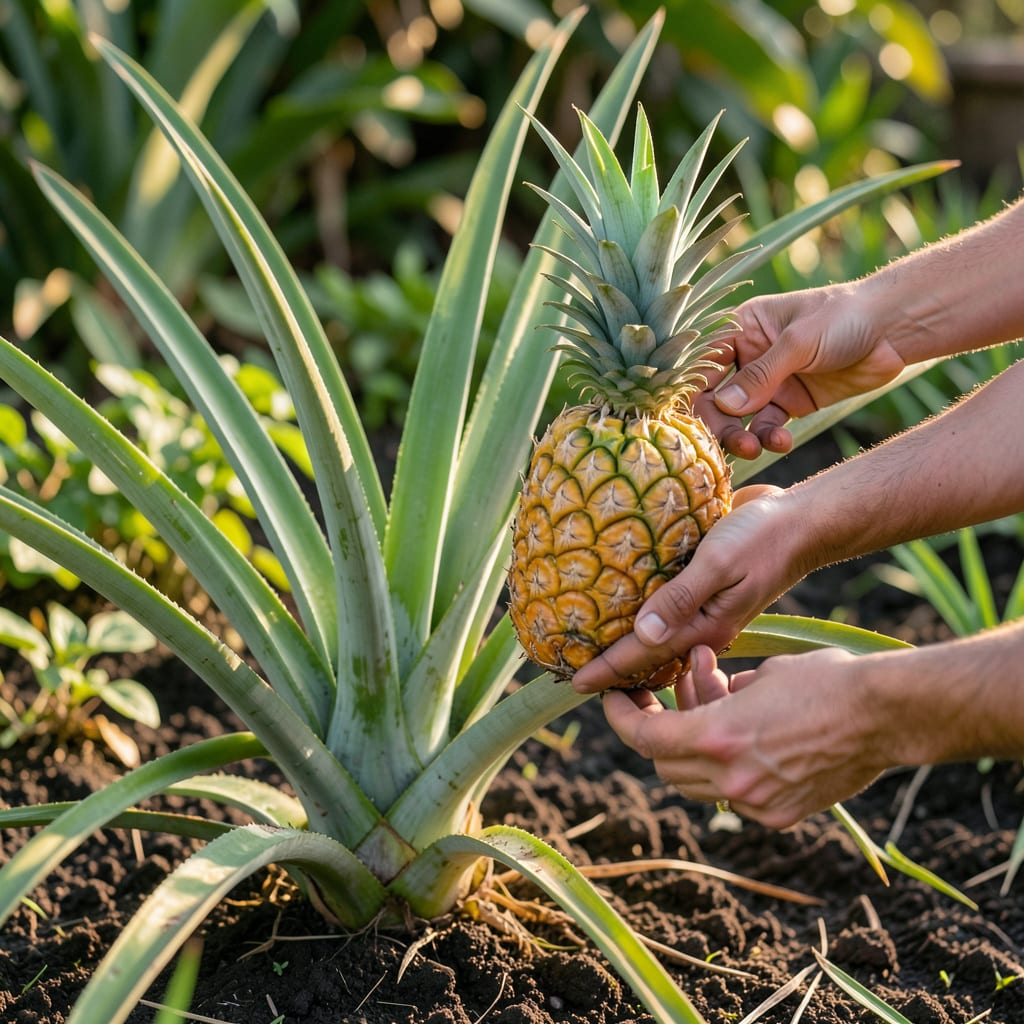
Knowing exactly when to harvest Pineapple 🍍 can mean the difference between a tangy disappointment and a perfectly sweet, juicy reward.
This tropical fruit doesn’t continue ripening after picking, so timing is everything. I’ll show you the key signs to watch for and when to pick for maximum sweetness.


Timing your pineapple harvest perfectly ensures the sweetest flavor. Unlike some fruits, pineapples won’t ripen further after picking, so you’ll need to watch for clear signs.
I look for visual changes like a golden hue at the base and a sweet aroma near the stem. These are your best indicators that the fruit is ready. ✂️
| Sign | Description |
|---|---|
| Golden Base | Color shifts from green to golden-yellow at the base |
| Sweet Scent | Strong tropical aroma at the stem end |
| Leaf Pull Test | Inner leaves pull out easily when tugged gently |
| Slight Softness | Gives slightly when pressed at the base |
The golden base color is the most obvious visual cue. As the pineapple matures, the green skin at the bottom turns rich yellow, signaling sugar development inside.
Next, the sweet scent is unmistakable. A ripe pineapple emits a strong tropical fragrance at its base. If you don’t smell anything, it’s not ready yet. 🌿
For the leaf pull test, grasp an inner leaf near the crown and tug gently. If it comes out easily, your pineapple is likely ripe. This works because the fruit softens as it matures.
The slight softness test is another reliable method. Press the base of the fruit with your thumb. A slight give indicates ripeness, while a hard base means it needs more time.
Avoid relying on the crown leaves alone, as they may wilt slightly but aren’t the best indicator. Instead, focus on the base color and smell for the most accurate assessment.
If your pineapple has a fermented smell, it’s overripe. Harvest immediately to prevent spoilage. The window between perfect ripeness and overripeness can be just a few days. ⏰
Remember, pineapples typically take 18-24 months to mature after planting. Patience is key, but watching for these signs will ensure you pick at the peak of sweetness. 🌱
Even experienced gardeners can misjudge pineapple ripeness. I’ve seen premature harvesting ruin a whole season’s work because the fruit was still green at the base with no sweet scent.
Another common error is waiting too long. If your pineapple develops a fermented smell, it’s past its prime and may be unusable. The ideal window is narrow—just a few days. 🌿
⚠️ Warning: Harvesting too early results in sour fruit, while waiting too long leads to overripe pineapples with a fermented odor. Always check the base color and aroma before cutting.
The improper cutting technique is another pitfall. Never yank the fruit off—this can damage the plant and reduce future yields. Instead, use a sharp knife to cut the fruit cleanly at the base.
Ignoring the leaf pull test can also lead to mistakes. If the inner leaves don’t come out easily, the pineapple isn’t ready, no matter how yellow it looks. This test is more reliable than color alone. ✂️
Harvesting during midday heat can stress the plant. Early morning is ideal when sugar content is highest. Avoid the hottest part of the day to keep both you and the plant comfortable.
Finally, don’t forget to inspect the fruit thoroughly. Look for uniform color changes and smell the base. If anything seems off, give it another day or two. Patience pays off with pineapples. 🌱
Timing your pineapple harvest for the sweetest flavor means paying attention to the clock. I always aim for early morning when sugar levels peak in the fruit.
This is when the plant’s natural sugars are most concentrated after a night of rest. Avoid midday heat, which can stress both you and the plant. 🌿
I recommend using a sharp, clean knife to cut the fruit at its base. This ensures a clean removal without harming the mother plant, which can produce more fruit. ✂️
Before cutting, always double-check the ripeness signs. The base should be golden-yellow, and you should smell that tropical sweetness at the stem end.
If you harvest during peak heat, the fruit may lose some of its sweetness. Early morning also makes the task more comfortable for you, especially in tropical climates. ☀️
A fermented smell at the base means it’s past its prime. Harvest immediately to prevent spoilage, as the window between perfect and overripe is just a few days.
Avoid midday heat, as it stresses the plant and reduces sugar content. Early morning (6-9 AM) is ideal for the sweetest fruit.
Gently tug an inner leaf near the crown. If it pulls out easily, your pineapple is ripe. This test is more reliable than color alone.
Pineapples typically mature in 18-24 months. Patience is key, but watching for golden base color and sweet scent ensures peak sweetness.
