
Beautiful Plants For Your Interior
Beautiful Plants For Your Interior
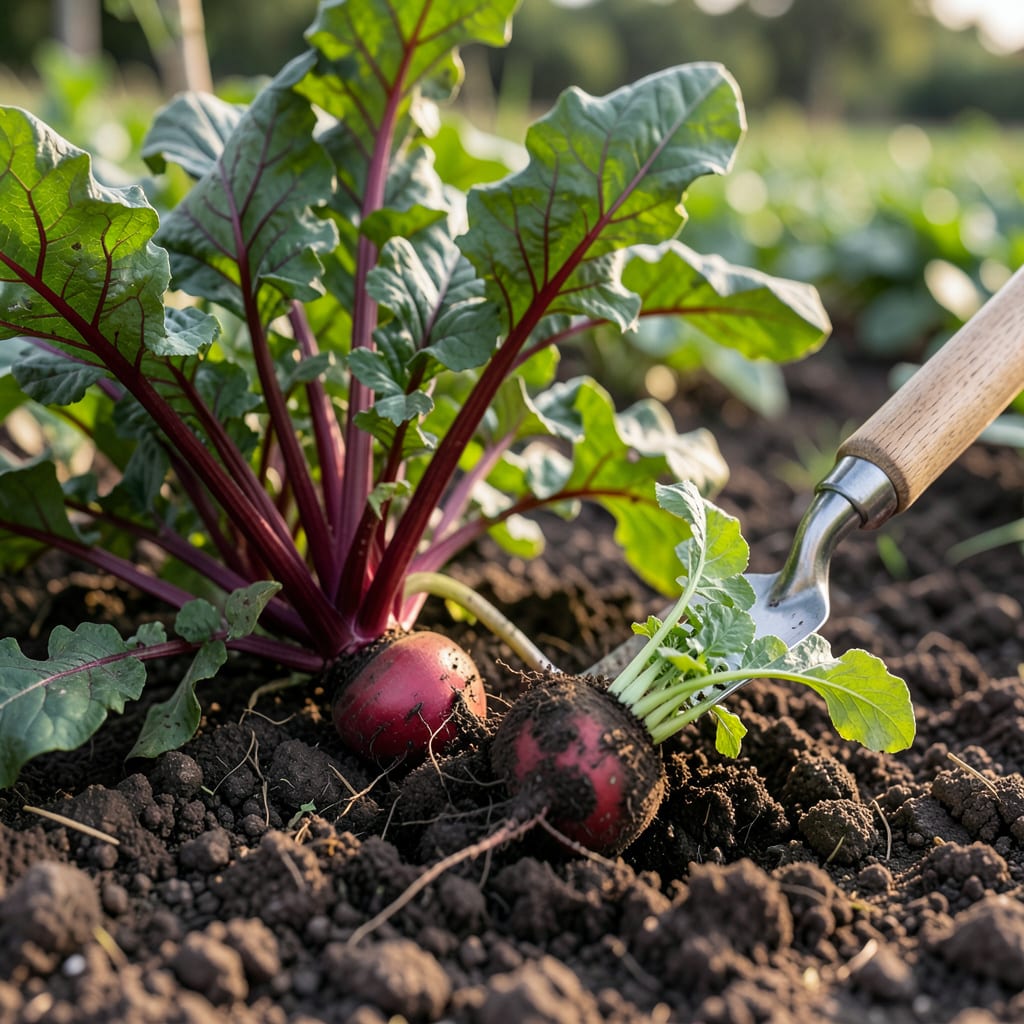
Nothing beats the satisfaction of pulling a perfect 🟣 Beet from your garden at just the right moment. But how do you know when that moment is?
I’ll show you the simple signs to look for—from size to color—that guarantee your Beets will be sweet, tender, and ready to enjoy. Let’s discover the secrets together.


I always check for shoulder protrusion above the soil first. When the top of the beet root starts peeking out, it’s a clear sign it’s nearing maturity. This usually happens at 1-3 inches in diameter.
The root diameter is the most reliable indicator. I measure mine with a ruler—anything between 1 to 3 inches is perfect for peak flavor and tenderness.
The foliage also tells a story. I look for lush, healthy greens about 6 inches tall. If the leaves are vibrant, the roots are likely ready below.
Another key sign is the skin texture. I gently brush away soil to check—firm and smooth means it’s harvest time, while soft or spongy skin signals it needs more time.
I’ve learned that color deepening matters too. Most beets turn a rich, deep red or purple when mature, though golden varieties will brighten. The color should be uniform and vivid.
For early varieties, I start checking at 50 days after planting. Main-season beets often need 60-70 days. I mark my calendar to avoid missing the window.
If I’m unsure, I do a test pull. I’ll harvest one beet to check its size and texture. If it’s under 1 inch, I wait. If it’s over 3 inches, it might be getting tough.
I avoid waiting too long, as oversized beets can become woody and bitter. The sweet spot is truly 1-3 inches for the best texture and flavor.
Finally, I consider the season. In spring, I harvest before hot weather sets in. For fall crops, I aim to pull them before the first frost for the best results.☀️
I always start by loosening the soil around my beets with a hand fork. This prevents root breakage and makes pulling easier. I work carefully to avoid piercing the beet roots themselves.
Next, I grip the foliage firmly near the base and pull gently. If the beet resists, I use my other hand to wiggle it free. Stubborn roots may need a little extra persuasion with a trowel.
For staged harvesting, I pull every other beet first. This gives the remaining ones more space to grow larger. I find this method works well for successive harvests over several weeks.
I avoid harvesting when the soil is bone dry or waterlogged. The best time is after a light watering, when the soil is moist but not soggy. This helps the roots slip out more easily.
If I’m harvesting baby beets, I look for roots about 1 inch in diameter. These are perfect for tender, sweet eating. I use the same gentle technique to avoid damaging the young plants.
After pulling, I shake off excess soil and check for damage. I trim the foliage to 1 inch above the root to prevent bleeding. This helps the beets stay fresh longer in storage.☀️
I’ve learned the hard way that timing is everything with beets. Harvest too early, and you’ll get underdeveloped roots with weak flavor. These small beets often lack the sweetness and texture we love.
Wait too long, and your beets can become woody and tough. I’ve pulled beets left in the ground past 3 inches only to find them bitter and stringy. The texture suffers most of all.
If I harvest too early, I sometimes leave the rest to mature. But if I’ve waited too long, I use them quickly in dishes where texture matters less. Overgrown beets don’t store well either.
I’ve found that splitting is another issue with late harvesting. When beets grow too large, they can crack open, which invites pests and reduces their storage potential significantly.
To salvage less-than-perfect harvests, I focus on younger plants for early picks and immediate use for overmature ones. Proper timing ensures the best flavor and texture every time.🌱
Harvest when roots reach 1-3 inches in diameter. This size ensures peak sweetness and tender texture. Larger beets may turn woody.
Leave them in the ground a bit longer. Small roots lack full flavor and texture. Check again in 5-7 days for growth progress.
Yes, overmature beets become tough and bitter. They may also split, reducing storage life. Aim to harvest within the 60-70 day window.
No, try staged harvesting—pull every other beet first. This gives remaining roots more space to grow and extends your harvest window.
