
Beautiful Plants For Your Interior
Beautiful Plants For Your Interior
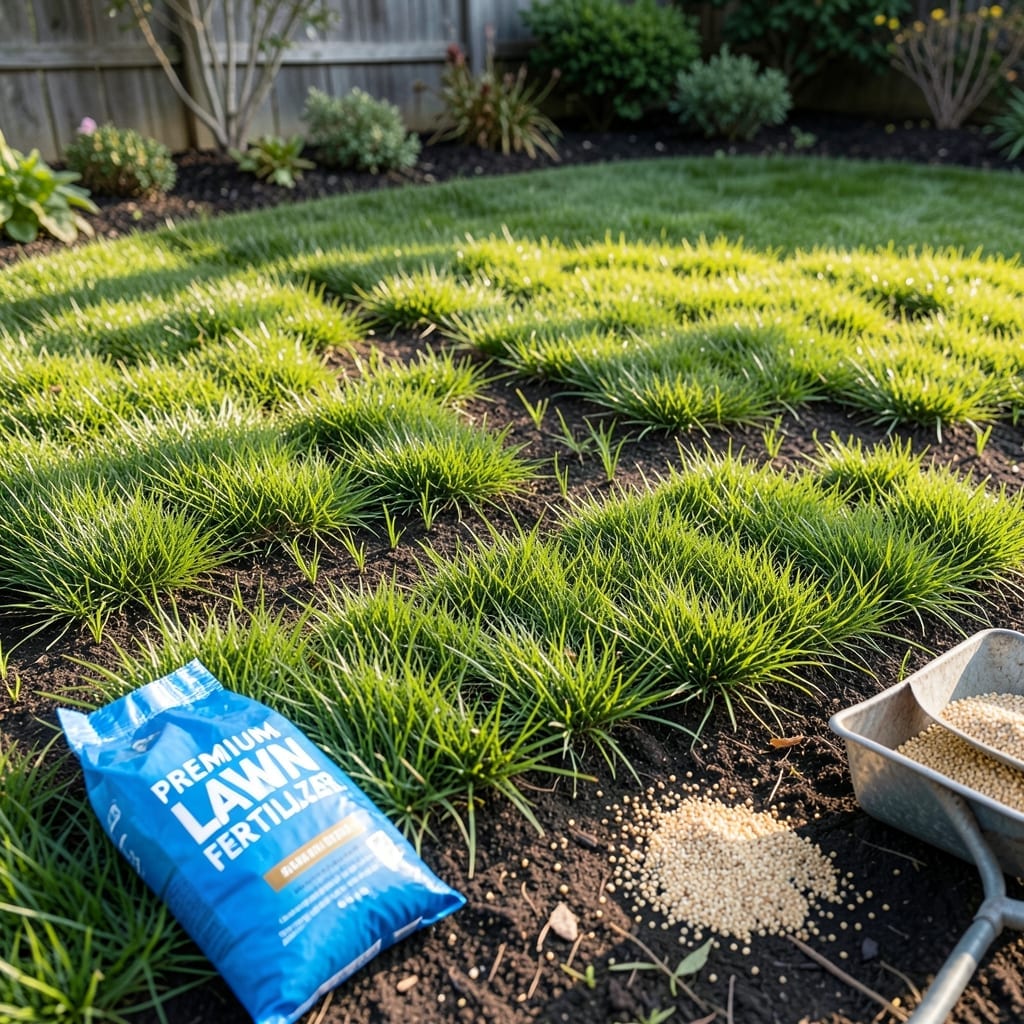
Fertilize your overseeded lawn 4-6 weeks after seeding, when new grass reaches 2-3 inches tall. Use a starter fertilizer high in phosphorus to support root growth without harming young seedlings.
I always wait until the new blades are sturdy enough to handle nutrients, as early feeding can shock the tender shoots. Phosphorus-heavy formulas are ideal because they encourage deep root systems, while nitrogen can wait until the grass is more established. This approach gives your lawn the strongest possible start. ⚡
💡 In This Article
Young grass seedlings have delicate root systems that can’t process nutrients effectively. The first 4-6 weeks are critical for root establishment, and introducing fertilizer too soon overloads the tender shoots with salts. This osmotic stress draws moisture out of the plants, causing the dreaded “fertilizer burn” that turns new grass brown overnight.
Phosphorus is the MVP here because it stimulates root growth at a cellular level. In the soil, phosphorus helps form ATP—the energy currency that fuels root development. Without it, seedlings grow slowly with shallow roots. Soil temps above 55°F help phosphorus become more available to plants, which is why fall overseeding often works so well.
Nitrogen, while important for blade growth, can actually hinder root development if applied too early. It forces the plant to prioritize top growth over root establishment. I’ve seen lawns where early nitrogen applications created lush green blades on top of weak, undeveloped root systems that couldn’t survive the first dry spell.
Consider your grass type too. Cool-season grasses like Kentucky bluegrass need this timing most, as their roots grow aggressively in fall and spring. Warm-season grasses like Bermuda can handle slightly earlier feeding, but still benefit from waiting until they’ve established. ✨
The 2-3 inch height rule isn’t arbitrary—it indicates the plant has developed enough leaf surface to begin photosynthesizing efficiently. At this stage, the roots have typically grown 1-2 inches deep, creating that crucial nutrient-absorbing network needed to process fertilizer without damage.
Fertilizing before roots establish can burn seedlings due to salt content. The tender shoots can’t process nutrients, leading to brown patches or stunted growth. Wait until grass is 2-3 inches tall.
Water lightly before applying to prevent burning, then water thoroughly afterward. This helps nutrients soak into the soil and reach the roots effectively. Aim for 1/2 inch of water post-application.
Regular lawn food often has too much nitrogen, which can harm new grass. Starter fertilizers have higher phosphorus (middle NPK number) to support root growth. Stick with starter until after the first mowing.
Wait 24-48 hours after fertilizing to allow full nutrient absorption. Mowing too soon can remove fertilizer particles from the blades. Ensure grass is dry before mowing to avoid clumping.