
Beautiful Plants For Your Interior
Beautiful Plants For Your Interior
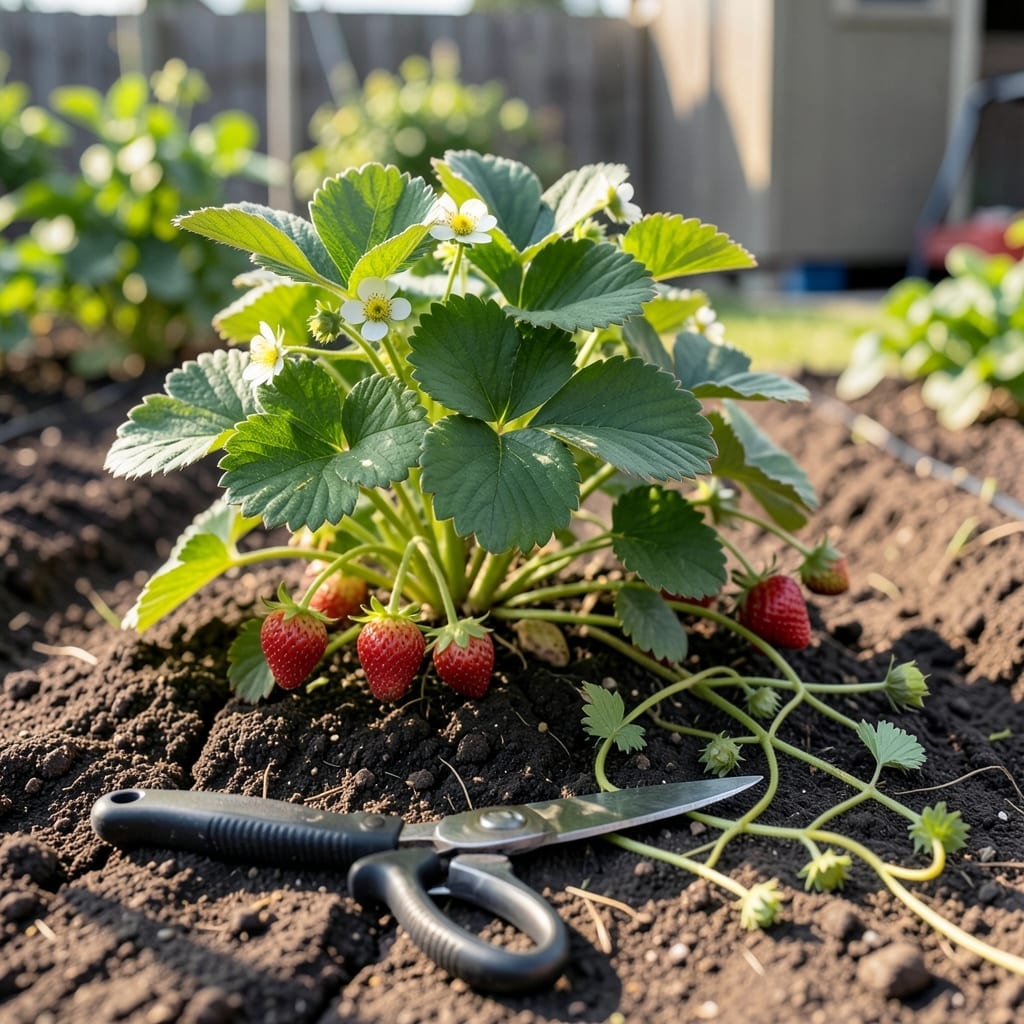
Strawberry runners can crowd your garden and weaken plant health, but cutting them at the right time boosts fruit production. 🍓 The key is knowing when to act for the best results.
I’ve learned that timing makes all the difference with Strawberry plants. Cut too early or late, and you might harm next season’s harvest. Let me show you when to make the cut.
You’ll discover the optimal window to prune runners and why it matters for stronger plants. This simple step can transform your garden’s productivity.
Timing your strawberry runner pruning right ensures bigger harvests next season. I always watch for growth stage cues rather than just calendar dates.
For June-bearing strawberries, the best window is right after harvest season ends, usually in early summer. This gives plants time to recover.
| Strawberry Type | Pruning Window | Key Indicator |
|---|---|---|
| June-bearing | Early summer | After fruit harvest |
| Everbearing | Late summer | After second fruiting |
| Day-neutral | Midsummer | When runners slow |
Everbearing varieties need a different approach. I wait until late summer after their second fruiting cycle completes. This timing prevents stress during active production.
For day-neutral strawberries, which produce continuously, midsummer pruning works best. I look for when runner production slows naturally as a sign it’s safe to cut.
Climate plays a role too. In cooler zones, I prune 2-3 weeks earlier than in warmer areas. Watch for first frost dates to guide your timing.
The plant’s energy is key. Never prune while berries are forming or during extreme heat. Stress can reduce next year’s yield significantly.
I always check for new growth at the base. If you see healthy leaves emerging, it’s a good sign your plants are ready for pruning.
Remember that young plants in their first year should keep some runners to establish themselves. Only mature plants benefit from full runner removal.
After cutting, I give my strawberries a light fertilizer boost to support recovery. This helps them redirect energy to root development before winter.
With proper timing, you’ll see stronger plants and more abundant fruit the following season ✂️
Removing strawberry runners correctly prevents plant stress and encourages healthier growth. I always start with the right tools to make clean cuts.
A sharp pair of pruning shears or scissors works best. Sanitize them first to avoid spreading disease between plants.
I cut 1-2 inches from the mother plant to ensure no damage. Never pull runners, as this can tear plant roots.
For mature strawberries, I remove all runners to direct energy to fruit production. Young plants benefit from keeping a few for new growth.
After cutting, I water my plants deeply to reduce stress. A light mulch helps retain moisture and protect the soil.
Monitor your plants for new growth in the following weeks. Healthy leaves indicate your strawberries are recovering well from pruning ✂️