
Beautiful Plants For Your Interior
Beautiful Plants For Your Interior
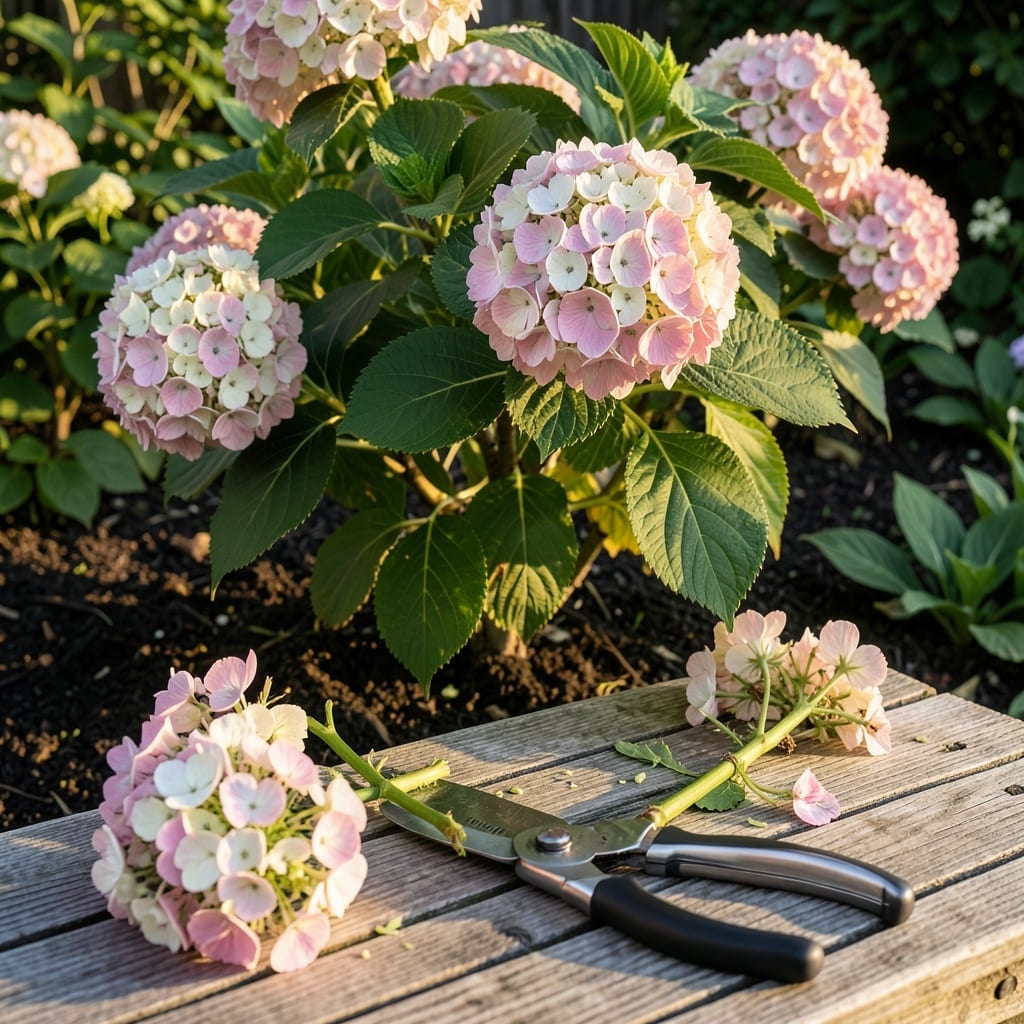
Timing is everything when it comes to cutting 🌸 Hydrangea flowers—do it right, and you’ll enjoy bigger, longer-lasting blooms next season.
Do it wrong, and you might accidentally prune away next year’s flowers. I’ve seen gardeners make this mistake, and it’s heartbreaking to miss out on those gorgeous summer displays.
Let me show you exactly when and how to prune for the best results, so your Hydrangeas thrive year after year.
I’ve learned that pruning hydrangeas at the right time makes all the difference. The timing depends on the variety, as each has a unique blooming cycle. Cutting at the wrong time can remove flower buds for next year.
Understanding whether your hydrangea blooms on old wood or new wood is key. This determines if you should prune in late summer or early spring for the best results.
| Variety | Blooms On | Pruning Time |
|---|---|---|
| Bigleaf | Old wood | After flowering |
| Panicle | New wood | Early spring |
| Oakleaf | Old wood | After flowering |
| Smooth | New wood | Late winter |
For bigleaf hydrangeas, which include popular varieties like mophead and lacecap, pruning should happen immediately after the flowers fade in summer. These bloom on old wood, so cutting later risks removing next year’s buds.
Panicle hydrangeas, like the Limelight or Vanilla Strawberry types, bloom on new wood. This means you can prune them in early spring before new growth starts, giving them plenty of time to develop flowers.
Oakleaf hydrangeas also bloom on old wood, so they follow the same pruning schedule as bigleaf varieties. I recommend pruning these in late summer after their flowers have finished. This ensures you don’t cut off next year’s blooms.
Smooth hydrangeas, such as Annabelle, bloom on new wood. These can be pruned in late winter or early spring. This timing allows the plant to focus its energy on producing larger, more vibrant flowers.
Always use sharp pruning shears to make clean cuts. I’ve found that cutting at a 45-degree angle helps prevent water from pooling on the cut surface, which can lead to disease.
If you’re unsure about your hydrangea variety, observe when it blooms. If it flowers in early summer, it’s likely an old wood variety. If it blooms later in the season, it’s probably a new wood type. This simple observation can guide your pruning schedule.
Remember, the goal is to encourage healthy growth and abundant blooms. By pruning at the right time for your specific variety, you’ll enjoy a garden full of vibrant hydrangea flowers every year.
✂️I’ve seen even experienced gardeners make costly pruning mistakes with hydrangeas. The most common error is cutting at the wrong time of year, which can eliminate next season’s blooms entirely.
Another frequent issue is over-pruning, where too much of the plant is removed. This can stress the hydrangea and reduce its ability to produce flowers.
⚠️ Avoid These Pruning Pitfalls
Cutting old wood hydrangeas in spring removes flower buds. Always prune bigleaf and oakleaf varieties after they bloom.
Using dull pruning shears can crush stems, leading to disease. Sharpen blades before each use.
Pruning too late in the season may not give new growth enough time to harden before winter.
Using dull tools is another mistake that can damage your hydrangeas. Jagged cuts invite disease and slow healing. I always keep my pruning shears sharp for clean, precise cuts.
Some gardeners also prune too aggressively, removing more than 1/3 of the plant at once. This can weaken the shrub and reduce flowering. Stick to light, strategic cuts.
For panicle hydrangeas, pruning in fall can leave new growth vulnerable to winter damage. It’s better to wait until early spring for these varieties.
Finally, neglecting to clean your tools between cuts can spread diseases. I wipe my shears with rubbing alcohol to keep them sterile between plants.
✂️