
Beautiful Plants For Your Interior
Beautiful Plants For Your Interior
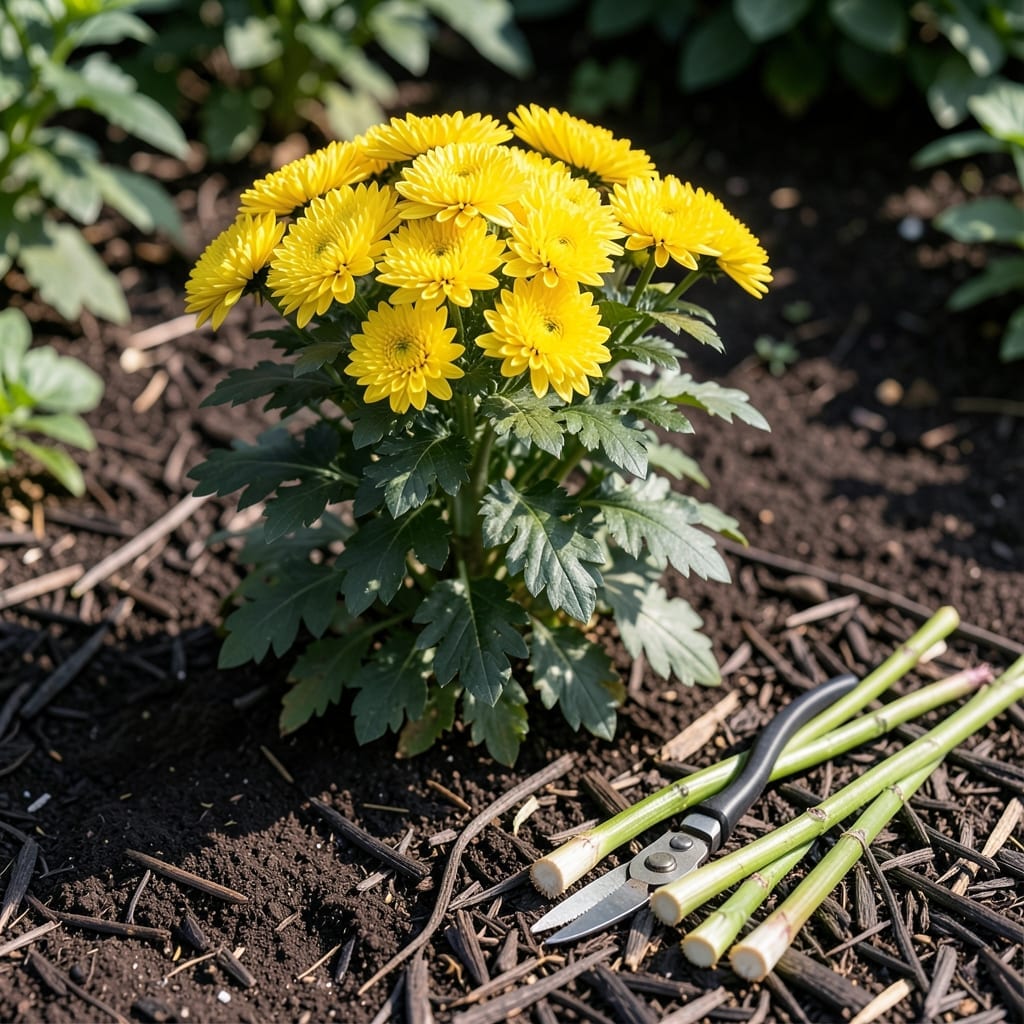
Cutting back mums at the right time is the key to vibrant blooms next season, but doing it too early or too late can spell disaster for your 🌼 Chrysanthemum.
I learned this the hard way after losing a few plants to poorly timed pruning. The difference between thriving and struggling often comes down to just a few weeks.
Discover when and how to prune your mums for winter to protect them from frost and ensure healthier spring growth.
I’ve found that the perfect window for cutting back mums is after the first hard frost but before winter sets in. This is typically late fall or early winter in most regions.
For USDA zones 5-9, this usually means November, but I always check the local weather forecast to confirm the first frost date.
| Stage | Action |
|---|---|
| Before First Frost | Avoid pruning; plants still active |
| After First Hard Frost | Cut back to 6 inches from ground |
| Early Winter | Mulch base for frost protection |
| Late Winter | Remove old mulch; check for new growth |
The first hard frost is my cue because it signals the plant to enter dormancy. I look for brown, wilted foliage as a sign that it’s time to prune.
In warmer climates like zone 9, I might wait until December since frost comes later. In colder zones like 5, I aim for late October or early November.
I always use sharp pruners to make clean cuts at a 45-degree angle. This prevents tearing the stems, which can invite disease.
After pruning, I add a 2-3 inch layer of mulch around the base. This protects the roots from freeze-thaw cycles that can heave plants out of the soil.
If you’re in a region with mild winters, you might skip mulching, but I recommend it for consistent protection.
I’ve noticed that mums pruned too early often produce weak new growth that gets damaged by frost. Waiting until dormancy ensures the plant’s energy is stored in the roots.
Finally, I mark my calendar to remove mulch in early spring when new shoots appear. This prevents rot and gives the plant room to grow.
Timing your pruning right means healthier plants and bigger blooms next season ✂️
I always start by gathering the right tools: sharp bypass pruners, gardening gloves, and a clean tarp to collect debris. Dull tools can crush stems, so I sharpen mine before each use.
First, I inspect the chrysanthemum for signs of dormancy. When the foliage turns brown and the first hard frost has passed, I know it’s time to begin.
I make each cut just above a leaf node at a 45-degree angle to prevent water pooling. This technique helps the plant heal faster and reduces the risk of disease.
After pruning, I clear all the plant debris from the garden bed. Leaving old foliage can harbor pests and diseases over winter, which I want to avoid.
Next, I apply a 2-3 inch layer of organic mulch, like straw or shredded leaves. This insulates the roots and prevents soil heaving during freeze-thaw cycles.
Finally, I water the plants lightly after pruning. This helps settle the soil and ensures the roots have moisture before the ground freezes. Proper care now means vibrant blooms next fall ✂️