
Beautiful Plants For Your Interior
Beautiful Plants For Your Interior
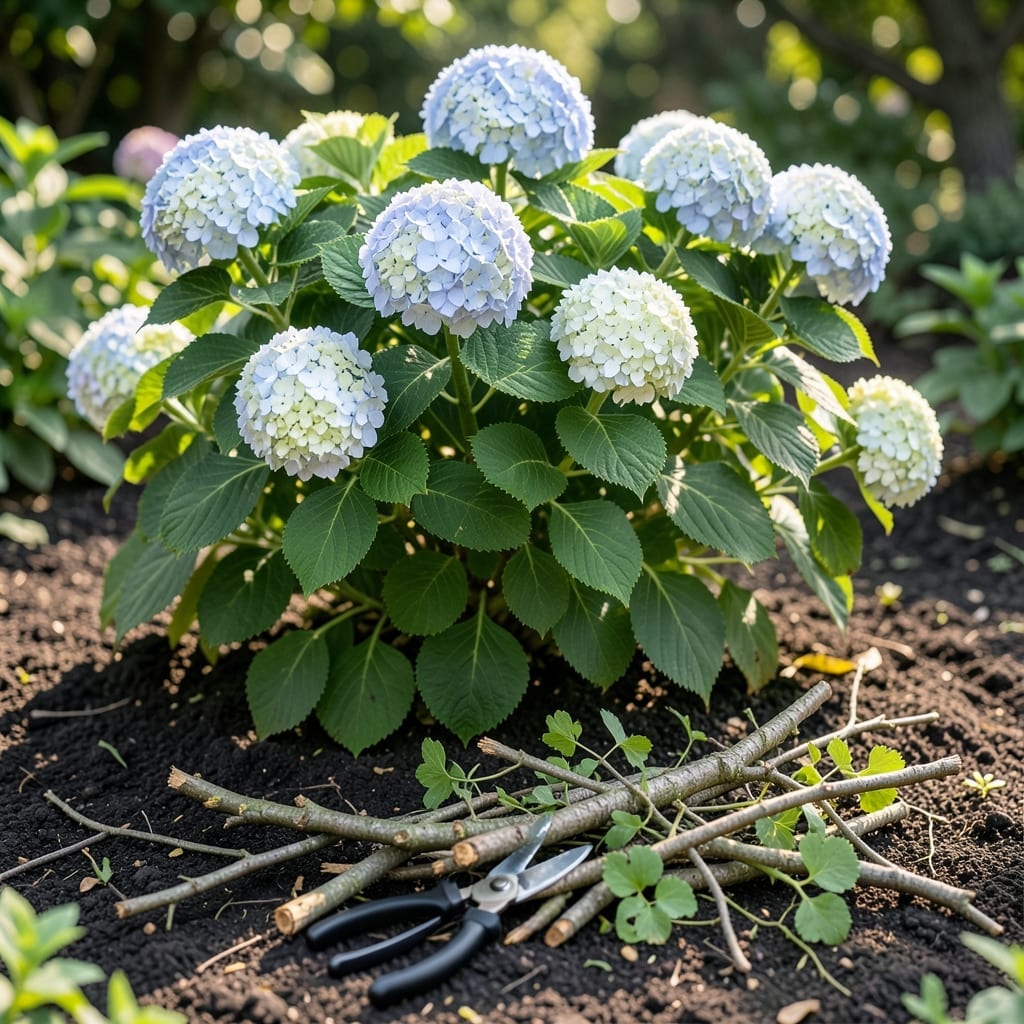
Pruning your 🌸 Hydrangea at the wrong time can cost you a whole season of blooms. I’ve seen too many gardeners make this mistake, only to wonder why their shrubs stayed bare when they should be bursting with color.
Timing is the key to keeping your Hydrangea healthy and vibrant. Whether you’re new to gardening or have years of experience, knowing when to cut back makes all the difference.
Discover the best seasonal windows for pruning and how to do it right. Your Hydrangea will thank you with bigger, more beautiful flowers next year.
Timing your hydrangea pruning correctly starts with knowing your shrub’s bloom type. I’ve learned that old-wood and new-wood varieties have completely different pruning schedules.
Old-wood bloomers like Bigleaf and Oakleaf hydrangeas set their flower buds on last year’s growth. Pruning these at the wrong time can remove potential blooms for the entire season.☀️
| Variety | Bloom Type | Pruning Time |
|---|---|---|
| Bigleaf | Old Wood | After blooming |
| Oakleaf | Old Wood | After blooming |
| Panicle | New Wood | Late winter |
| Smooth | New Wood | Late winter |
Bigleaf hydrangeas (Hydrangea macrophylla) should only be pruned immediately after flowering, typically in late summer. This gives the plant time to set buds for next year’s display.✂️
Oakleaf hydrangeas (Hydrangea quercifolia) follow the same rule as Bigleaf. Their distinctive foliage and cone-shaped flowers appear on old wood, so post-bloom pruning is essential.
For new-wood bloomers like Panicle (Hydrangea paniculata) and Smooth (Hydrangea arborescens), the timing changes. These varieties produce flowers on current season’s growth, so you can prune in late winter or early spring.
I always recommend pruning Panicle hydrangeas in February or March, before new growth begins. This encourages strong stems and larger flower heads come summer.
Smooth hydrangeas, like the popular ‘Annabelle’, can be cut back hard in late winter. They respond well to heavy pruning, often producing bigger blooms on the new growth.🌿
If you’re unsure about your hydrangea type, observe its blooming pattern. Old-wood varieties often start flowering in early summer, while new-wood types bloom later in the season.
Remember, even with the right timing, proper technique matters. Always use clean, sharp pruners and make cuts just above a bud or branch junction to promote healthy regrowth.
Pruning hydrangeas properly ensures healthy growth and abundant blooms. I always start by identifying which stems need cutting and which should stay. This prevents accidental removal of flower buds.✂️
First, examine your hydrangea for dead or damaged wood. These stems won’t produce blooms and can be removed at any time. Next, look for weak or crossing branches that may hinder growth.
For old-wood hydrangeas, I focus on removing only the oldest canes after they’ve bloomed. This encourages new growth while preserving next year’s flowers. Never prune these in spring or fall.🌿
With new-wood varieties, I prune more aggressively in late winter. Cutting back by one-third helps maintain shape and promotes larger blooms. These hydrangeas are more forgiving of mistakes.
Always use bypass pruners rather than anvil types. They make cleaner cuts that heal faster. I also keep a small saw handy for thicker stems that pruners can’t handle.
After pruning, I apply a layer of mulch around the base to retain moisture. This helps the plant recover and reduces stress during the growing season.☀️