
Beautiful Plants For Your Interior
Beautiful Plants For Your Interior
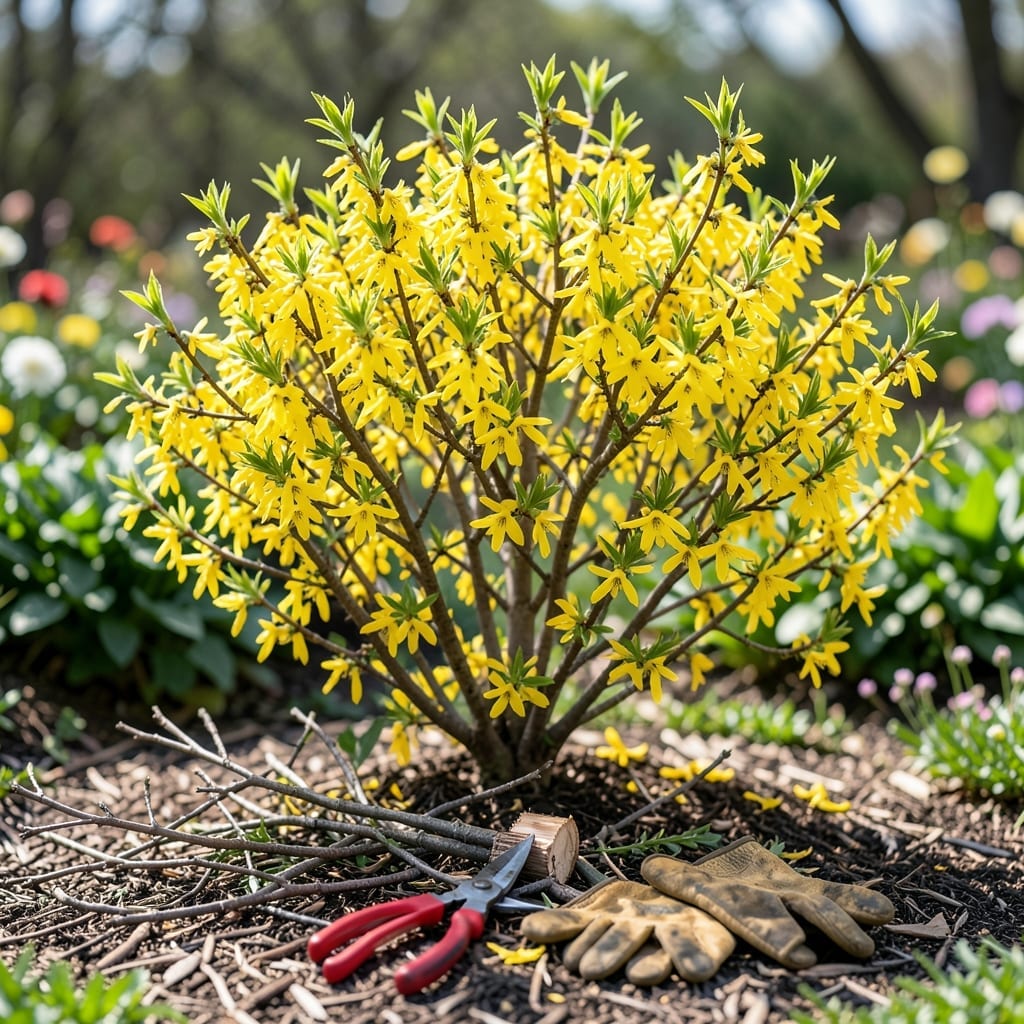
Timing your Forsythia pruning perfectly can mean the difference between a lackluster shrub and a burst of golden blooms. Cut too early or too late, and you risk sacrificing next year’s flowers entirely.
The 🌸 Forsythia sets its buds in the fall, so pruning at the wrong time can leave you with bare branches when spring arrives. I’ve seen it happen more times than I can count.
Discover the best approach to keep your shrub healthy and blooming vibrantly year after year. Let me walk you through the essentials.
The optimal window for pruning Forsythia is right after flowering in spring. This timing ensures you don’t accidentally remove the flower buds that form in late summer for the next year’s display.
I always mark my calendar for late April or early May, depending on when my shrub finishes blooming. Pruning too late in the season can sacrifice next year’s blooms, so timing is everything. ✂️
🌸 Key Takeaway
Prune Forsythia immediately after blooming to preserve next year’s flower buds. Avoid fall or winter pruning, which removes potential blooms.
Forsythia sets its flower buds on old wood, meaning the growth from the previous season. If you prune in fall or winter, you’ll cut off these buds, leaving your shrub barren in spring.
In warmer climates (USDA Zones 7-8), blooming may finish earlier, so adjust your pruning schedule accordingly. I’ve found that early April works well in these regions, while cooler zones (5-6) might need to wait until mid-May.
If your Forsythia is overgrown, don’t panic. You can still prune it back hard, but do it right after blooming to give the plant time to regrow and set new buds for the following year.
For young shrubs, focus on shaping rather than heavy pruning. Remove dead or diseased branches first, then trim back any wayward growth to maintain a neat, rounded shape.
Remember, light pruning can be done year-round to remove damaged branches, but major pruning should always align with the post-bloom window. This keeps your shrub healthy and flower production high.
Avoid pruning during extreme heat or drought, as this can stress the plant. Early morning or late afternoon pruning on mild days is ideal for reducing shock to the shrub.
Finally, always use sharp, clean tools to make precise cuts. This prevents tearing the wood, which can invite disease. I keep a pair of bypass pruners handy for this exact task. 🌿
Once your Forsythia finishes blooming, it’s time to prune. Start by removing dead or diseased branches first—these won’t contribute to growth and can harbor pests. ✂️
Next, identify old wood vs. new growth. Old wood is thicker and woody, while new growth is green and flexible. Since flower buds form on old wood, avoid cutting these unless absolutely necessary.
🌸 Pruning Steps
Use sharp bypass pruners for clean cuts. Angle your cuts at 45 degrees just above a bud or branch to encourage healthy regrowth. This prevents water from pooling on the cut surface.
For overgrown shrubs, you can remove up to 1/3 of the oldest stems each year. This rejuvenates the plant without shocking it. I’ve revived many neglected Forsythias with this method.
Avoid shearing the top flat, as this can create a dense outer shell that blocks light from reaching the center. Instead, aim for a natural, rounded shape with even sunlight distribution.
After pruning, water deeply to help the plant recover. A 2-3 inch layer of mulch around the base retains moisture and suppresses weeds. This gives your Forsythia the best chance to bounce back strong. 🌿