
Beautiful Plants For Your Interior
Beautiful Plants For Your Interior
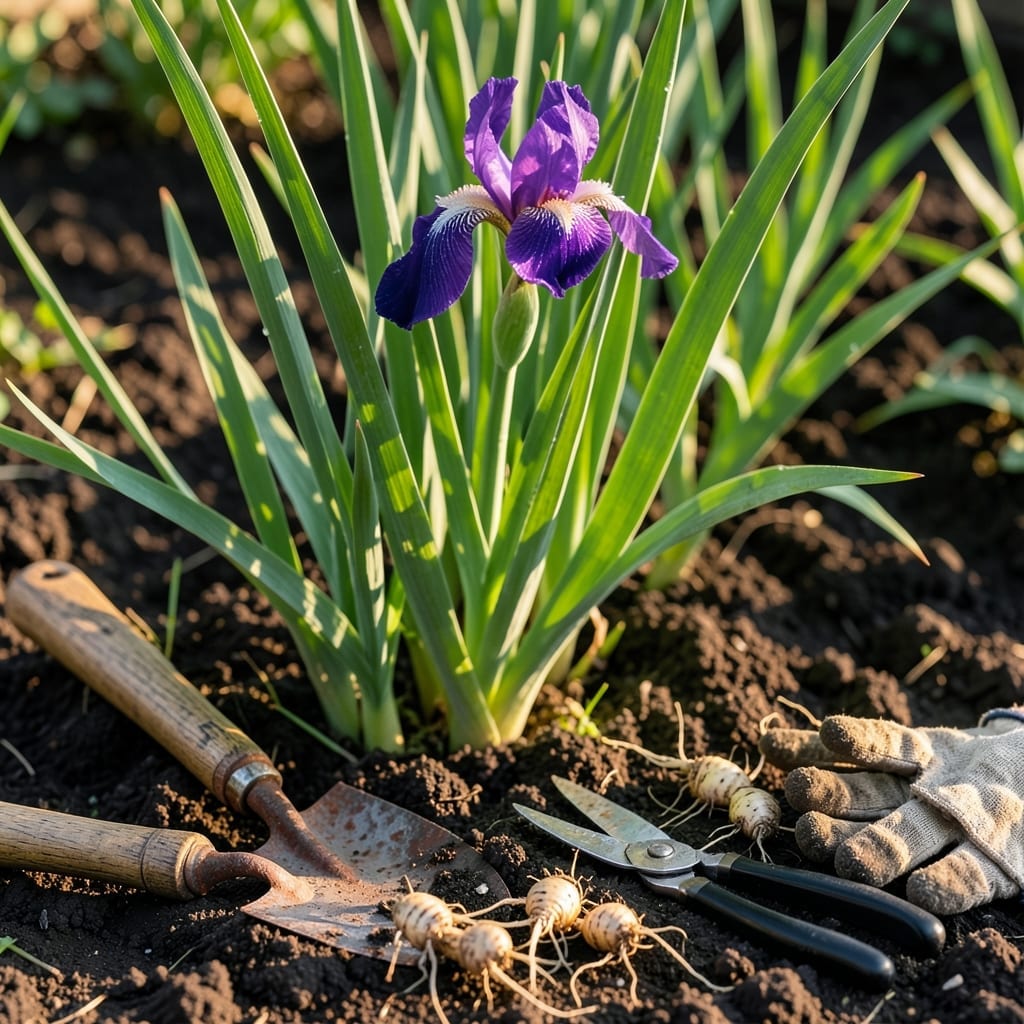
Overcrowded iris clumps lead to fewer blooms and weaker plants, but timing your division right can bring your garden back to life. I’ve seen summer divisions transform struggling 🌸 Iris beds into vibrant displays.
Dividing at the proper moment rejuvenates the rhizomes and ensures healthier growth. The key is knowing when your Iris clumps are begging for space.
Let me show you the best approach to revive your garden with more efficient blooms.
Timing your iris division correctly can make all the difference between a lackluster bed and a vibrant display. I always recommend late summer to early fall as the prime window.
This period, roughly 6-8 weeks before your first frost, gives the rhizomes time to establish roots before winter dormancy. It’s nature’s perfect reset button for your irises.
🌸 Ideal Iris Division Timeline
| Stage | Timeframe | Zone Considerations |
|---|---|---|
| Prime Window | July-August | All zones |
| Early Option | June | Zones 7-10 |
| Late Option | September | Zones 3-6 |
In warmer climates like zones 7-10, you can start dividing as early as June. The extra heat helps rhizomes recover faster, but avoid the peak summer intensity.
For cooler regions in zones 3-6, September works well. Just ensure you finish at least 4-6 weeks before the ground freezes to prevent winter damage.
I’ve noticed that dividing too early in spring can shock the plants during their active growth phase. The fall timing aligns perfectly with their natural cycle of root development after blooming.
Watch for reduced blooming as a clear sign your irises need dividing. When the center of the clump starts dying back or becomes woody, that’s your plant’s way of saying “I need space!”
Another telltale sign is rhizomes pushing above the soil surface. This typically happens after 3-5 years of growth, signaling it’s time for division.
In my experience, bearded irises respond especially well to late summer division. The Siberian and Japanese varieties prefer early fall, just as the weather starts cooling.
Remember, the soil temperature should be above 60°F for best results. This ensures the rhizomes can actively grow new roots before winter sets in.
I always mark my calendar for late July in my zone 6 garden. That gives me the full August for the rhizomes to settle in before the first frost in mid-October.
Dividing iris rhizomes is simpler than it looks, but proper technique ensures healthy regrowth. I always start by preparing the area with clean, sharp tools to prevent disease spread.
First, use a garden fork to gently lift the entire clump from the soil. Be careful not to damage the rhizomes, as these are the lifelines for your new plants.
🌸 Iris Division Steps
After lifting, shake off excess soil to clearly see the rhizome structure. Healthy rhizomes are firm and plump, while old ones may look woody or hollow.
Use a sharp knife to separate the rhizomes, ensuring each division has at least one healthy fan of leaves and a portion of roots. Discard any soft or rotten pieces.
Before replanting, trim the leaves to about 6 inches tall. This reduces water loss and helps the plant focus energy on root establishment rather than foliage.
Plant each division shallowly, with the top of the rhizome slightly exposed to sunlight. Space them 12-24 inches apart to allow for future growth.
Finally, water deeply to settle the soil and encourage root growth. Avoid fertilizing immediately, as this can burn new roots before they establish.