
Beautiful Plants For Your Interior
Beautiful Plants For Your Interior
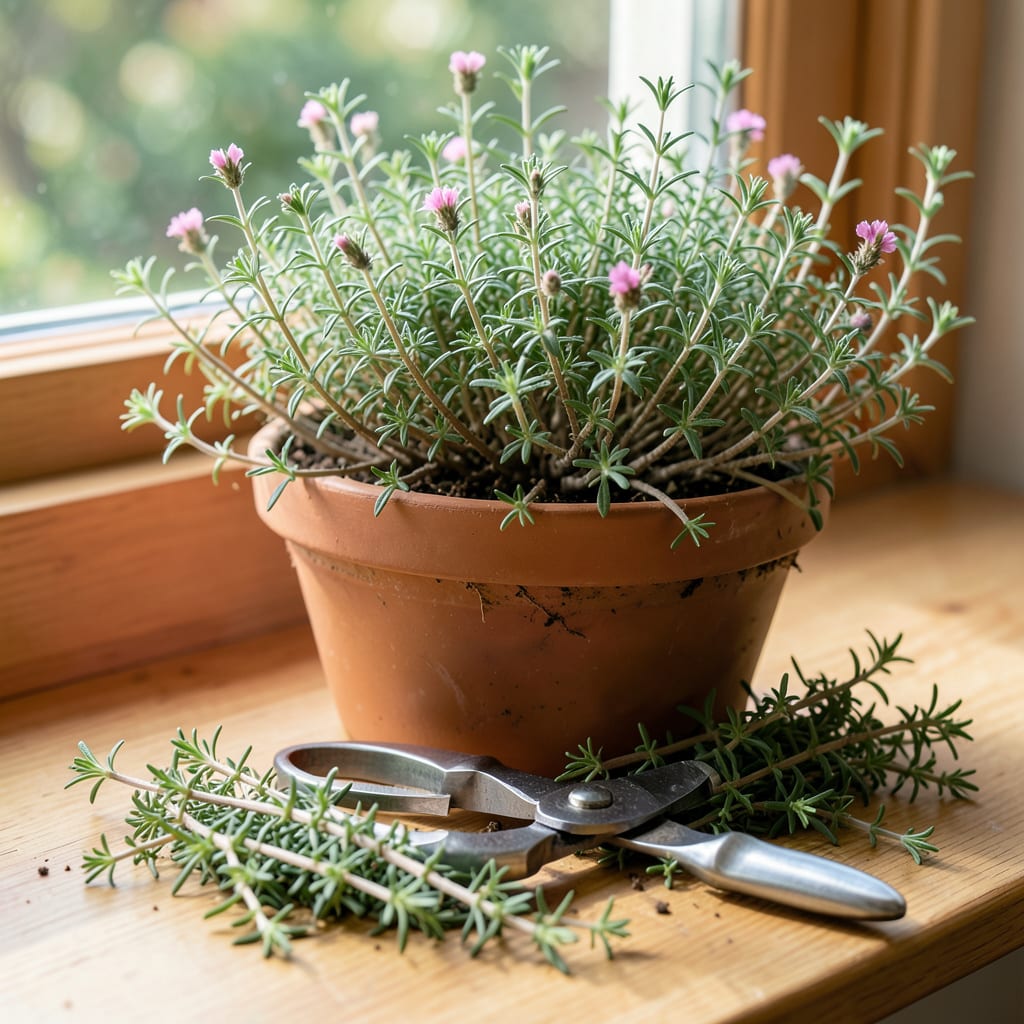
I remember the first time I harvested thyme too early – the flavor was so mild it barely registered. With 🌿 Thyme, timing makes all the difference between a disappointing sprig and an aromatic powerhouse.
Wait until stems turn woody and leaves release a strong fragrance when rubbed. That’s your sign the plant is ready to deliver its peak flavor, typically between June and September in zones 5-9.


I’ve learned that thyme gives clear signals when it’s harvest-ready. Watch for woody stems at the base and a dense, bushy appearance. These are your first clues that the plant has matured.
The most reliable indicator is the aroma. When leaves release a strong fragrance when rubbed, your thyme is packed with essential oils and ready to pick. This usually happens when the plant reaches 6-8 inches in height.
Another sign is flower formation. When you see small white, pink, or purple flowers beginning to form, your thyme is at peak maturity. Harvest just before full bloom for the best flavor.
Check the stem color too. Young thyme has green, soft stems, but mature plants develop woody, brown stems at the base. This woodiness indicates the plant is established and ready.
The leaf texture also changes. Immature leaves are pale and small, while ready-to-harvest leaves are dark green and fully formed. They should feel slightly leathery to the touch.
I always do the aroma test. Rub a few leaves between your fingers – if the scent is strong and immediately noticeable, your thyme is ready. Weak or no aroma means it needs more time.
Remember that morning harvesting after the dew has dried yields the most flavorful thyme. The essential oils are most concentrated at this time of day, giving you the best possible quality.
Finally, look at the overall plant density. A ready thyme plant will be bushy and full, not sparse or leggy. This indicates healthy growth and maximum oil production.
By watching for these visual and sensory cues, you’ll always harvest thyme at its peak. This ensures the strongest flavor and aroma for all your gardening needs.
🌿Timing your thyme harvest depends on both the variety and the season. I’ve found that common thyme typically reaches peak maturity in early summer, while other varieties have their own schedules.
Lemon thyme often matures a bit earlier, usually ready by late spring. Meanwhile, creeping thyme may take until mid-summer to fully develop its signature ground-cover density.
| Variety | Best Harvest Time |
|---|---|
| Common Thyme | June – September |
| Lemon Thyme | May – August |
| Creeping Thyme | July – September |
Weather plays a big role too. In cooler climates, thyme may mature slower, pushing harvest time to late summer. Warmer zones often see earlier harvests by a few weeks.
For all varieties, I recommend harvesting in the morning after dew evaporates. This is when essential oils are most concentrated, giving you the strongest aroma and flavor.
Avoid harvesting during rainy periods or when plants are wet. Excess moisture can dilute oils and promote mold growth, which harms both the plant and your harvest quality.
In zones 5-9, you can often get multiple harvests per season. After the first cut, thyme typically regenerates within 4-6 weeks for a second, sometimes even third harvest.
🌿I’ve made my share of thyme harvesting mistakes over the years. The most common error is harvesting too early when stems are still green and soft. This gives you weak flavor and can stunt growth.
Another frequent mistake is cutting the wrong parts. Always harvest from the top growth, never the woody base. Cutting into old wood can damage the plant and reduce future yields.
Harvesting too early: Wait for woody stems and strong aroma
Cutting old wood: Only trim green growth to encourage regrowth
Harvesting when wet: Always pick in dry conditions to prevent mold
Using dull tools: Sharp pruners make clean cuts that heal faster
Ignoring weather conditions is another big mistake. Harvesting during rainy periods or when plants are wet can lead to mold issues and diluted essential oils.
Many gardeners also overlook tool maintenance. Using dull pruners can crush stems instead of making clean cuts, which stresses the plant and slows recovery. I always keep mine sharp.
Finally, don’t harvest more than one-third of the plant at once. Taking too much can weaken the thyme and reduce its ability to regrow for future harvests.
🌿Wait until plants reach 6-8 inches tall. At this height, stems begin turning woody and leaves develop their full aromatic potency. Anything shorter may lack sufficient flavor.
Pick in the morning after dew has dried but before heat builds. This is when essential oils are most concentrated, giving you the strongest aroma and flavor.
It’s best to harvest just before full bloom. Once flowers open, the plant’s energy shifts from leaf to flower production, which can reduce leaf flavor intensity.
In zones 5-9, you can typically harvest 2-3 times per season. Allow 4-6 weeks between cuts for the plant to regenerate fully.
