
Beautiful Plants For Your Interior
Beautiful Plants For Your Interior
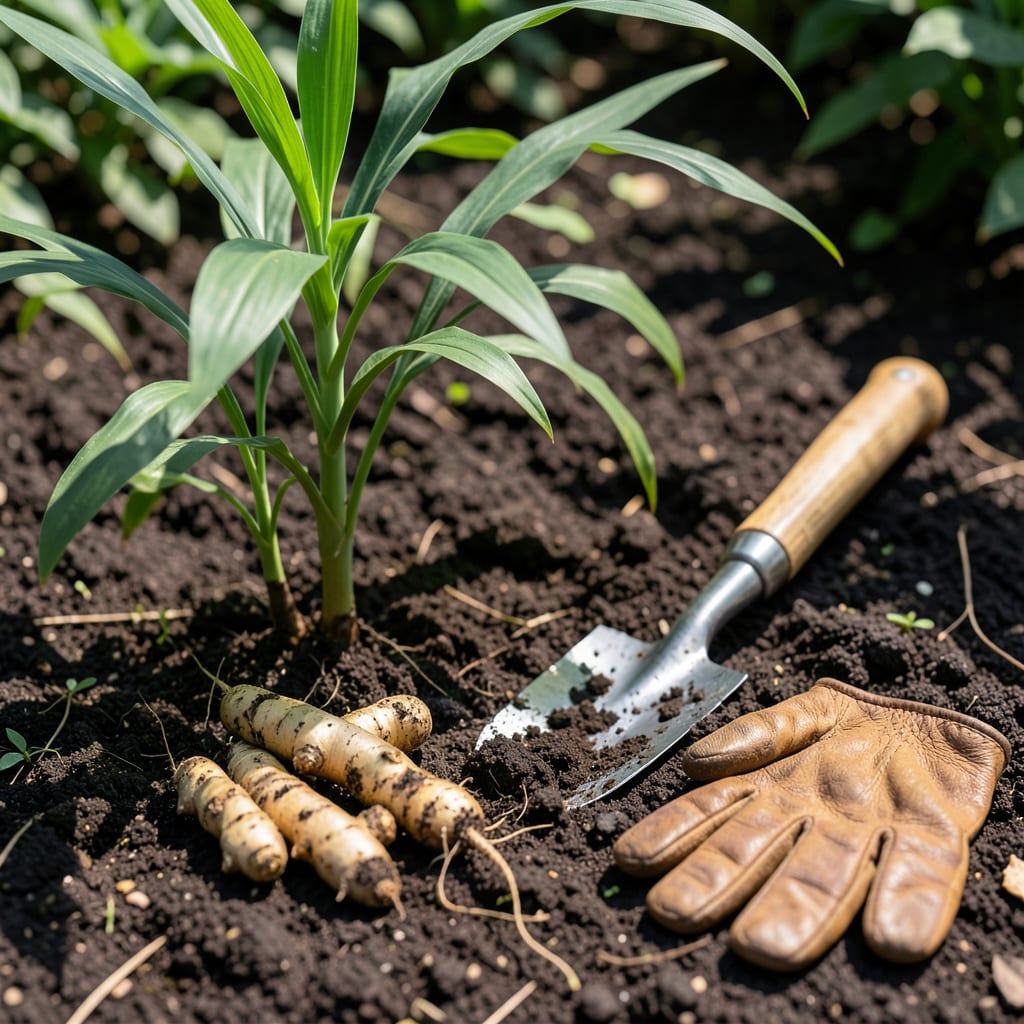
Timing your ginger harvest perfectly can transform your yield from disappointing to abundant. I’ve learned the subtle signs that make all the difference in getting plump, flavorful rhizomes.
When the 🌱 leaves turn yellow and stems begin to dry, your ginger is ready. Let me show you how to spot these cues and harvest at the optimal moment.


I’ve found that ginger plants give clear signals when they’re ready for harvest. The first clue is often the yellowing leaves, which start to die back naturally.
Another telltale sign is the drying stems, which bend easily when touched. These changes typically occur after 8-10 months of growth.
| Sign | Description |
|---|---|
| Yellow Leaves | Lower leaves turn golden-yellow and wilt |
| Dry Stems | Stems become brittle and bend easily |
| Plump Rhizomes | Underground roots feel firm and full |
| Soil Cracks | Surface may show small cracks near base |
| Growth Timeline | 240-300 days from planting |
To check without digging, I gently brush away soil at the base. Mature ginger rhizomes should be 3-4 inches long with smooth, taut skin.
If the skin appears wrinkled or the rhizomes feel small, it’s best to wait another month. Patience pays off with larger, more flavorful roots.
In warmer climates like USDA zones 9-12, ginger can be left in the ground longer. Cooler zones may require earlier harvesting before frost.
I’ve noticed that morning harvesting works best. The soil is softer, making it easier to lift rhizomes without breaking them.
Remember, ginger can be harvested partially. You can remove mature sections while leaving younger rhizomes to continue growing.
After harvesting, I always inspect the rhizomes for any damage. Healthy ginger should have a firm texture and fresh aroma.
Proper timing ensures the best flavor and size for your homegrown ginger 🌱
I always start by choosing the right tools for the job. A hand trowel or garden fork works best to loosen the soil gently around the plant.
The best time to harvest is early morning when the soil is still moist and soft. This makes it easier to lift the rhizomes without breaking them.
I recommend wearing gardening gloves to protect your hands while working. The rhizomes can be quite firm and may have sharp edges.
If you’re harvesting partially, select only the largest rhizomes and leave the smaller ones to continue growing. This ensures a continuous supply throughout the season.
After lifting the rhizomes, I inspect them carefully for any damage. Healthy ginger should have smooth skin and a fresh, spicy aroma.
With these careful techniques, I’ve successfully harvested bountiful ginger without harming my plants 🌱
I’ve seen many gardeners rush the harvest and end up with underdeveloped rhizomes. Picking too early means smaller roots with less flavor and potency.
Waiting too long can be just as problematic. Overmature ginger may become tough or fibrous, losing its desirable qualities.
Avoid these common mistakes to ensure perfect ginger harvests every time.
Ignoring soil conditions is another critical error. Ginger needs well-draining soil to prevent rot, which can ruin your harvest.
I always check for yellowing leaves and drying stems as my primary indicators. These visual cues are more reliable than calendar dates alone.
Finally, remember that post-harvest care matters. Failing to cure or store ginger properly can lead to mold or spoilage after all your hard work.
Avoiding these mistakes ensures a successful ginger harvest every time ✂️
Ginger typically reaches harvest readiness in 8-10 months after planting. In optimal conditions, you may see mature rhizomes as early as 240 days.
Yes, you can dig up baby ginger after 120-150 days, though it will be less fibrous and milder. For full flavor and size, waiting the full 240-300 days is best.
Overmature ginger may become tough or woody. The rhizomes can also split or develop a bitter taste. In warm climates, it may continue growing but lose quality.
Yes, early morning is ideal when soil is moist and soft. This makes lifting rhizomes easier and reduces the risk of breaking them during extraction.
