
Beautiful Plants For Your Interior
Beautiful Plants For Your Interior
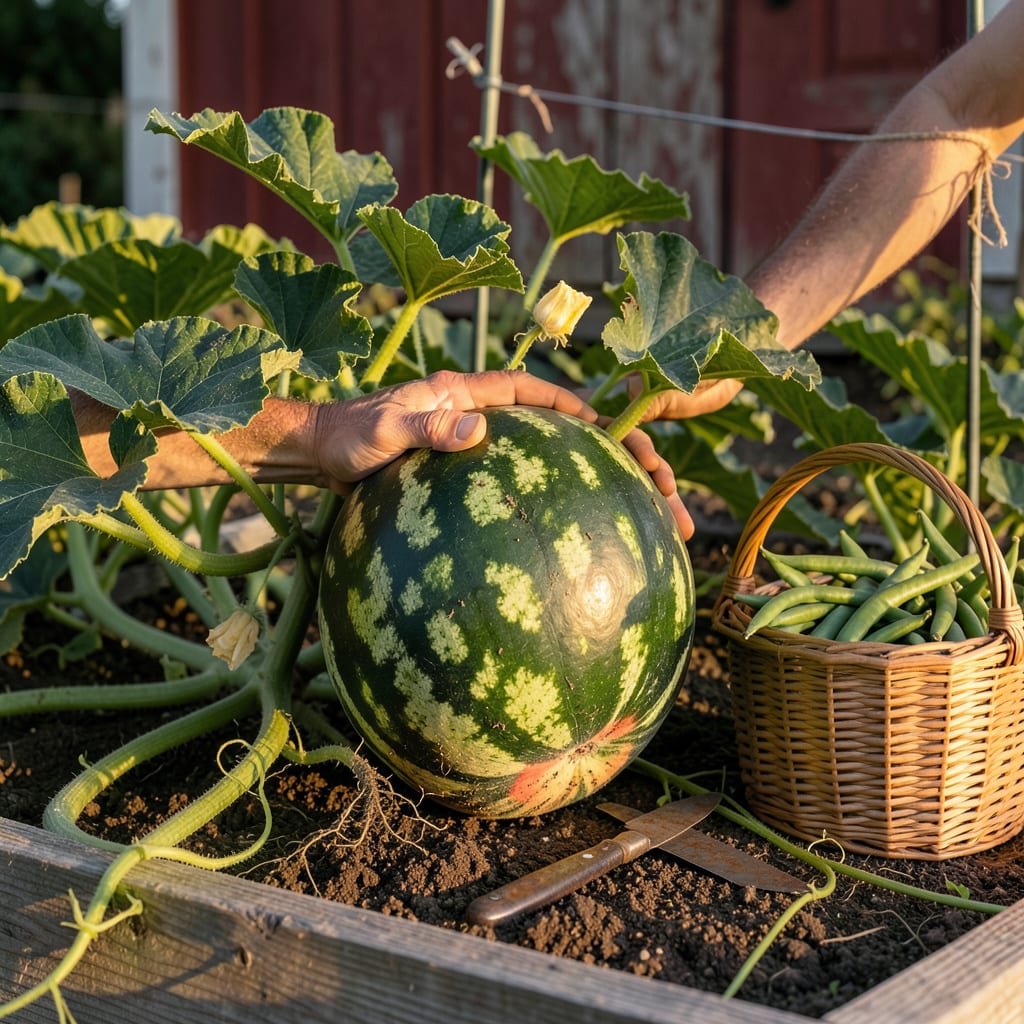
There’s nothing worse than cutting into a watermelon you’ve nurtured all season, only to find it underripe—or worse, overripe and mushy. That perfect balance of sweetness and crispness hinges on one critical moment: knowing exactly when to pick.
After growing 🍉 Watermelons in Zone 6 for years, I’ve learned the subtle signs that separate a disappointing harvest from that juicy, sun-ripened reward. Let me show you the 5 foolproof indicators so you’ll never second-guess your timing again.


After months of tending your watermelon vines, the big question arrives: Is it ready? Unlike tomatoes or peppers, watermelons don’t keep ripening after picking, so timing is everything. I’ve learned the hard way that guessing leads to either a flavorless flop or a fermented mess.
Luckily, your watermelon sends clear signals when it’s peak-perfect. From the curly tendril trick to the famous thump test, I’ll walk you through the five foolproof signs—plus the science behind why they work. No more second-guessing at harvest time!
The curled tendril is my go-to first check. That little green spiral near the fruit’s stem shrivels up when the melon stops growing. If it’s still flexible and green, walk away—your watermelon needs more time. This works for all varieties, from ‘Sugar Baby’ to ‘Crimson Sweet.’
Next, flip the melon gently to inspect the ground spot. This is where it rested on the soil, and it should be a deep cream or yellow. A white or pale green spot means it’s not ready. Pro tip: If the spot is orange, you’ve hit the sweetness jackpot—that’s maximum sugar concentration!
Now run your fingers over the rind’s surface. An unripe watermelon feels smooth and glossy, almost waxy. A ripe one has a dull, rough texture—like fine sandpaper. This happens as the fruit’s protective coating breaks down during ripening. Trust your fingertips on this one!
For the stem test, grasp the vine where it meets the fruit and give it a gentle twist. If it resists, leave it. If it separates with a little pressure, you’re good to go. Avoid yanking—you want the stem to detach cleanly without tearing the rind. This is especially key for seedless varieties, which can be trickier.
The famous thump test takes practice, but here’s how I do it: Use your knuckles to tap the melon’s side (not the top). A deep, hollow sound means it’s ripe; a high-pitched ping means it’s underripe. A dead thud? Overripe. Listen for that goldilocks “pock”—not too sharp, not too flat.
Here’s a bonus trick: Sniff the blossom end (opposite the stem). A ripe watermelon has a subtle sweet, almost floral aroma. No smell? Not ready. Overpowering or fermented? You’ve waited too long. This works best in the early morning when temperatures are cooler and scents stronger.
Remember, variety matters. ‘Moon and Stars’ melons often have yellow ground spots when ripe, while ‘Black Diamond’ stays darker. Seedless types may need an extra 3–5 days past the tendril curl. When in doubt, I check multiple signs—never rely on just one!
Finally, if you’re growing in hot climates (Zone 9+), watermelons can ripen 5–7 days faster than the seed packet claims. Cool, cloudy summers? Add a week. Keep a garden journal to track your local patterns—my harvests got way more consistent once I started noting first-ripe dates each year.
Now that you’ve got the signs down, grab your pruning shears and get ready for that perfect slice. Just don’t forget to chill your watermelon for 2–3 hours after picking—it tastes even sweeter cold! ✂️🌱
Not all watermelons ripen the same way. While Crimson Sweet might show a bright yellow ground spot, Sugar Baby varieties often develop a deeper red hue when ready. These subtle differences can make or break your harvest timing.
Seedless hybrids like ‘Triple Crown’ typically mature 5-7 days faster than seeded varieties. Meanwhile, heirlooms such as ‘Moon and Stars’ may need extra time to develop their signature sweetness. Always check your seed packet for days-to-maturity ranges.
| Variety | Days to Maturity | Ripeness Signs |
|---|---|---|
| Crimson Sweet | 80-85 days | Yellow ground spot, dull rind |
| Sugar Baby | 75-80 days | Deep red color, sweet aroma |
| Triple Crown (Seedless) | 70-75 days | Tendril browning, hollow sound |
| Moon and Stars | 90-100 days | Yellow stars visible, matte rind |
Regional climates play a huge role too. In hotter zones, watermelons may ripen 7-10 days faster than their listed maturity date. Cooler areas often require the full range or even extra weeks of warm weather to reach peak sweetness.
For early-season varieties like ‘Golden Midget’, watch for rapid color changes—they can go from underripe to overripe in just 3-4 days of hot weather. Late-season types such as ‘Carolina Cross’ need patience but reward you with larger, sweeter fruit.
Pro tip: Keep a garden journal noting when you planted each variety. Compare your harvest dates year-to-year to fine-tune your timing. Remember that first frost dates can rush your decision—pick before temperatures drop below 50°F at night.
When in doubt, perform the thumb test: press gently on the rind. A ripe watermelon should have slight give, like pressing a firm pillow. Too hard means wait; too soft means you’ve waited too long. Trust your senses as much as the calendar! 🌱
Timing your watermelon harvest is like walking a tightrope—pick too soon, and you’ll get a tasteless, crunchy disappointment. Wait too long, and you’re left with a fermented, mushy mess. I’ve been there, and trust me, neither scenario is pretty.
An underripe watermelon lacks sugar development, leaving you with pale, watery flesh that’s more fit for compost than your fruit bowl. The seeds (if present) will be white and soft, not the mature black or brown you want. Even the rind stays unusually hard, making it tough to cut cleanly.
Fix it: Try ripening indoors near ethylene-producing fruit (like bananas) for 2-3 days—it won’t match vine-ripened flavor but improves slightly.
Fix it: Use immediately—overripe melons spoil fast. Cut out any soft spots and eat within 24 hours.
An overripe watermelon is just as frustrating. The flesh turns grainy or mealy, especially near the seeds, and the flavor shifts from sweet to sickly-sweet or even sour. The rind may develop soft spots or cracks, inviting pests and mold. I once left a ‘Carolina Cross’ on the vine too long, and it literally split open overnight—what a waste!
Here’s the kicker: watermelons don’t ripen after picking like tomatoes or avocados. Once separated from the vine, their sugar content is locked in. That’s why checking for multiple ripeness signs (like we covered earlier) is crucial. I always double-check the ground spot color and tendril condition before committing to the cut.
If you do end up with an underripe melon, place it in a paper bag with a banana or apple for 2–3 days at room temperature. The ethylene gas might coax out a bit more sweetness—though it’ll never match vine-ripened perfection. For overripe ones, refrigerate immediately and use within a day. They’re great for smoothies or juicing but lose their crisp texture.
Remember, weather plays a role too. A sudden heatwave can rush ripening, while cool spells slow it down. I once had a ‘Sugar Baby’ go from perfect to overripe in just 48 hours during a 95°F streak. When temps climb, check your melons daily—don’t rely on the calendar alone! 🌡️🍉
Most varieties need 70-90 days from planting to harvest. Seedless types often mature 5-7 days faster, while heirlooms like ‘Moon and Stars’ may take up to 100 days. Always check your seed packet for specifics.
No, watermelons don’t ripen further once picked. Unlike tomatoes, they stop developing sugar when separated from the vine. If picked early, you can try placing it near ethylene-producing fruit for 2-3 days, but it won’t match vine-ripened quality.
Splitting usually happens from uneven watering or sudden heat spikes. When melons absorb water too quickly after dry periods, the internal pressure causes cracks. Maintain consistent moisture, especially during the final 2 weeks of ripening.
Store uncut melons at room temperature for up to 1 week. Once cut, refrigerate in an airtight container for 3-4 days. For best flavor, chill whole melons for 2-3 hours before serving.
The thump test works best for traditional seeded varieties. Seedless types often produce a slightly different sound. Always combine it with other signs like ground spot color and tendril condition for the most accurate assessment.
