
Beautiful Plants For Your Interior
Beautiful Plants For Your Interior
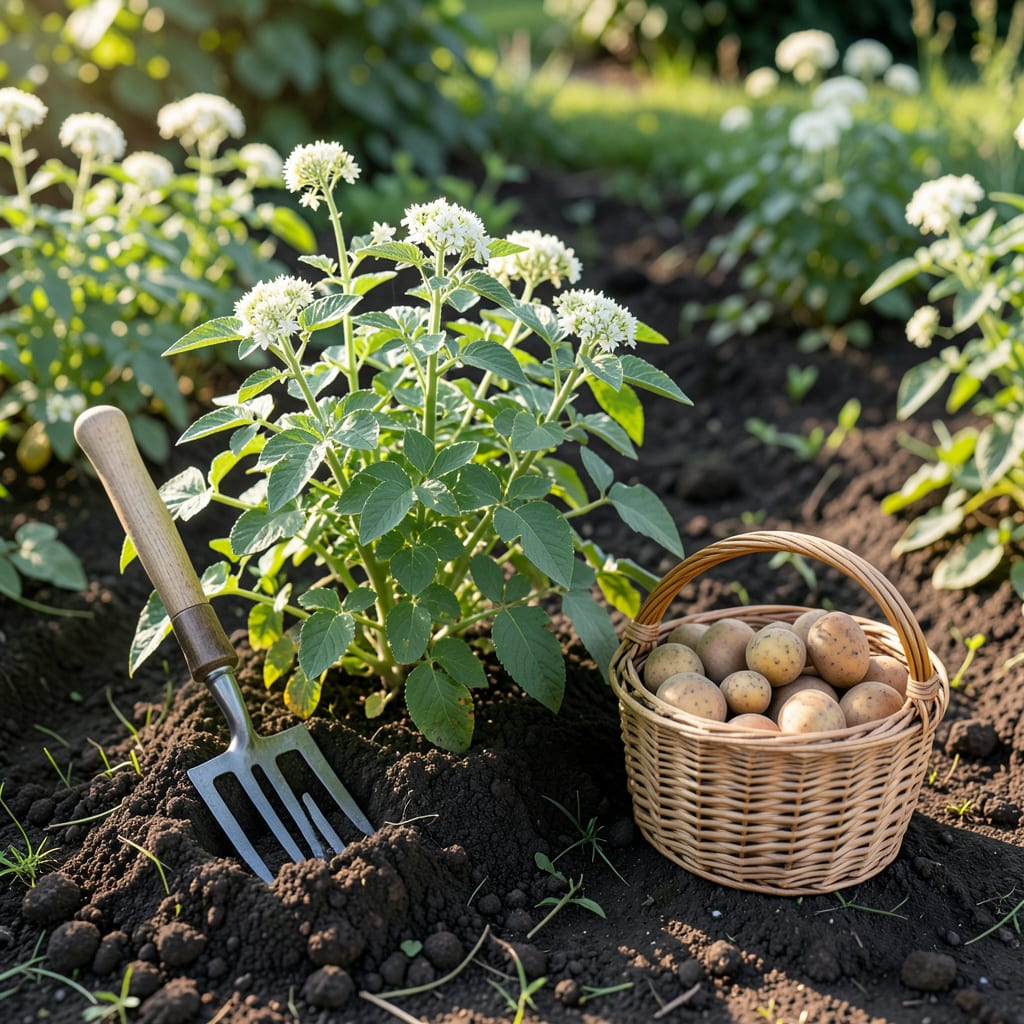
Knowing exactly when to pick 🥔 Potato can mean the difference between a bountiful harvest and a disappointing yield. Timing is everything—too early and they’re undersized, too late and they might rot in the ground.
I’ll show you the perfect signs to look for, from dying foliage to firm skins, so you can harvest your crop at its peak. Let’s dig into the details together.


I always watch for those first visual cues that my potato plants are ready to give up their bounty. The most obvious sign is when the foliage begins yellowing and dying back naturally.
Another clear indicator is the formation of flowers on the plants. For new potatoes, you can start harvesting as soon as you see these blooms appear, usually about 2-3 weeks after flowering begins.
| Harvest Sign | Description |
|---|---|
| Yellowing Foliage | Plant tops turn yellow and die back naturally |
| Flower Formation | Flowers appear on plants, new potatoes ready in 2-3 weeks |
| Skin Set | Skin doesn’t rub off easily when gently scratched |
| Size Check | Mature potatoes reach 2-5 inches in diameter |
For a mature harvest, I wait until the skin sets properly. This means when you gently rub a potato with your thumb, the skin doesn’t come off easily. This typically happens as the plant tops die back completely.
The size of the potatoes is another great indicator. New potatoes can be harvested when they’re about 1-2 inches in diameter, while mature potatoes are usually 2-5 inches across.
I’ve learned that weather conditions matter too. It’s best to harvest during dry weather when the soil isn’t waterlogged. This helps prevent rot and disease in your stored potatoes.
For early varieties, you can start checking for readiness about 60-90 days after planting. Mid-season varieties typically take 90-110 days, while late varieties may need 110-135 days to mature.
I always use a garden fork to gently lift the potatoes from the soil. Be careful not to pierce or bruise them during harvest, as this can lead to spoilage during storage.
After harvesting, I let my potatoes cure in a dark, well-ventilated area for 1-2 weeks. This helps toughen their skin for better storage. Store them in a cool, dark place with good airflow.
Remember, the exact timing can vary based on your climate and growing conditions. When in doubt, do a gentle dig test with a few plants to check on progress 🌱
The harvest window varies significantly between potato varieties. I always check the maturity days for each type I plant, as this gives me a reliable timeline to follow.
Early varieties like Yukon Gold or Red Norland are typically ready in 60-90 days, making them perfect for gardeners eager to enjoy their crop sooner rather than later.
| Variety Type | Days to Maturity | Best Harvest Time |
|---|---|---|
| Early | 60-90 days | When flowers appear |
| Mid-Season | 90-110 days | Foliage starts yellowing |
| Late | 110-135 days | Foliage dies back |
Mid-season varieties such as Kennebec or Purple Majesty need 90-110 days. I start checking these when I notice the lower leaves beginning to yellow.
Late varieties like Russet or Fingerling can take up to 135 days. For these, I wait until the entire plant has died back before harvesting.
Your planting date also affects harvest time. If I plant in early spring, I expect to harvest early varieties by late June, while late varieties might not be ready until early September.
I always adjust for local climate too. In cooler regions, potatoes may take 10-15 days longer to mature. In warmer areas, they might be ready a bit sooner. Keep an eye on those visual cues we discussed earlier! 🌱
I’ve seen many gardeners make critical errors when harvesting their potato crop. One of the most common is harvesting too early, before the skins have properly set.
Another frequent mistake is using the wrong tools. I always recommend a garden fork instead of a shovel to prevent accidental piercing of the tubers.
⚠️ Warning: Never harvest potatoes when the soil is waterlogged. This can lead to rot during storage and ruin your entire crop.
I’ve learned that ignoring weather conditions can be disastrous. Always wait for dry weather before harvesting. Wet conditions can make the soil compact and difficult to work with.
Improper curing is another issue I see often. After harvesting, it’s crucial to let your potatoes cure in a dark, well-ventilated area for 1-2 weeks. This step helps toughen the skin for better storage.
Finally, don’t make the mistake of storing potatoes improperly. Keep them in a cool, dark place with good airflow. Avoid storing them in the refrigerator, as the cold can convert starches to sugars, affecting taste and texture 🌱
New potatoes are ready when plants flower. You can gently dig and check for 1-2 inch tubers about 2-3 weeks after blooms appear. Be careful not to damage the plants when checking.
Overripe potatoes may split or rot in the ground. In warm climates, they can also begin sprouting again. Harvest within 2 weeks of foliage dying back for best results.
Avoid harvesting when soil is wet. Wait for dry conditions for at least 2-3 days to prevent rot and make digging easier. This also helps with curing afterward.
No, early types take 60-90 days, mid-season 90-110 days, and late varieties up to 135 days. Always check your specific variety’s recommended timeline.
