
Beautiful Plants For Your Interior
Beautiful Plants For Your Interior
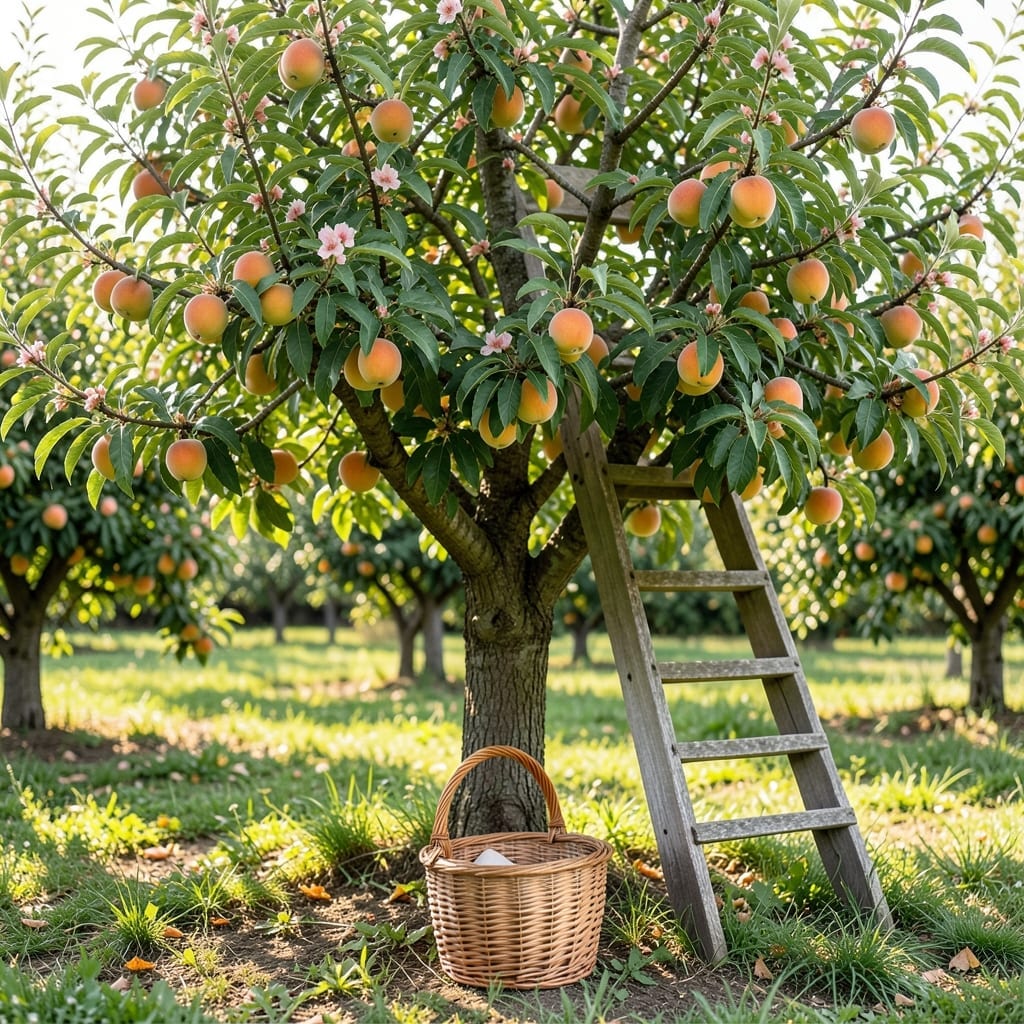
Nothing beats the taste of a perfectly ripe 🍑 peach fresh from the tree, but knowing exactly when to pick them can be tricky. Timing is everything to avoid underripe or overripe fruit.
I’ve learned that June through August is prime time for most varieties in zones 5-8, though weather and care play big roles. The difference between a mediocre peach and one bursting with sweetness often comes down to just a few days.
Let me walk you through the signs to watch for and the simple tricks I use to harvest at peak flavor every time. You’ll never guess at ripeness again.
Timing your peach harvest perfectly starts with knowing your variety type. I’ve found that early-season peaches typically ripen in late June to early July, while mid-season types peak in July to early August. Late varieties often hold off until mid-to-late August.
Climate plays a huge role too. In warmer zones like 7-8, fruit may ripen 1-2 weeks earlier than in cooler zone 5 areas. Even within a region, a hot spell can speed things up by several days. 🌳
| Variety | Ripening Months | Days After Bloom |
|---|---|---|
| Early Season | Late June – Early July | 90-100 |
| Mid-Season | July – Early August | 100-120 |
| Late Season | Mid-August – September | 120-150 |
Note: Adjust for local climate conditions.
I always mark my calendar based on the bloom date. Most peaches need 90-150 days from bloom to harvest, with early varieties on the shorter end. If you know when your tree flowered, counting forward gives you a solid estimate.
In my experience, dwarf peach trees often ripen a bit earlier than standard varieties. This is because their compact size can lead to warmer microclimates near the fruit. I’ve noticed this especially with container-grown peaches on sunny patios.
Weather can throw off even the best estimates. A cool spring might delay ripening by 7-10 days, while a hot, dry summer can accelerate it. I check my trees daily once we hit the expected window, as the difference between perfect and overripe can be just 24-48 hours.
Regional differences matter too. In the Pacific Northwest, peaches often ripen later due to cooler summers. Meanwhile, in the Southeast, the heat can bring an earlier harvest. Local extension offices often have the most accurate timelines for your area.
For the most precise timing, I combine the variety’s typical window with visual cues. The table above gives me the framework, but I always confirm with the color, feel, and aroma of the fruit itself. This two-step approach has never let me down. 🌿
If you’re growing multiple varieties, staggering them can extend your harvest season. I plant early, mid, and late types to enjoy fresh peaches for nearly two full months each summer. It’s a game-changer for anyone serious about their home orchard.
Finally, remember that first-year trees often take longer to ripen fruit. Don’t expect a full crop until the tree is 3-4 years old. Patience pays off with bigger, sweeter harvests in the long run. ✂️
Knowing when to pick a peach comes down to three key senses: sight, touch, and smell. I start by looking for a full color change from green to golden yellow or deep red, depending on the variety. This is the first visual clue that ripening is underway.
Next, I gently press the fruit with my fingertips. A ripe peach will have a slight give, similar to a firm avocado. If it’s rock hard, it needs more time. If it’s squishy, you’ve waited too long. ✂️
The smell test is my secret weapon. A ripe peach emits a sweet, fragrant aroma at the stem end. If there’s no scent, it’s not ready. This is especially useful for varieties with deep red skin, where color changes can be subtle.
I always use the “twist method” to confirm. A ripe peach will detach easily from the tree with a gentle twist. If you have to tug or pull, it’s not ready. This method prevents damage to both the fruit and the tree.
For early varieties, I start checking 90 days after bloom. For late varieties, I wait until about 120-150 days. These timelines help me narrow down when to start my daily inspections for the perfect picking moment.
Remember, peaches don’t ripen well after picking. Unlike some fruits, they need to fully ripen on the tree for the best flavor. That’s why I’m so careful about timing. A day or two can make all the difference in taste and texture. 🌳