
Beautiful Plants For Your Interior
Beautiful Plants For Your Interior
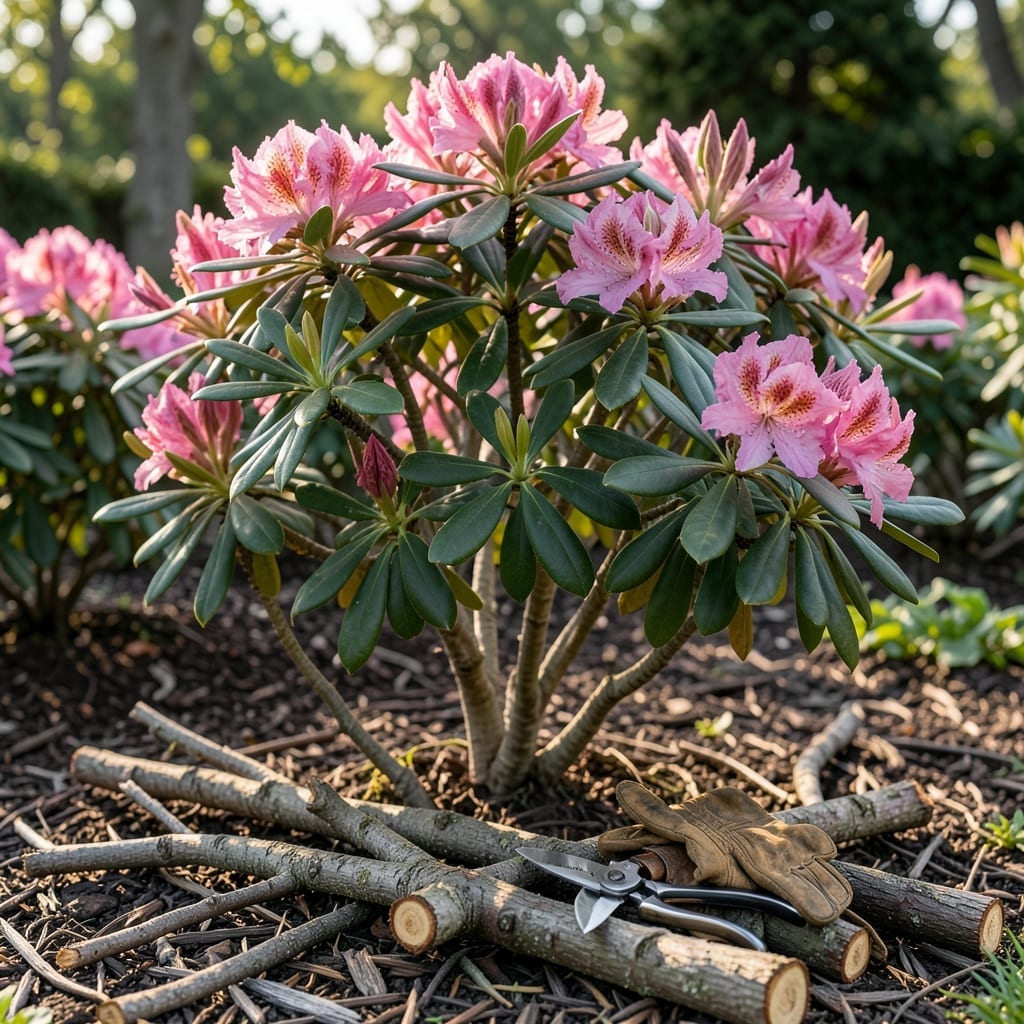
Pruning your 🌸 Rhododendron at the wrong time can mean fewer blooms and a stressed plant. Timing is everything when it comes to maintaining these beautiful shrubs.
I’ve seen too many gardeners accidentally harm their Rhododendrons by trimming them when they shouldn’t. The right approach ensures vibrant growth and abundant flowers year after year.
Discover the perfect window to prune without sacrificing next season’s blooms. It’s simpler than you might think, and the results are well worth it.
Let me walk you through the best practices so you can keep your Rhododendrons thriving. You’ll be amazed at the difference a little knowledge can make.
The perfect window to prune your rhododendrons is late spring or early summer, right after they’ve finished flowering. This timing allows the plant to set buds for next year’s blooms without interruption.
I always mark my calendar for this period because pruning too late in the season can remove next year’s flowers. The plant needs time to recover and produce new growth before winter sets in.
| Stage | Action |
|---|---|
| Early Spring | Avoid pruning |
| Late Spring | Prune after flowering |
| Summer | Light trimming only |
| Fall/Winter | Never prune |
In colder climates like USDA Zones 4-5, aim to finish pruning by early July at the latest. This gives your rhododendron enough time to harden off before the first frost.
Warmer regions in Zones 7-8 can extend this window slightly, but I still recommend sticking to the post-flowering rule. The plant’s energy is focused on bloom production, and pruning at the wrong time disrupts this cycle.
If you miss the ideal window, light pruning in early fall can be done, but avoid heavy cuts. Late pruning can stimulate new growth that won’t have time to harden before winter, leaving it vulnerable to cold damage.
I’ve found that morning pruning on a dry day reduces stress on the plant. The cooler temperatures and lower humidity help the cuts heal faster, minimizing the risk of disease.
For evergreen rhododendrons, the same rules apply, but be extra cautious with deciduous varieties. These may need slightly earlier pruning to ensure they have enough time to recover.
Remember, rhododendrons bloom on old wood, meaning the flower buds form on last year’s growth. Pruning at the wrong time can result in no blooms the following season, which is why timing is so critical.
If your shrub is overgrown, don’t panic. You can do a gradual rejuvenation over 2-3 years, pruning a third of the plant each year. This approach keeps the plant healthy while slowly restoring its shape.
☀️Pruning rhododendrons correctly starts with timing, but technique matters just as much. I always begin by selecting the right tools, like sharp bypass pruners and sterilized blades to prevent disease. Clean cuts heal faster and reduce plant stress significantly.
First, identify the old wood and new growth on your shrub. Rhododendrons set their flower buds in late summer, so pruning after blooming but before new buds form is key. This window ensures you won’t accidentally remove next year’s flowers.
After pruning, I recommend applying a layer of mulch around the base to retain moisture and protect the roots. This simple step can make a big difference in how quickly your rhododendron recovers and regrows.
Remember, thin cuts are better than thick ones. Removing entire branches at their base encourages new growth from the center, while cutting mid-branch can leave unsightly stubs that are prone to disease.
Finally, observe your plant over the next few weeks. If you notice wilting or discoloration, you may have pruned too aggressively. In that case, focus on watering consistently and providing some afternoon shade to reduce stress.
With these steps, your rhododendrons will maintain their vibrant blooms and lush foliage for years to come ✂️