
Beautiful Plants For Your Interior
Beautiful Plants For Your Interior
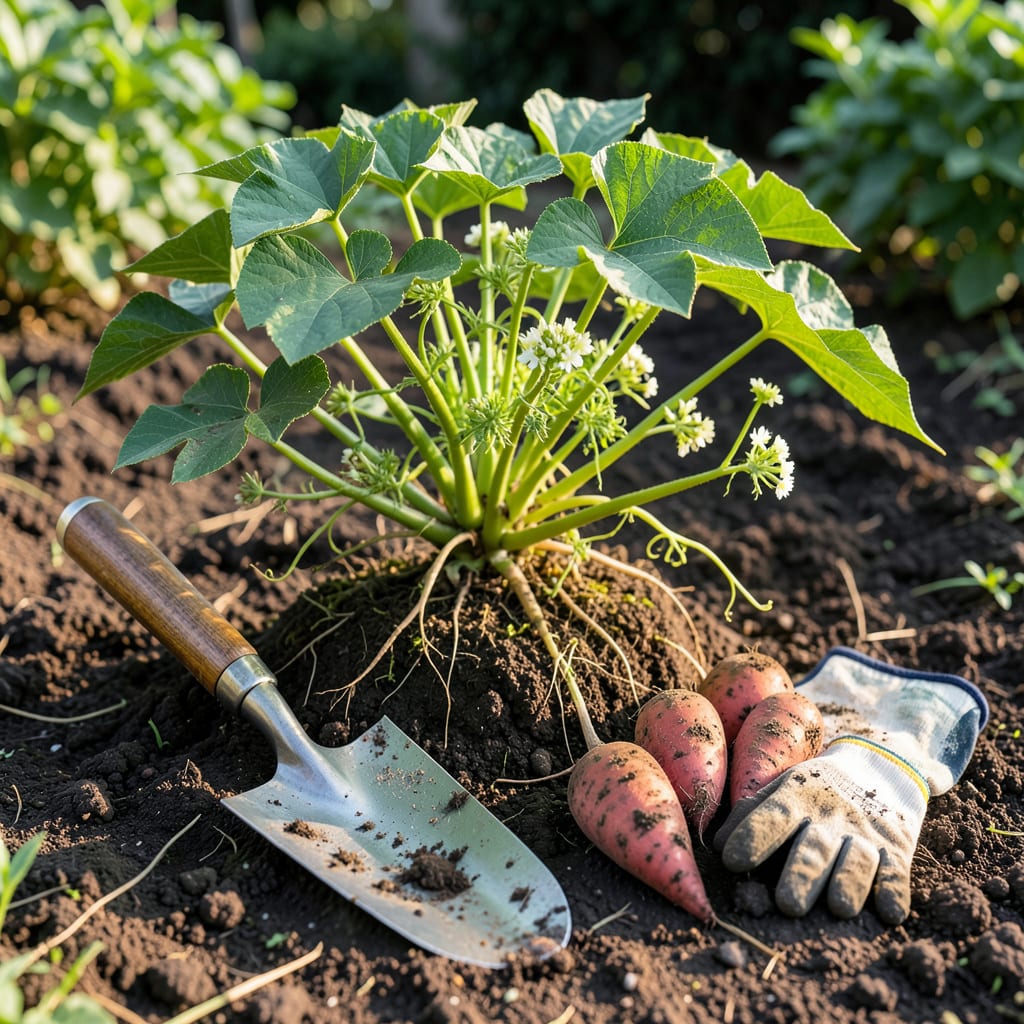
Knowing exactly when to harvest 🍠 Sweet Potato can mean the difference between a lackluster crop and a bountiful, flavorful yield. Timing is everything.
The plants send clear signals if you know what to look for. I’ll show you how to spot these signs and pick at the perfect moment for the best results.


I always watch for vine yellowing first—it’s the most reliable sign that sweet potatoes are nearing maturity. As the growing season progresses, the once-vibrant green leaves start to fade to pale yellow or even brown.
Another clear indicator is when the vines slow growth or begin to die back. This typically happens 90–170 days after planting, depending on the variety and your climate zone. Warmer regions may see faster maturity. 🌱
| Maturity Sign | Description |
|---|---|
| Leaves Yellowing | Foliage turns pale yellow or brown |
| Vine Dieback | Growth slows or vines wither |
| Tuber Size | 3–5 inches in diameter |
| Skin Firmness | Hard skin resists scratching |
If you’re growing Beauregard or Centennial varieties, expect maturity around 100 days. For heirloom types, like Japanese Sweet Potatoes, it may take closer to 170 days. Always check your seed packet for specifics.
I recommend gentle soil probing near the base of the plant. If the tubers feel firm and are at least 3 inches wide, they’re likely ready. Be careful not to damage the delicate skin during this check.
Weather plays a role too. If frost is forecasted, harvest immediately, even if vines are still green. Sweet potatoes can’t tolerate frost, and cold damage ruins storage potential. In warmer climates, you can often leave them in the ground longer for larger yields.
The “leaf drop test” is another trick I use. When 50% of the leaves have fallen or yellowed, it’s a strong sign the tubers have reached peak maturity. This method works well for organic gardeners who avoid chemical treatments.
For container-grown sweet potatoes, the signs are the same, but the root bound nature may accelerate maturity. Check for roots emerging from drainage holes—this often means they’re ready to harvest or need more space.
Remember, underdeveloped tubers have soft skin and small size. If you’re unsure, harvest a test tuber from the edge of the plant. If it meets your size expectations and the skin is firm, the rest are likely ready too.
In my experience, morning harvesting works best. The soil is cooler, making digging easier, and the tubers are less prone to bruising. Use a garden fork to gently lift the plants, taking care not to pierce the potatoes. 🌿
Timing your sweet potato harvest perfectly means going beyond just watching the vines. I always start with a gentle soil check near the plant’s base to feel for tuber size and firmness.
The “leaf drop test” is another reliable method. When 50% of leaves have yellowed or fallen, it’s a strong sign the tubers have reached peak maturity and are ready to be picked.
If you’re unsure, harvest a test tuber from the edge of the plant. A ready sweet potato will have a firm skin and measure at least 3 inches in diameter.
Weather is critical in harvest timing. If frost is forecasted, dig up your crop immediately, even if vines are still green. Sweet potatoes cannot tolerate frost, and cold damage ruins storage life.
For container gardens, check for roots emerging from drainage holes. This often signals the tubers are ready or need more space to grow properly.
In warmer climates, you can often leave sweet potatoes in the ground longer for larger yields. Just be sure to harvest before the first frost to protect your crop. ☀️
I’ve seen many gardeners lose their sweet potato crop by harvesting too early. Underdeveloped tubers have soft skin and small size, which means they won’t store well or taste as sweet. Patience is key for a flavorful yield. 🌱
On the other hand, waiting too long can be just as damaging. Over-mature tubers may split or develop diseases in the soil. Once the vines die back completely, the tubers are at risk of rot or pest damage.
⚠️ Warning: Harvesting too early or too late can ruin your sweet potato crop. Avoid these common pitfalls to ensure a successful harvest.
Another critical mistake is improper curing. After harvesting, sweet potatoes need to cure for 10–14 days in a warm, humid environment. This step enhances flavor and extends storage life. Skip it, and your crop may taste bland or spoil quickly.
I always remind gardeners to monitor weather forecasts closely. If frost is approaching, harvest immediately, even if the vines are still green. Sweet potatoes can’t tolerate frost, and cold damage will ruin their storage potential. 🌿
For container-grown sweet potatoes, don’t wait for the vines to die back completely. Since the roots are confined, tubers can become overcrowded and stop growing. Check them regularly once they reach 3 inches in size.
Finally, avoid rough handling during harvest. Use a garden fork to lift the plants gently, and never pull the vines directly. This can break the tubers or damage their delicate skin, leading to spoilage.
Most varieties reach maturity in 90–170 days, depending on the type. Popular kinds like Beauregard are typically ready in about 100 days, while heirloom types may need closer to 170 days.
It’s risky. Once vines die back completely, tubers are vulnerable to rot or pests. Harvest promptly when you notice 50% leaf yellowing or before the first frost to protect your crop.
Tubers will be underdeveloped, with soft skin and small size. They won’t store well and may lack sweetness. Patience ensures a more flavorful and abundant harvest.
Gently probe the soil near the plant base to feel for tuber size and firmness. A ready sweet potato will measure at least 3 inches and have a firm skin.
