
Beautiful Plants For Your Interior
Beautiful Plants For Your Interior
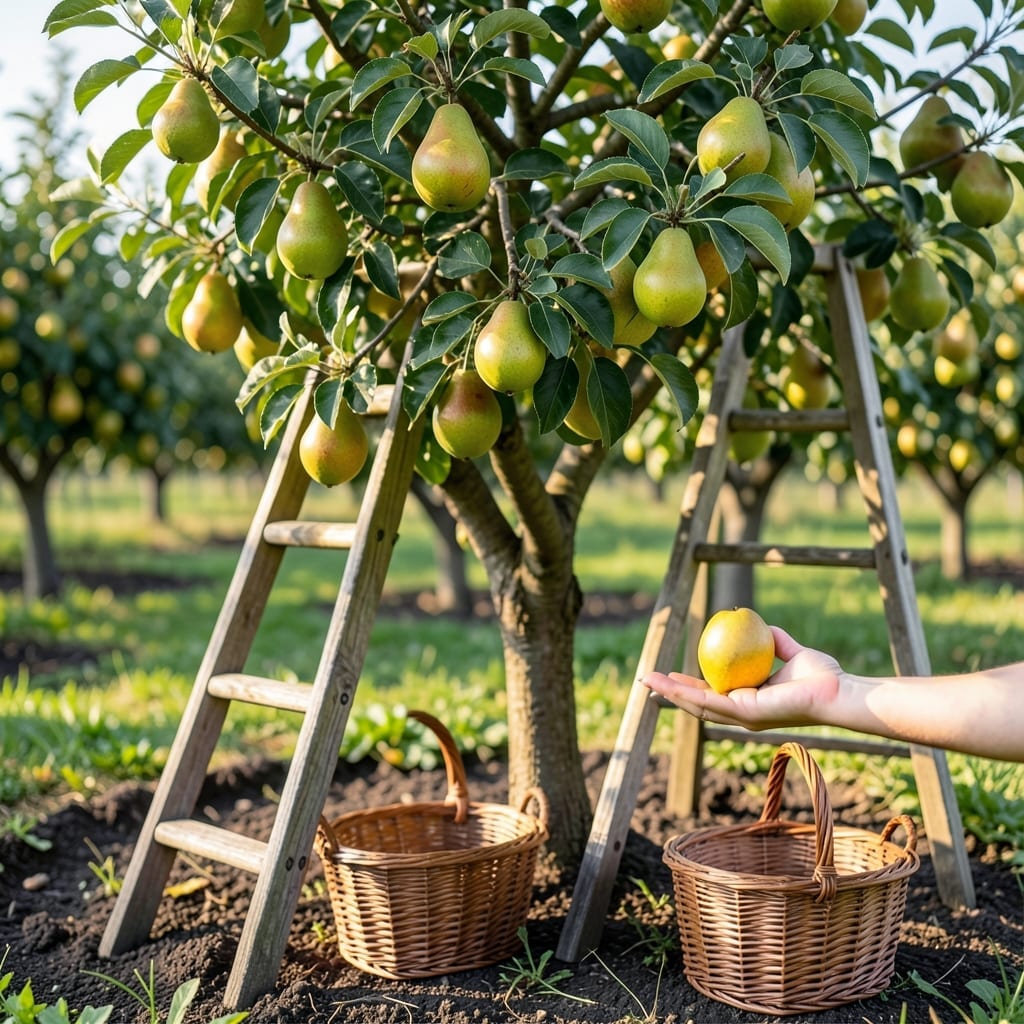
Nothing beats the sweet, juicy crunch of a perfect 🍐—but timing your harvest is tricky. Unlike other fruits, pears don’t ripen well on the tree.
Knowing the exact signs of ripeness ensures you pick them at their peak flavor and texture. I’ve learned the hard way that waiting too long or picking too soon ruins the experience.
Discover how to spot the subtle color shifts, gentle give, and aroma that signal your pears are ready to enjoy at their best.
Pears are unique because they don’t ripen well on the tree. Instead, they mature and then ripen after harvest. This means timing your pick is critical to avoid mealy or hard fruit.
I’ve found that color changes are the first clue. Most pears shift from deep green to yellow, red, or brown as they near maturity. But color alone isn’t enough—you’ll need to check texture too.
| Variety | Color at Maturity | Texture Sign |
|---|---|---|
| Bartlett | Yellow or red | Slight give near stem |
| Anjou | Green to yellow | Firm with sweet aroma |
| Bosc | Brown-russet | Hard until picked |
| Asian | Golden yellow | Crisp when ripe |
The stem test is my go-to method. Gently lift a pear and twist it slightly. If it separates easily from the branch, it’s ready to harvest. This works for all varieties and prevents damage to the tree.
Another reliable sign is the aroma at the stem. Ripe pears emit a sweet, fragrant smell near the stem end. If you don’t detect any scent, the fruit isn’t ready yet.
For Bartlett pears, the color shift is dramatic—from green to bright yellow. Anjou pears stay green but develop a yellowish tint at maturity. Bosc pears turn a rich brown, while Asian pears turn golden.
Texture matters just as much as color. Press gently near the stem end—if there’s a slight give, the pear is mature. Avoid squeezing too hard, as this can bruise the fruit.
I always check a few pears from different branches, as ripening can vary. If most pass the color and texture tests, it’s time to harvest the entire tree.
Remember, pears continue to ripen after picking. So even if they’re not perfectly soft, they’ll reach peak ripeness in 1-3 days at room temperature. Store them in a cool, dry place to slow ripening if needed.
With these signs in mind, you’ll never wonder when are pears ripe again. Just watch for color changes, test the stem, and enjoy the sweet rewards of perfect timing. 🌳
One of the biggest mistakes I see gardeners make is picking pears too early. Since pears ripen off the tree, it’s tempting to harvest them when they’re still hard. But this often results in grainy, flavorless fruit that never reaches its potential.
Another common error is ignoring the stem test. If the pear doesn’t separate easily from the branch when gently twisted, it’s not ready. Forcing it off can damage the tree and lead to poor-quality fruit.
⚠️ Warning: Never judge ripeness by size alone. A large pear isn’t necessarily ripe—color, texture, and aroma are far more reliable indicators.
Misreading color changes is another pitfall. Some varieties, like Anjou pears, stay green even when mature. Relying solely on color can lead to premature harvesting or leaving fruit on the tree too long.
Improper storage after picking can also ruin your harvest. Storing unripe pears in the refrigerator halts ripening, while leaving them in direct sunlight can cause them to overripen too quickly. Aim for a cool, dark place at room temperature.
I’ve learned that testing a few pears from different branches is key. Ripening can vary even on the same tree, so checking multiple fruits ensures you don’t miss the optimal harvest window. If most pass the tests, it’s time to pick.
Finally, avoid overhandling the fruit. Excessive squeezing or dropping pears can cause bruising, which speeds up spoilage. Handle them gently and use both hands when harvesting to prevent damage.