
Beautiful Plants For Your Interior
Beautiful Plants For Your Interior
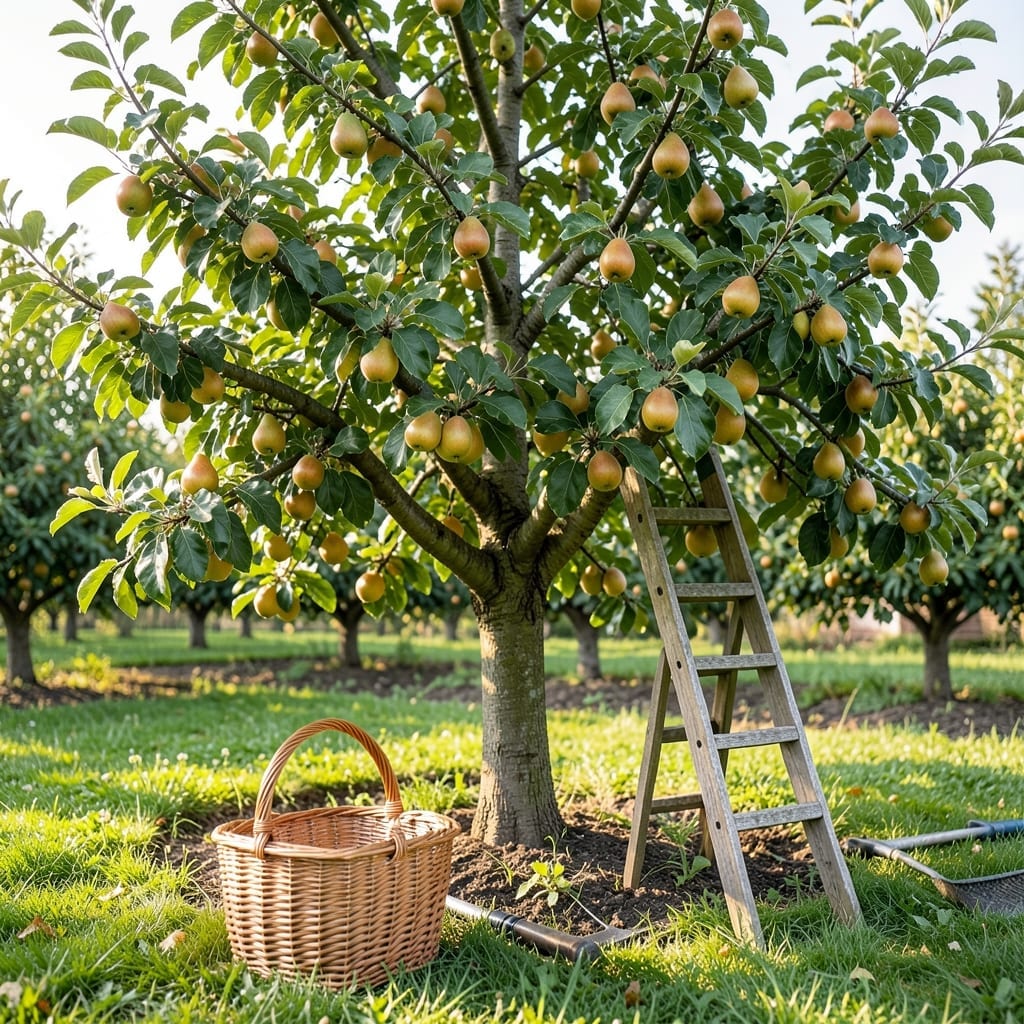
Nothing beats the taste of a perfectly ripe pear picked at its peak. With Pear Tree 🍐 harvest season spanning late summer to early fall, timing is everything for that sweet, juicy flavor.
You might think color alone signals readiness, but there are more reliable clues. The fruit should separate easily from the branch with just a gentle twist – a sure sign it’s ready.
I’ve learned that waiting for full ripeness on the tree often means missing your window. Most pears actually ripen best after picking, making harvest timing the key to success.
Discover how to spot the subtle changes in color, texture, and aroma that indicate your pears are at their prime. Your taste buds will thank you.


I’ve found that timing is everything when it comes to pear tree harvesting. Picking too early leaves you with hard, tart fruit, while waiting too long risks overripe, mushy pears dropping to the ground.
The best approach is to watch for visual cues and use simple ripeness tests. Most pear varieties change color as they mature, shifting from deep green to yellow, red, or brown hues depending on the type.
| Ripeness Sign | What to Look For |
|---|---|
| Color Change | Fruit shifts from green to yellow or red |
| Firmness Test | Slight give when gently pressed near stem |
| Stem Separation | Lift and twist—if it detaches easily, it’s ready |
| Aroma | Sweet scent near the stem end |
For Bartlett pears, the color change is dramatic—they turn from bright green to yellow as they ripen. But with Anjou or Bosc, the shift is subtler, often developing a golden or russeted blush.
I always do the thumb test—press gently near the stem. If there’s a slight softness, it’s time to pick. Remember, pears ripen from the inside out, so they might still feel firm when perfectly ready.
The lift-and-twist method is my go-to. Grasp the pear and lift it upward while giving a gentle twist. If it separates cleanly from the branch, it’s harvest-ready. If it resists, leave it for a few more days.
Another reliable sign is the stem’s appearance. When pears are ready, the stem often dries slightly and may start to pull away from the branch. This is nature’s way of saying, “I’m ready to go!”
Don’t rely solely on size or shape—some varieties stay small even when ripe. Instead, combine multiple tests for the most accurate results. I check a few pears from different parts of the tree to ensure consistency.
Weather plays a role too. In cooler climates, pears may take longer to ripen, while hot, dry conditions can speed up the process. If a cold snap is forecast, I harvest early to prevent damage.
Finally, trust your senses. Ripe pears often emit a sweet, fragrant aroma near the stem. If you detect that scent, it’s a sure sign they’re at their peak and ready for picking. 🌳
Each pear variety has its own harvest window and ripeness cues. Bartlett pears change from green to yellow when ready, while Anjou pears develop a slight blush. Knowing these differences helps you pick at the perfect time.
I always check the stem separation test first. For Bosc pears, look for a brownish skin color and firm texture. Comice pears are ready when they give slightly to gentle pressure.
The pressure test works well for most varieties. Apply gentle thumb pressure near the stem – if it gives slightly, it’s ready to pick. Remember that pears ripen from the inside out, so external color isn’t always reliable.
For Asian pears, wait until they’re fully colored and slightly soft. These pears are best when left on the tree until completely ripe. I find they’re sweeter when harvested at peak ripeness compared to European varieties.
Weather affects harvest timing too. A warm summer may speed up ripening, while cool temperatures can delay it. Always combine visual cues with the stem separation test for the most accurate results.
Track your harvest dates each year. This helps predict future readiness and adjust for seasonal variations. My garden journal has become invaluable for timing my pear picks perfectly. 🌳