
Beautiful Plants For Your Interior
Beautiful Plants For Your Interior
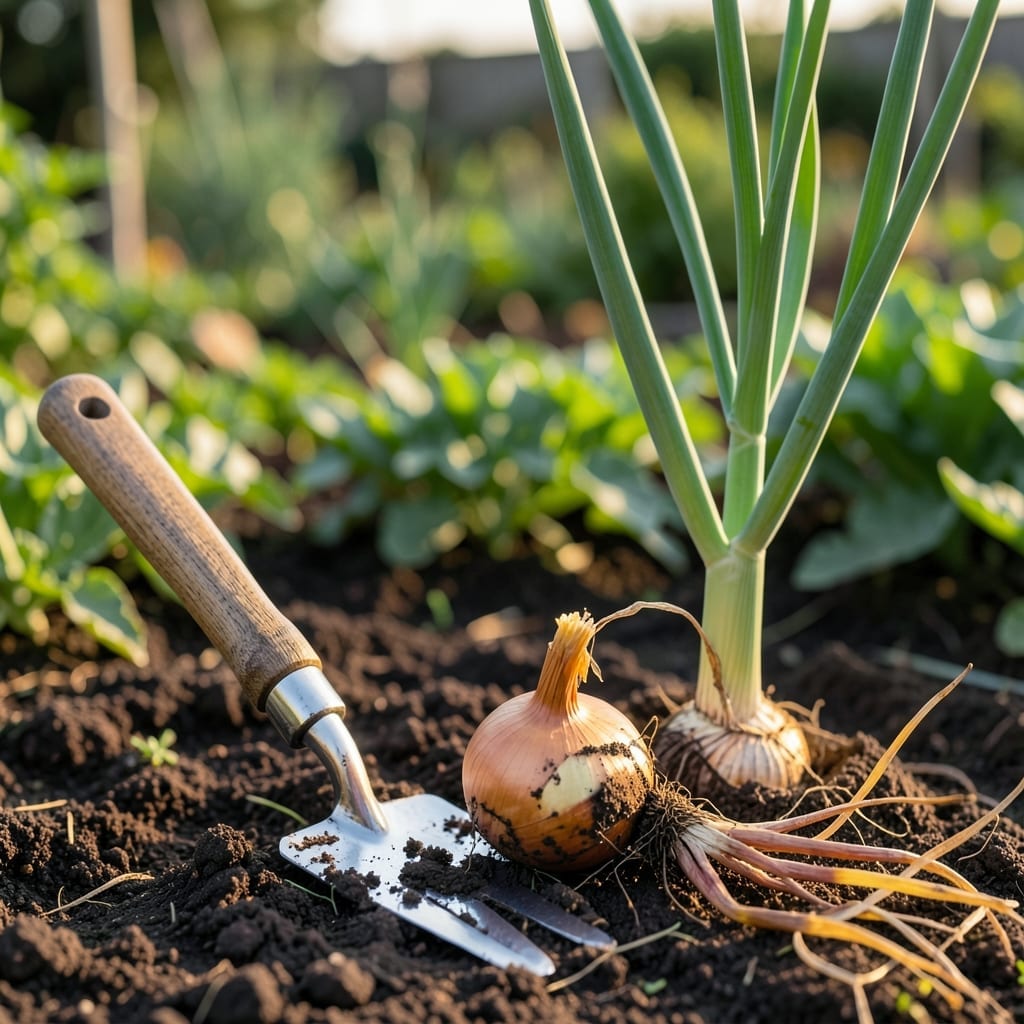
Knowing exactly when to harvest 🧅 Onion can mean the difference between a bountiful crop and a disappointing yield. Timing is everything, and onions give clear signals when they’re ready to be pulled from the soil.
I’ve seen too many gardeners pull their onions too early or leave them too long, missing that perfect window. The signs are subtle but unmistakable once you know what to look for.
From yellowing leaves to softening necks, your plants will tell you when it’s time. I’ll show you the simple visual cues and tests to confirm they’re ready.
Let’s make sure your harvest is spot-on this season. You’ll be pulling perfect onions with confidence in no time.


I always watch for the first clear sign: yellowing foliage. When the green tops start turning golden brown, it means the onion bulb has stopped growing and is preparing for dormancy.
Another unmistakable cue is when the tops fall over naturally. This happens as the neck softens and the plant redirects energy to the bulb. Don’t force it—let it happen on its own.
I check the neck thickness too. A mature onion will have a soft, thin neck, while an immature one stays thick and firm. This is a sure sign the bulb has finished growing.
The outer skin should look dry and papery. If it’s still moist or rubbery, the onion isn’t ready. This skin protects the bulb during storage, so wait for it to form fully.
For bulb size, I compare it to the variety’s expected diameter. Most onions are ready at 2-4 inches, but check your seed packet for specifics. Size matters for storage potential.
If the tops are still green and upright, the onion isn’t ready. I’ve learned patience pays off—pulling too early results in small, underdeveloped bulbs that won’t store well.
I also watch for weather conditions. A stretch of dry, sunny days is ideal for harvesting. Wet weather can cause rot, so I time my harvest when the soil is dry and the forecast is clear.
When in doubt, I do the push-over test. If the tops flop over easily, the onions are likely ready. If they spring back upright, I give them a few more days to mature.
Finally, I inspect the soil line. When the bulb’s shoulders start to protrude above the soil, it’s a sign the onion has reached its full size and is ready to be pulled. ☀️
I always double-check my onions with simple tests before harvesting. The push-over test is my first move: if tops flop over easily, they’re likely ready. This natural process signals the plant is diverting energy to the bulb.
Next, I gently brush soil from the bulb to check its size. Most varieties reach mature size when the diameter matches the variety’s expected width. For example, yellow onions often hit 3-4 inches before harvest.
I also examine the outer skin texture. A ready onion has a dry, papery skin that crackles slightly when touched. If it’s still moist or rubbery, I give it more time in the soil.
For bunching onions, I look for 1-inch thick stems at the base. These varieties don’t form bulbs but show readiness through stem thickness and consistent diameter.
The neck check is crucial too. I feel where the stem meets the bulb – it should be soft and shriveled, not firm. This indicates the plant has stopped growing and is ready.
Finally, I consider the weather forecast. I time my harvest for a dry, sunny week to allow proper curing. Wet conditions can ruin storage life, so I always plan accordingly.
These tests help me avoid the common mistake of harvesting too early or too late. With practice, you’ll recognize these signs instinctively each season 🌱