
Beautiful Plants For Your Interior
Beautiful Plants For Your Interior
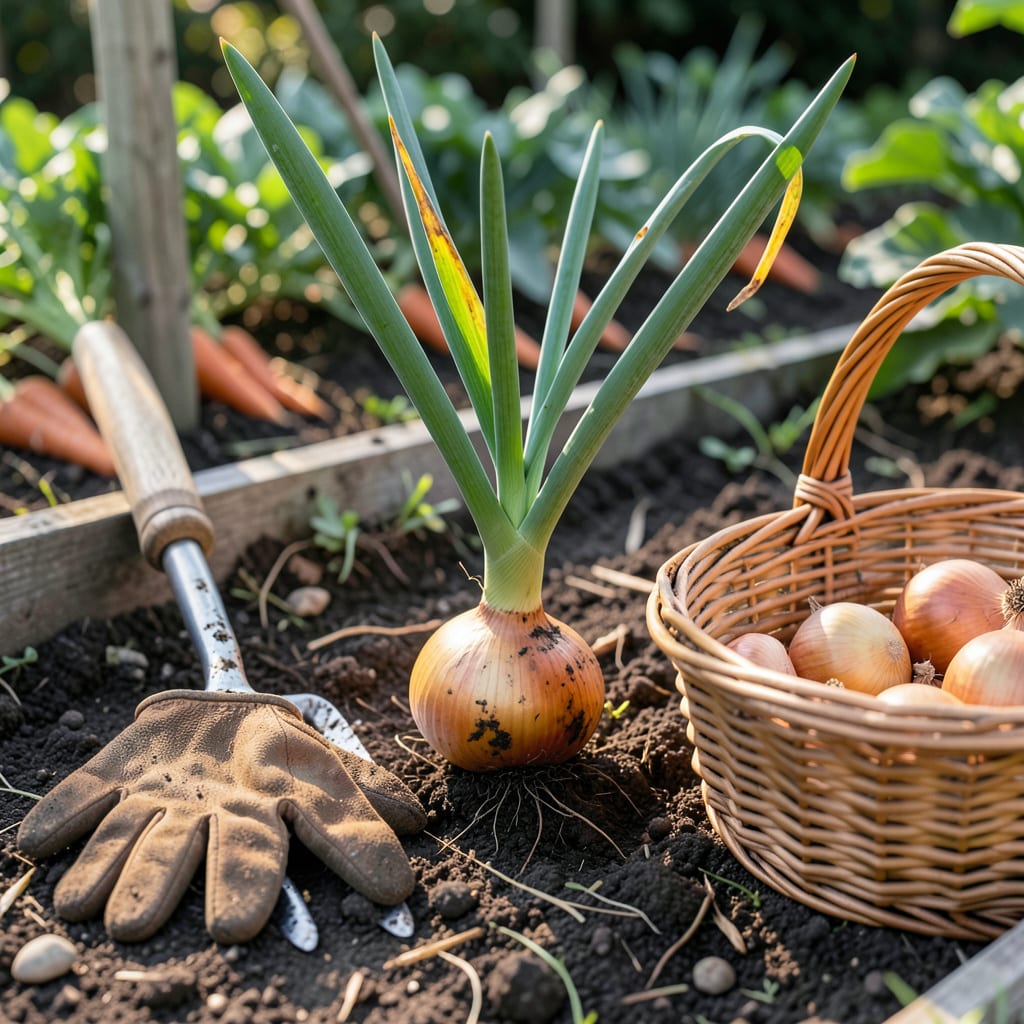
There’s nothing worse than pulling your onions too soon—or waiting too long—only to end up with small, flavorless bulbs. After months of tending your garden, nailing that perfect harvest moment makes all the difference.
I’ll show you the 5 foolproof signs your 🧅 onions are ready, whether you’re growing sweet spring varieties or hearty storage types. No more guessing—just juicy, crisp results every time.


Timing your onion harvest perfectly isn’t about luck—it’s about reading the 5 key visual cues your plants give you. I’ve learned that onions practically tell you when they’re ready, if you know what to look for. Let’s break down each signal so you never second-guess again.
The first clue is always the leaves turning yellow and starting to flop over. This isn’t just wilting—it’s the onion’s way of saying, “I’m done growing!” For bulbing onions, this is your green light. Green onions, though, are ready much earlier when they’re still vibrant green and slender.
For storage onions, the papery skin is your best friend. Run your fingers over the bulb—if the outer layer feels dry and easily rubs off, it’s ready. This skin protects the onion during curing, so don’t harvest until it’s fully developed. Sweet onions like Vidalia or Walla Walla will have thinner skins but still dry slightly.
The neck test is my favorite trick. About 1-2 inches above the bulb, the stem should feel soft and collapsible. If it’s still thick and rigid, your onion needs more time. This is especially critical for long-day varieties, which can take up to 120 days to mature. Short-day types (common in southern gardens) often soften faster.
Don’t ignore the bulb size—gently brush away soil to check. Most mature onions reach 2-3 inches in diameter, though some jumbo varieties (like ‘Ailsa Craig’) can grow larger. If you’re growing green onions, harvest when they’re 6-8 inches tall and the base is slightly swollen but not fully bulbed.
Weather can throw a wrench in your plans. If heavy rain is forecasted, harvest a day early to prevent splitting or rot. Conversely, a drought might delay maturity—keep soil moist but not soggy. I once lost half my crop to rot because I waited too long after a monsoon-like downpour. Lesson learned!
Here’s a pro move: Stop watering 1-2 days before harvest. This lets the skins tighten up, which is crucial for storage onions. For green onions, you can water right up until harvest since you’ll use them fresh. If you’re growing red or white onions, their color deepens as they mature—another handy visual cue.
If you’re still unsure, do the “lift test”: Gently tug on a bulb. If it resists, it’s not ready. If it pops out easily with dry, papery roots, you’ve hit the sweet spot. Remember, overwintered onions (planted in fall) often mature 2-3 weeks earlier than spring-planted ones, so adjust your expectations.
Finally, trust your instincts. If most of your onion tops have flopped, the necks are soft, and the bulbs feel firm (not squishy), it’s time. Grab your garden fork, loosen the soil, and pull them on a dry, sunny day for best curing results. Your future self will thank you when those onions store perfectly for months! ☀️
Not all onions are created equal when it comes to harvest time. Green onions (scallions) can be ready in as little as 60 days, while storage onions often need 100-120 days to fully mature. The key is knowing what type you’re growing.
For spring-planted bulbing onions, I watch the calendar and the weather. Most varieties hit their peak in mid-to-late summer, but short-day onions (like ‘Texas Early White’) mature faster in southern climates. Long-day types (such as ‘Walla Walla’) thrive in northern gardens.
| Onion Type | Days to Maturity | Best Harvest Time | Key Sign |
|---|---|---|---|
| Green Onions | 60-80 days | When 6-8 inches tall | Leaves still green and slender |
| Sweet Onions | 90-110 days | When tops flop over | Neck softens, skin papery |
| Storage Onions | 100-120 days | After tops brown and dry | Bulb firm, skin tight |
Overwintered onions (planted in fall) are ready by early summer, often 2-3 weeks earlier than spring-planted ones. If you’re growing red or white onions, check their shoulders—when they start pushing out of the soil, they’re close to harvest.
Weather plays a huge role too. A heatwave can speed up maturity, while cool, wet springs delay it. I always keep an eye on the 10-day forecast—if heavy rain is coming, I’ll harvest a few days early to prevent rot.
For green onions, you can start harvesting as soon as they’re pencil-thick. Just snip what you need and let the rest keep growing. With bulbing onions, patience pays off—wait until at least half the tops have fallen over naturally.
If you’re growing onion sets (those tiny bulbs planted in spring), they’ll mature faster than seeds—usually in 70-90 days. But no matter the type, always stop watering 1-2 days before harvest to toughen up the skins for storage.
Pro tip: Gently brush away soil from the bulb’s top to check its size. If it’s reached the expected diameter (usually 2-3 inches for storage onions), and the neck is soft, it’s go time! ✂️
Timing your onion harvest isn’t just about patience—it’s about preserving flavor and storage life. I’ve learned the hard way that picking too soon or waiting too long can ruin months of work. Let’s break down what goes wrong and how to fix it.
Harvest too early, and you’ll end up with small, underdeveloped bulbs that lack sweetness. The skins will be thin and prone to bruising, and they won’t store well. I once pulled a batch of Walla Walla sweets at 80 days—they were edible but nowhere near their full, juicy potential.
Wait too long, and your onions may split open or start regrowing. I lost an entire row of red onions one year because I waited until the skins turned brittle—the centers had already sprouted green shoots, making them bitter and unusable for storage.
The ideal window is when 60-80% of tops have fallen over naturally. For storage onions, this usually happens at 100-120 days. Sweet varieties like Vidalia are best at 90-110 days. If you miss this window, you can sometimes salvage the crop by curing immediately in a dry, shaded spot.
Here’s how to test if an overmature onion is still usable: Cut it open. If the center is firm and white, it’s fine for immediate use. If you see green sprouts or soft spots, compost it—those won’t store well. Underripe onions can be cured artificially by spreading them in a single layer in a warm (75-85°F), dry place for 2-3 weeks.
Remember, weather extremes can force your hand. A sudden heatwave may cause onions to bolt prematurely, while prolonged rain can lead to rot. When in doubt, harvest a test bulb—if it meets the size and skin criteria, the rest are likely ready too. Your onions will thank you with better flavor and longer shelf life! 🌱
Most bulbing onions need 100-120 days from planting to harvest. Green onions mature faster in 60-80 days, while sweet varieties like Vidalia are typically ready in 90-110 days. Always check your seed packet for variety-specific timing.
If tops remain upright past the expected harvest window, gently bend them over by hand. This mimics natural maturity signals and helps redirect energy to bulb development. Wait 3-5 days after bending before harvesting to allow skins to tighten.
It’s best to wait 2-3 days after heavy rain before harvesting. Wet soil makes bulbs prone to bruising, and excess moisture can lead to rot during curing. If rain is forecasted, harvest a day early instead.
Flowering (bolting) usually happens due to temperature stress or inconsistent watering. Once flowers appear, the bulb stops growing. Remove flower stalks immediately and harvest within 1-2 weeks, as these onions won’t store well.
Gently brush away soil to check bulb size. Storage onions should be at least 2 inches in diameter. If they’re smaller but tops are dying back, they’ve likely reached their full size for the season. Consider adjusting planting time or soil fertility next year.
