
Beautiful Plants For Your Interior
Beautiful Plants For Your Interior
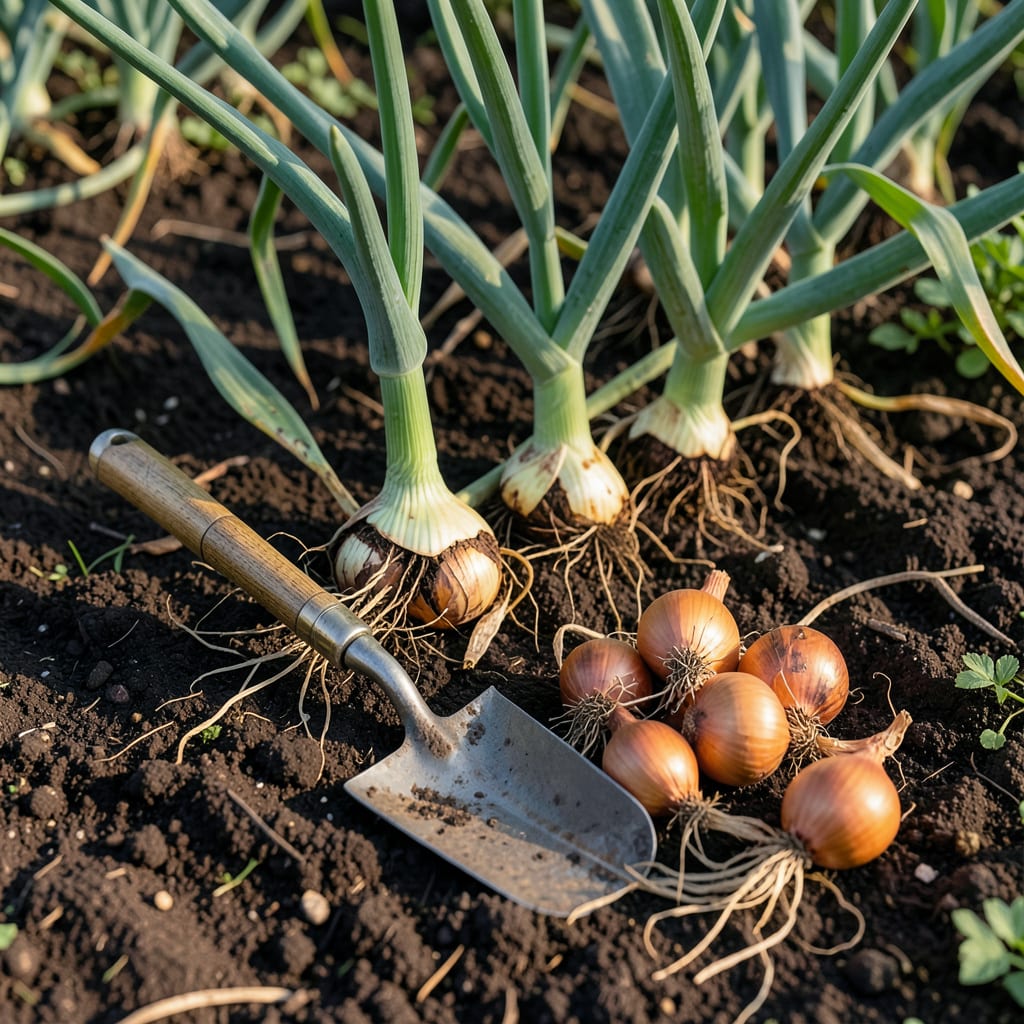
Timing your onion harvest perfectly can make all the difference between a lackluster crop and flavor-packed bulbs that store beautifully. The 🧅 onion sends clear signals when it’s ready to leave the soil.
I’ll show you exactly what to look for so you never second-guess the moment. Whether it’s your first harvest or your tenth, these signs never change.


Watching your onion plants closely is the best way to catch the perfect harvest window. I look for foliage yellowing first, as the green tops begin to turn brown and weaken at the base. This is nature’s way of saying the bulb has finished growing.
Another clear sign is when the necks soften and the tops fall over naturally. This typically happens 90-120 days after planting, depending on the variety. Don’t rush it—patience pays off with fuller bulbs. 🌱
| Sign | What to Look For | Onion Type |
|---|---|---|
| Foliage Color | Tops turn yellow or brown | Mature bulbs |
| Neck Condition | Softens and falls over | All types |
| Bulb Size | Full size for variety | Sweet, Red, Storage |
| Skin Texture | Dry and papery | Storage onions |
For green onions, the rule is different. Harvest these when the tops are 6-8 inches tall and the white bases are about 1 inch in diameter. They won’t form bulbs, so size is your main indicator. I pull them as needed for a continuous supply. 🌿
The skin texture is another giveaway for mature onions. When the outer layers feel dry and papery, the bulb is protecting itself for storage. This is especially important for storage onions, which need that tough outer layer to last months.
If you’re growing sweet onions, they often mature faster, around 80-90 days. Their tops may not fall over as dramatically, so I check the bulb size and skin condition more closely. A gentle squeeze can reveal firmness. ✂️
Weather plays a role too. After a dry spell, onions may signal readiness sooner. I always check the soil moisture—if it’s been wet, I might wait a few extra days to let the bulbs firm up before pulling.
Don’t ignore the calendar. Most onion varieties take 90-120 days to mature. If you planted sets in early spring, start checking for signs around early summer. Keep a garden journal to track your planting dates.
When in doubt, do a test dig. Carefully pull one onion to check its size and skin. If it looks ready, the rest of the crop likely is too. This simple step can save you from harvesting a whole bed too early. 🪴
Remember, harvesting too early means smaller bulbs with thinner skins that won’t store well. Waiting for these clear visual signs ensures you get the most out of your hard work in the garden.
Not all onions follow the same timeline, and I’ve learned that variety matters when deciding when to pull them from the soil. Each type has its own maturity indicators and ideal harvest window.
Green onions are the quickest, ready in 60-80 days. I harvest these when the tops reach 6-8 inches tall. Since they don’t form bulbs, size is the main cue. 🌱
| Onion Type | Days to Maturity | Harvest Sign |
|---|---|---|
| Green Onions | 60-80 days | 6-8 inch tops |
| Sweet Onions | 80-90 days | Tops yellow, soft necks |
| Red Onions | 90-110 days | Foliage falls, dry skin |
| Storage Onions | 100-120 days | Bulbs firm, papery skin |
Sweet onions like Vidalia or Walla Walla mature in 80-90 days. Their tops may not fall over as dramatically, so I watch for yellowing foliage and check bulb firmness.
Red onions typically need 90-110 days. I look for the same foliage fall-over as with other bulbs, plus a deep purple skin that’s dry to the touch. ☀️
Storage onions, including yellow and white varieties, take the longest at 100-120 days. These need fully dry, papery skins to last through winter storage. I often leave them in the ground a bit longer.
If you’re unsure about the variety, check the seed packet or plant tag for the days to maturity. This number is a reliable guide, though weather and care can shift the timeline slightly. 🪴
Even experienced gardeners can slip up when harvesting onions. I’ve seen premature pulling lead to undersized bulbs that don’t store well. The biggest mistake is not waiting for the tops to fall over naturally. 🌱
Another common error is leaving onions in wet soil too long after maturity. This can cause rotting or mold growth on the bulbs. Always check the weather forecast and harvest before heavy rains.
Warning: Never pull onions by their tops alone—this can damage the neck and lead to spoilage. Always loosen the soil first with a fork or trowel.
Improper curing is another pitfall. I’ve learned that onions need 1-2 weeks in a dry, ventilated space to develop their protective outer skin. Skipping this step means shorter storage life. ☀️
Damaging the bulbs during harvest is easier than you think. I use a garden fork to gently lift onions from the soil, rather than yanking them out. This prevents bruising and skin tears that invite disease.
Finally, don’t overlook the curing environment. I spread my onions in a single layer in a shady, airy spot. Direct sunlight can scald the bulbs, while poor airflow can trap moisture. ✂️
By avoiding these mistakes, you’ll ensure your onions are firm, flavorful, and ready for long-term storage. A little care at harvest time goes a long way in preserving your hard-earned crop.
Most bulb onions need 90-120 days to fully mature. Green onions are quicker at 60-80 days. Sweet varieties often ripen in 80-90 days, while storage types may take the full 120 days.
Pulling onions before they’re ready results in small, underdeveloped bulbs with thin skins. These won’t store well and may spoil faster. Always wait for the tops to yellow and fall over naturally for best results.
Avoid harvesting in wet conditions. Pulling onions from soggy soil can lead to rot. Wait for a dry spell, then gently lift them with a garden fork to prevent damage.
Green onions are ready when the tops reach 6-8 inches tall. The white bases should be about 1 inch in diameter. Unlike bulb onions, they don’t need to fall over to signal readiness.
