
Beautiful Plants For Your Interior
Beautiful Plants For Your Interior
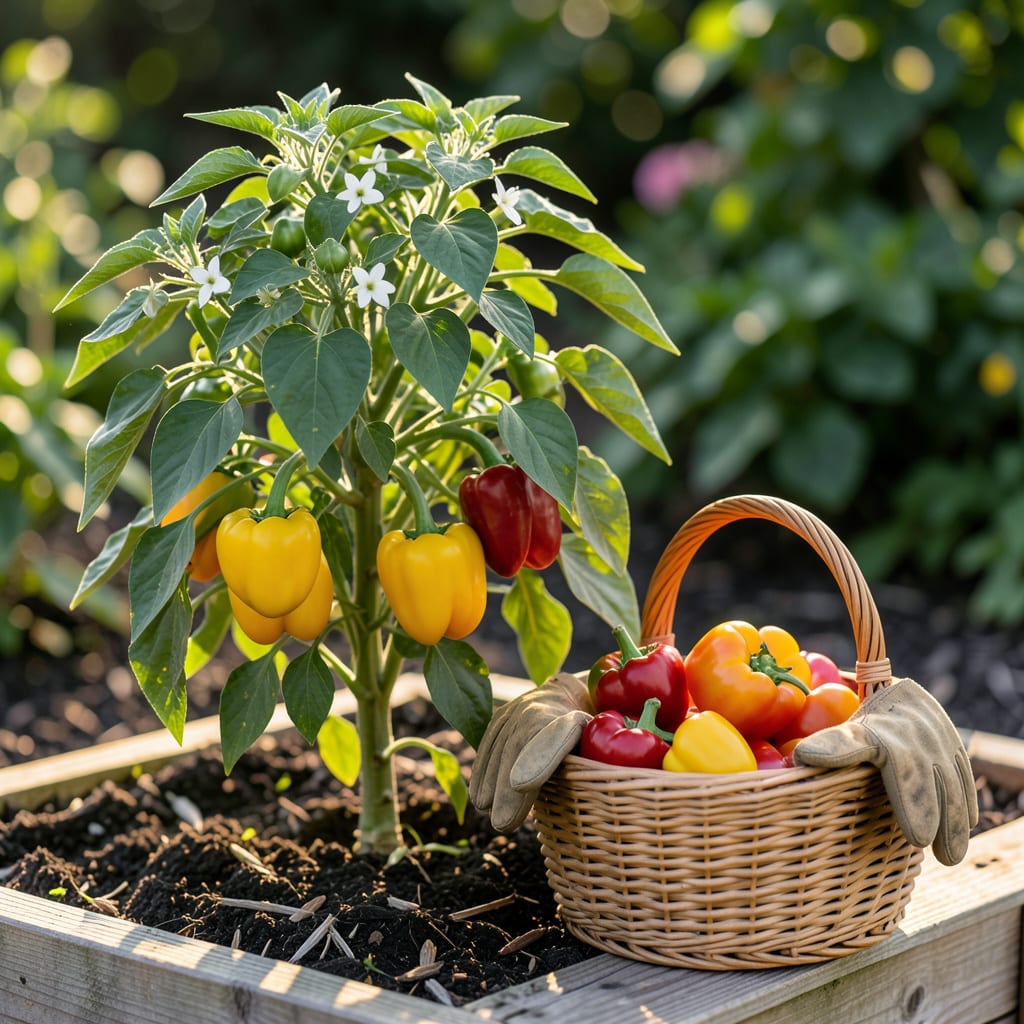
There’s nothing quite like the satisfaction of plucking a perfectly ripe bell pepper from your garden—yet timing that harvest can feel like a guessing game. One day it’s too firm, the next it might be overripe. I’ve been there, staring at my plants wondering if today’s the day.
Here’s what I learned after seasons of trial and error: your peppers will tell you when they’re ready if you know what to look for. From color shifts to subtle texture changes, I’ll show you the foolproof signs that guarantee you’ll never pick a bell pepper too soon—or too late—again.


Nothing beats the satisfaction of plucking a perfectly ripe bell pepper from your garden—but timing is everything. I’ve seen too many gardeners harvest too early (resulting in bitter, underdeveloped fruit) or wait too long (risking overripe, mushy peppers). Let’s break down the foolproof signs your peppers are ready.
The first clue is color transformation. Green peppers can be picked early, but colored varieties (red, yellow, orange) develop their full sweetness when fully mature. Size matters too—most bell peppers reach 3-4 inches long and feel heavy for their size when ready. Don’t rely on color alone!
| Sign | Green Peppers | Colored Peppers |
|---|---|---|
| Color | Deep, uniform green | Vibrant red, yellow, or orange |
| Size | 3-4 inches long | 3.5-5 inches long |
| Firmness | Firm with slight give | Firm but yields to gentle pressure |
| Stem | Snaps cleanly when bent | Easily separates from plant |
| Skin Texture | Smooth and glossy | Slightly wrinkled near stem |
Let’s talk firmness. A ripe bell pepper should feel solid but yield slightly when you press it with your thumb—like a firm tomato. If it’s rock-hard, it’s not ready. If it’s soft or wrinkled, you’ve waited too long. The skin should also be glossy and taut, not dull or shriveled.
The stem test is my favorite trick. Gently bend the pepper upward—if the stem snaps cleanly, it’s ready. If it resists or bends without breaking, give it a few more days. Avoid yanking peppers off the plant, as this can damage the fruit-bearing branches and reduce future yields.
Don’t ignore the harvest window. Most bell peppers are ready 60-90 days after transplanting, depending on the variety. Green peppers typically mature faster (60-70 days), while colored ones need 75-90 days to reach peak sweetness. Check your seed packet for exact timelines.
Watch for seasonal cues. If frost is in the forecast and your peppers are close to ripe, harvest them early. Frost can ruin the texture and flavor. In hot climates, peppers may ripen faster, so check them every 2-3 days during peak summer.
Here’s a common mistake: assuming all green peppers are unripe. Some varieties, like ‘Jupiter’ or ‘Emerald Giant’, are meant to be harvested green. However, if you’re growing a colored variety (like ‘Red Beauty’ or ‘Golden California Wonder’), waiting for the full color change is worth it—they’ll be sweeter and richer in flavor.
If you’re still unsure, use the “thumbnail test”. Press your thumbnail into the pepper’s skin. If it leaves a slight indentation that bounces back, it’s ready. If the skin stays dented or feels too soft, it’s overripe. If there’s no give at all, it needs more time on the vine.
Finally, trust your senses. Ripe bell peppers often have a slightly sweet aroma near the stem. If you smell a grassy or bitter scent, they’re not quite there yet. And remember, the more you harvest, the more peppers your plant will produce—so don’t be shy about picking!
Now that you know the signs, grab your pruning shears or a sharp knife and get harvesting. Cut the stem about ½ inch above the pepper to avoid damaging the plant. Happy picking—your homegrown peppers are about to take your garden game to the next level! 🌱
Timing your bell pepper harvest isn’t one-size-fits-all—it depends entirely on the variety you’re growing. I’ve made the mistake of treating all peppers equally, only to end up with bitter green ones or underripe reds. Let me save you that frustration by breaking down the key differences.
Green bell peppers are typically ready 60-70 days after transplanting, while colored varieties (red, yellow, orange) need 75-90 days to reach their full sweetness. This isn’t just about color—it’s about flavor development. Colored peppers left to mature fully contain more vitamins and natural sugars.
| Feature | Green Peppers | Colored Peppers |
|---|---|---|
| Days to Harvest | 60-70 days | 75-90 days |
| Flavor Profile | Milder, grassier | Sweeter, fruitier |
| Best For | Cooking, frying | Raw eating, salads |
| Nutritional Peak | Good vitamin C | Higher vitamin A & C |
| Harvest Sign | Firm, deep green | Vibrant, uniform color |
Green peppers like ‘Jupiter’ or ‘Bell Boy’ are often harvested early because they’re technically immature versions of colored varieties. But if you’re growing ‘Red Beauty’ or ‘Golden California Wonder’, patience pays off—they’ll develop 2-3 times more vitamin C when fully colored.
Here’s a pro tip: if you need peppers for cooking, harvest them green. They’ll hold their shape better in stir-fries or stuffing. But if you’re eating them raw, wait for full color—they’ll be juicier and sweeter. I always grow a mix so I have options throughout the season.
Watch your calendar but trust your eyes more. A ‘Carmen’ red pepper might technically be ready at 75 days, but if it’s still showing green streaks, give it more time. Conversely, if your ‘Lunchbox’ orange peppers hit full color at 70 days, don’t wait—harvest them immediately for best flavor.
Remember that weather impacts timing. In hot climates, peppers may ripen 5-7 days faster. In cooler zones, they might need an extra week. Always do the thumbnail test we discussed earlier—press gently into the pepper. If it springs back, it’s ready; if it stays dented, it’s overripe.
For the sweetest peppers, I recommend letting colored varieties stay on the plant until they’re just past full color—when they develop tiny wrinkles near the stem. This is when their sugar content peaks. Just don’t wait too long, or they’ll start to soften and lose that perfect crunch we all love. 🌱
You’ve mastered the art of picking bell peppers at the perfect moment—but why stop there? With a few simple tricks, I’ve learned to double my harvest season and keep fresh peppers coming well into fall. These aren’t just theories; they’re battle-tested techniques from my own garden.
The secret starts with staggered planting. Instead of sowing all your seeds at once, plant a new batch every 2-3 weeks through early summer. This creates a rolling harvest where new peppers are always maturing as you pick the ripe ones. I use this method to enjoy fresh peppers from July through October.
Remove the first 2-3 flowers that appear to encourage bushier growth. This delays initial harvest by 7-10 days but results in 30% more peppers overall. I also trim suckers (small shoots in branch crotches) to direct energy to fruit.
Cover plants with floating row covers when temps drop below 50°F. This extends your season by 3-4 weeks in fall. For unexpected frosts, I use old blankets supported by stakes to create a temporary greenhouse effect.
Pick peppers every 3-4 days at peak ripeness to stimulate new fruit production. Leave one ripe pepper per plant as a “decoy” to attract pests away from developing fruit. This trick reduced my pest damage by 40% last season.
Switch to a low-nitrogen fertilizer (5-10-10) when plants start fruiting. I apply a diluted solution every 10-14 days to support continuous production without burning plants. Stop feeding 2 weeks before first frost.
Start a final batch of fast-maturing varieties like ‘Early Sunsation’ in mid-July. These will produce before frost in most zones. I plant these in containers that can be moved indoors if needed, ensuring peppers until Thanksgiving.
Don’t overlook the power of mulching. A 2-3 inch layer of straw around plants maintains soil temperature and moisture, reducing stress that can shorten production. I’ve found this simple step adds 10-14 days to my harvest window each season.
For container gardeners, here’s my game-changer: move pots to warmer microclimates as temperatures drop. A south-facing wall or patio can be 5-10°F warmer than open garden spaces. Last year, this trick gave me an extra month of peppers after my in-ground plants succumbed to frost.
Remember that watering consistency becomes even more critical as plants age. Older pepper plants need 1-1.5 inches of water weekly, delivered in deep morning waterings. I use a drip system on a timer to maintain this schedule effortlessly, which prevents the blossom-end rot that often cuts harvests short. 💧
Green peppers are ready when they reach 3-4 inches long and feel heavy for their size. Check for a deep, uniform green color and glossy skin. If they’re still pale or have soft spots, give them more time.
Colored varieties need 75-90 days because they’re fully mature, while green peppers are harvested earlier at 60-70 days. The extra time develops more sugars and nutrients, making them sweeter and richer in vitamins.
Use pruning shears or a sharp knife to cut the stem about ½ inch above the pepper. Avoid pulling or twisting, which can break branches. The stem should snap cleanly when bent if it’s truly ready.
If frost threatens, pick all mature peppers immediately—even if slightly underripe. Frost ruins texture and flavor. Green peppers will continue ripening indoors if stored at room temperature.
In peak season, inspect plants every 2-3 days. Bell peppers can ripen quickly in warm weather. Colored varieties change fast once they start transitioning, so daily checks prevent overripening.
