
Beautiful Plants For Your Interior
Beautiful Plants For Your Interior
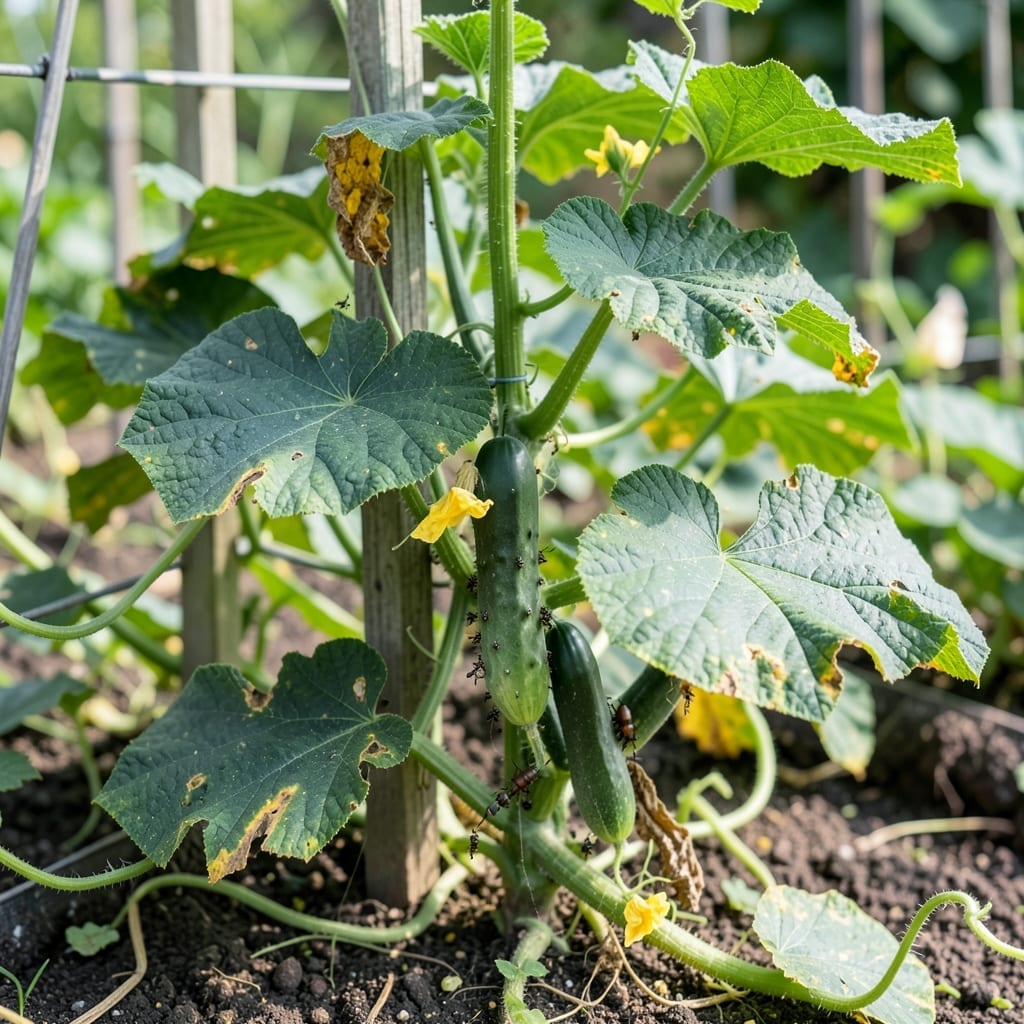
My cucumbers looked perfect last week, now they’re drooping like they’ve given up. 🌱 This happens every summer—just when vines finally take off, something goes sideways with the leaves, fruit, or both.
Between you and me, it’s usually not one dramatic problem. More often it’s heat stress, uneven watering, or a sneaky pest that’s been hiding under the leaves. The plants can’t tell us what’s wrong, but their symptoms scream it loud and clear.
Here’s the thing—most cucumber issues are fixable in 24-48 hours once you identify them. I’ve saved more than a few crops by catching the early warning signs and adjusting my approach.
We’ll sort through the common culprits and the simple fixes that get your vines back on track. No guesswork, just solutions.
Understanding why cucumbers are struggling this season starts with identifying the underlying issues. Here are the primary causes:
Cucumbers thrive in well-draining, nutrient-rich soil. If your soil lacks organic matter or has poor drainage, roots suffocate, leading to stunted growth or yellowing leaves. Test soil pH (ideal: 6.0–6.8) and amend with compost to improve fertility.
Inconsistent watering—either overwatering or drought—causes stress. Cucumbers need 1–2 inches of water weekly. Too much water invites root rot, while too little leads to bitter, misshapen fruit. Use drip irrigation for even moisture.
Common culprits like cucumber beetles, aphids, or powdery mildew weaken plants. Beetles spread bacterial wilt, while mildew blocks sunlight absorption. Apply neem oil or introduce beneficial insects (e.g., ladybugs) for natural control.
Cucumbers are heat-loving but wilt in temps above 90°F (32°C). Cool nights (below 50°F/10°C) slow growth. Use row covers for warmth or shade cloth to protect from scorching sun.
Yellow leaves or weak vines often signal nitrogen or potassium shortages. Side-dress with balanced fertilizer (e.g., 10-10-10) or compost tea to replenish nutrients mid-season.
If your cucumbers are struggling, don’t worry—most issues are fixable with the right approach. Below are practical solutions for common problems, along with prevention tips to keep your plants thriving.
Fix: This often signals a nutrient deficiency or overwatering. Test your soil and add a balanced fertilizer (10-10-10) to replenish nitrogen, phosphorus, and potassium. If the soil is soggy, improve drainage by amending with compost or sand.
Prevention: Water at the base of the plant in the morning to avoid fungal growth, and mulch to retain moisture without oversaturating the roots. 💡 Pro tip: Use a moisture meter to monitor soil hydration levels.
Fix: Spray plants with a mixture of water and mild soap to dislodge aphids. For cucumber beetles, apply neem oil or introduce beneficial insects like ladybugs. Handpick visible pests if the infestation is small.
Prevention: Plant companion herbs like dill or marigolds to repel pests naturally. Rotate crops yearly to disrupt pest life cycles.
Fix: If nights are chilly, cover young plants with row covers or cloches. During extreme heat, provide shade cloth (30-50%) to protect leaves from scorching. Ensure consistent watering to mitigate stress.
Prevention: Plant cucumbers after the last frost date and choose heat-tolerant varieties for warmer climates. ✨ Pro tip: Use black plastic mulch to warm soil early in the season.
Fix: Remove infected leaves immediately and apply a fungicide like sulfur or copper. Improve air circulation by spacing plants 12-18 inches apart and pruning excess foliage.
Prevention: Avoid overhead watering—use a drip irrigation system instead. Clean up plant debris at the end of the season to prevent spores from overwintering.
With these targeted fixes and a little proactive care, your cucumbers will be back on track to a bountiful harvest! 🌱 Happy gardening!
Yellow leaves often indicate nitrogen deficiency or overwatering. Test soil and adjust watering to 1-2 inches weekly. A balanced fertilizer can restore nutrients quickly.
Improve air flow by spacing plants 12-18 inches apart and water at the base. Remove infected leaves immediately and apply neem oil as a natural fungicide.
Bitterness usually comes from water stress or heat above 90°F (32°C). Maintain consistent moisture and provide afternoon shade during hot spells.
Reduce watering 1-2 days before picking to concentrate flavors. Resume normal watering after harvest to encourage more fruit production.