
Beautiful Plants For Your Interior
Beautiful Plants For Your Interior
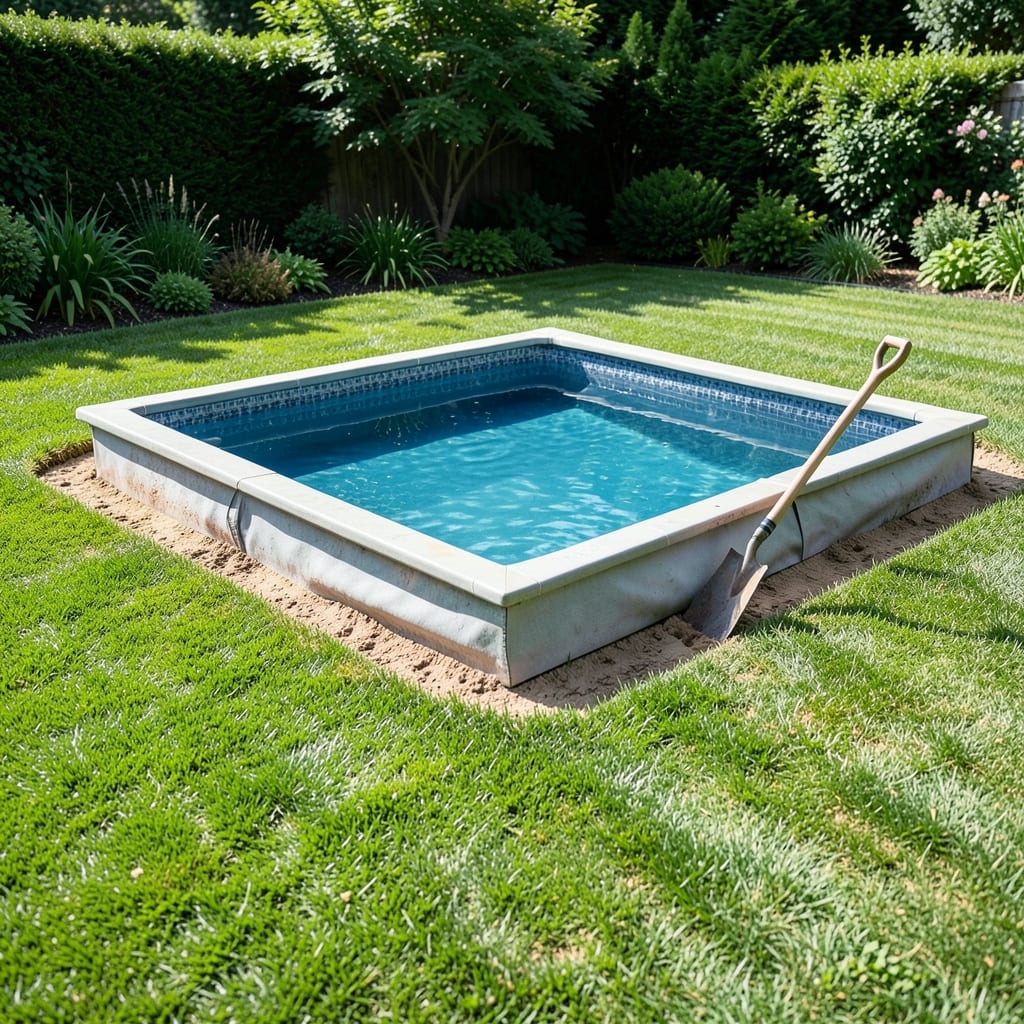
Use a protective ground cover like a pool pad, foam tiles, or a thick tarp under your above ground pool to prevent punctures, level the surface, and protect grass from damage.
I’ve learned the hard way that uneven ground or sharp objects can ruin a pool liner in no time. A good base creates a smooth foundation that keeps your pool stable and extends its lifespan. 🔥
Beyond protection, these covers also make installation easier and prevent grass from dying under the weight of the water.
💡 In This Article
An above ground pool filled with water can exert 4,800-5,400 pounds of pressure per square foot on the ground. Without proper support, this immense weight creates uneven stress points that can tear liners or cause structural failure over time. 🔥
The grass beneath your pool isn’t just at risk from pressure—it’s also vulnerable to suffocation. A solid barrier prevents the pool’s weight from cutting off oxygen and sunlight, which would kill your lawn in 3-5 days of continuous coverage.
Sharp objects hidden in grass—like rocks, sticks, or even buried debris—can puncture pool liners costing $200-$800 to replace. A protective layer creates a buffer zone that distributes weight evenly and shields against these hidden threats. ✨
Water naturally seeks the path of least resistance. On uneven ground, this means your pool could shift 1-2 inches over time, stressing the walls and creating weak points. A level base maintains structural integrity throughout the season.
Weed growth is another silent killer. Without a barrier, weeds can push up through the liner from below, creating small tears that expand into major leaks. Geotextile fabrics or thick tarps block this growth entirely. 💫
Temperature fluctuations matter too. Bare ground absorbs and radiates heat differently than a protective layer, which can cause your pool water to fluctuate 5-10°F more dramatically without proper insulation.
No, but mow it very short first. A protective layer like geotextile fabric can go directly over grass. For best results, remove any large rocks or sticks beforehand.
Aim for at least 1/4″ thickness for foam or rubber. For tarps, use 20-mil or thicker. Thinner materials may tear under the pool’s weight over time.
Yes. Dark-colored bases absorb heat, warming the water slightly. Foam pads provide some insulation, keeping water temperatures more stable. Light-colored materials reflect heat.
Secure it with landscape staples or weights at the edges. For foam pads, use double-sided tape or pool-specific adhesives. Leave 2″ extra material beyond the pool’s edge.