
Beautiful Plants For Your Interior
Beautiful Plants For Your Interior
Struggling with cucumber pests or poor yields? The right companion plants can boost growth, deter bugs, and improve flavor. Discover the top 10 plants to grow alongside cucumbers for a thriving garden ecosystem.

Tall sweet corn creates a living sunshade for your cucumbers, protecting them from harsh afternoon rays that can scorch leaves and stress plants.
While the corn provides natural shade, the cucumber vines reciprocate by anchoring corn stalks against wind, reducing the need for staking. This partnership works best when corn is planted in blocks rather than single rows, allowing cucumbers to weave between the stalks. Both plants thrive in well-drained soil with consistent moisture.
This duo is perfect for gardeners looking to maximize space while creating a self-supporting ecosystem. 🌱

Tired of cucumber beetles wreaking havoc on your vines? Plant radishes as your first line of defense—their pungent scent naturally repels these troublesome pests.
With a 30-day maturity, radishes grow fast enough to harvest before cucumbers need the full space. This means you get a pest-deterring crop that doubles as an early-season harvest. Plant them in rows between cucumber hills for maximum effect.
Ideal for gardeners who want to protect their cucumbers while making efficient use of space. 🌱
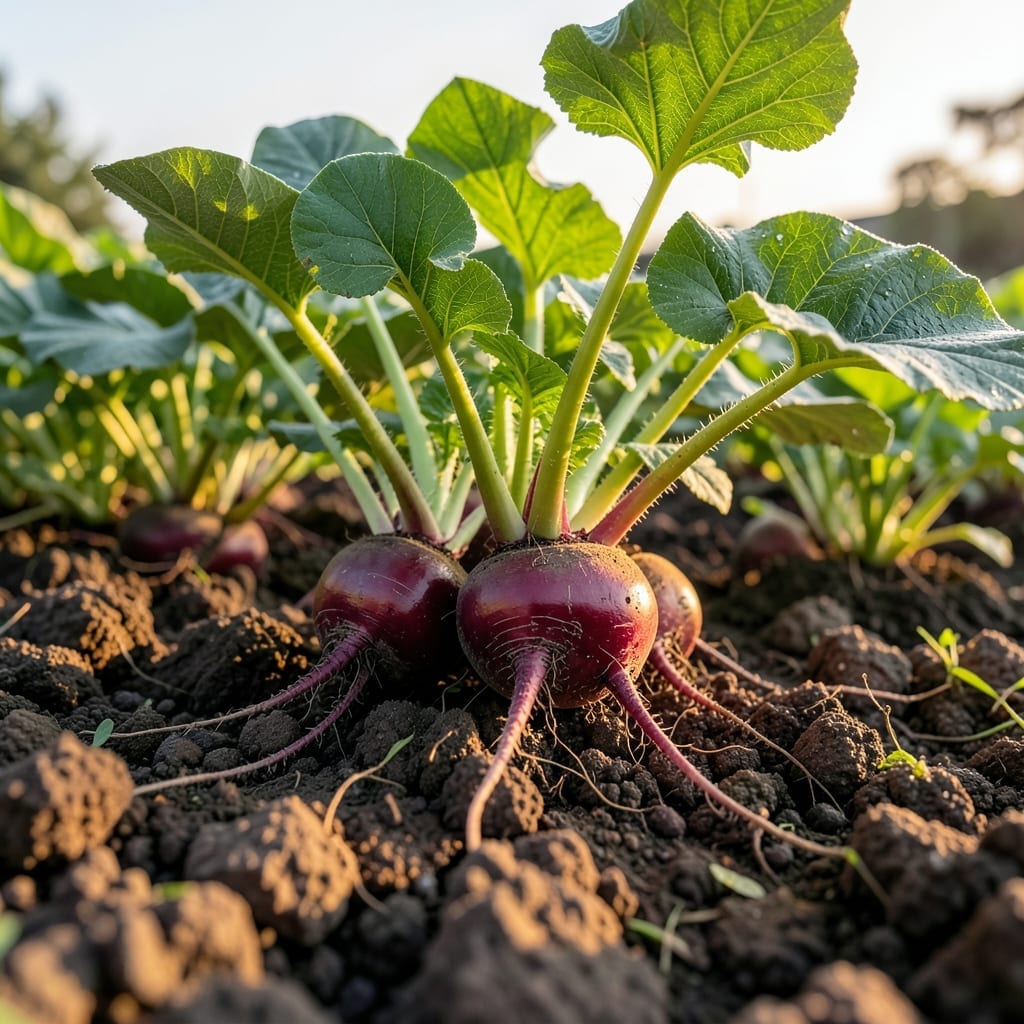
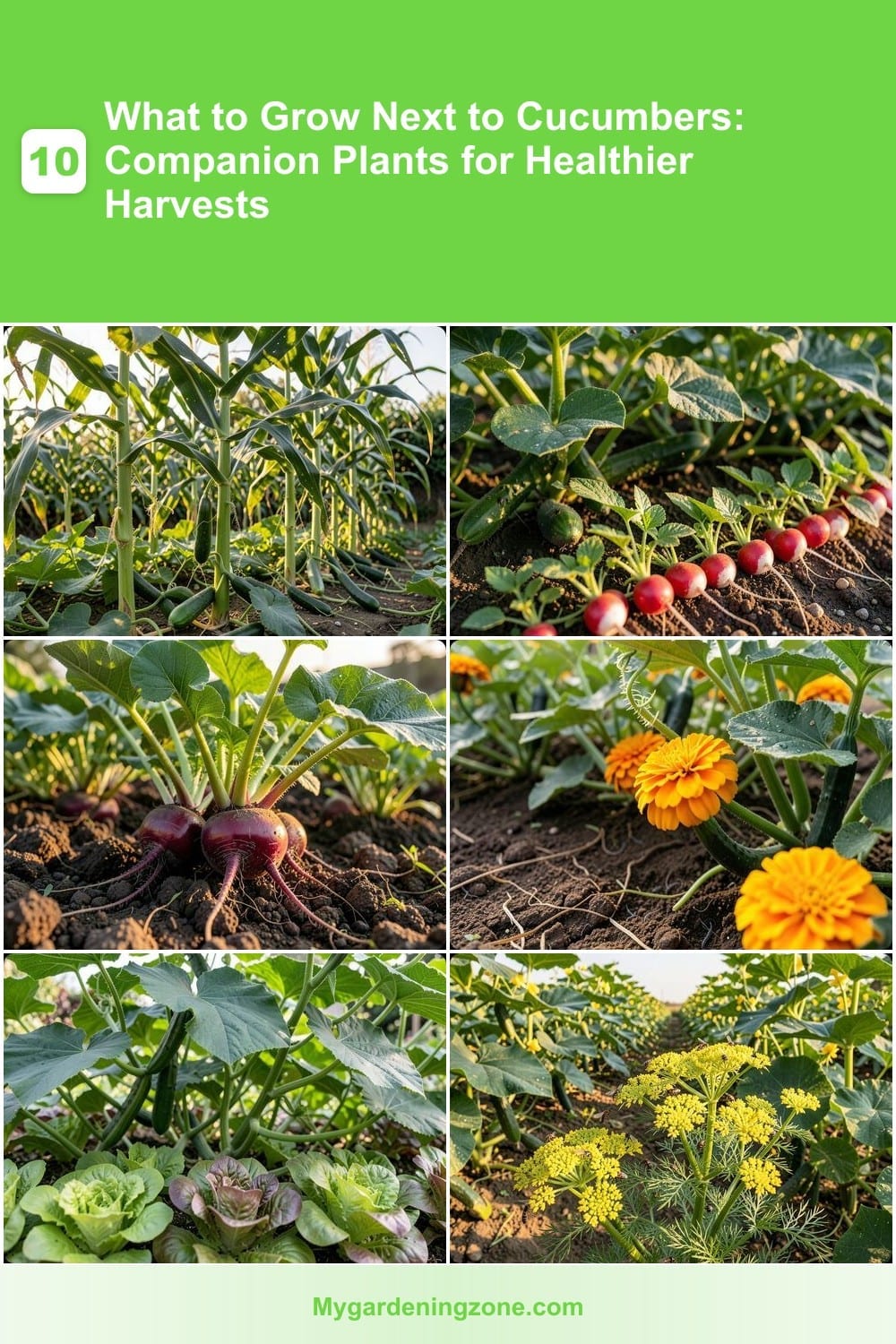
Struggling with hard, compacted soil that stifles your cucumbers? Beets are nature’s little tillers, sending down deep roots that naturally aerate the earth and improve drainage for thirsty cucumber plants.
As they grow, beets pull up essential nutrients from deeper soil layers, enriching the topsoil your cucumbers feed from. Their non-competitive root systems mean they won’t steal resources, making them ideal for interplanting. Harvest beets when young to minimize space competition.
Perfect for gardeners with heavy clay or poorly draining soil who want to boost their cucumber patch’s health. 🌱
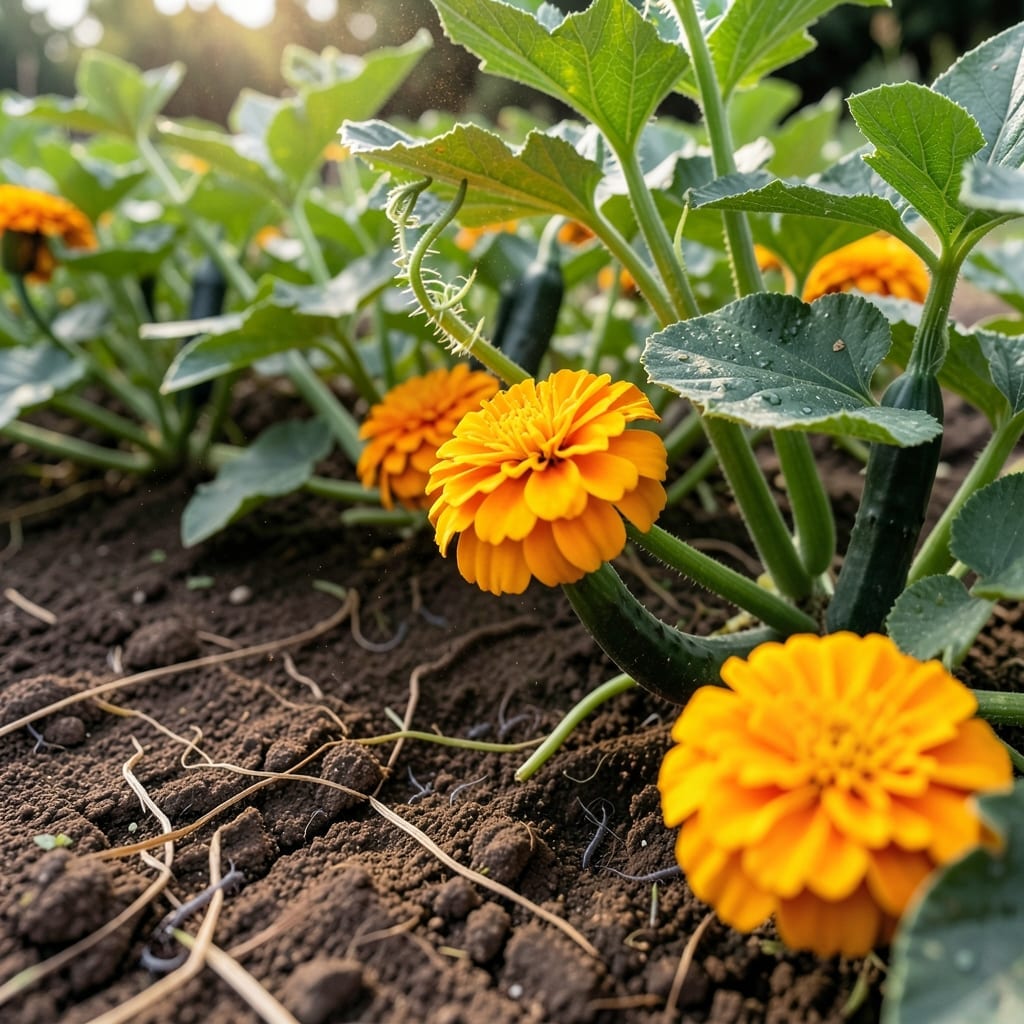
Hidden beneath the soil, root-knot nematodes can silently sabotage your cucumber patch—unless you plant French marigolds nearby to stop them in their tracks.
These vibrant flowers release natural chemicals called alpha-terthienyls that repel harmful nematodes and other soil pests that love to attack cucumber roots. Plant them as a border around your cucumber patch or intersperse them between plants for season-long protection.
This pairing is especially valuable for gardeners with a history of nematode problems or those planting in reused garden beds. 🌻
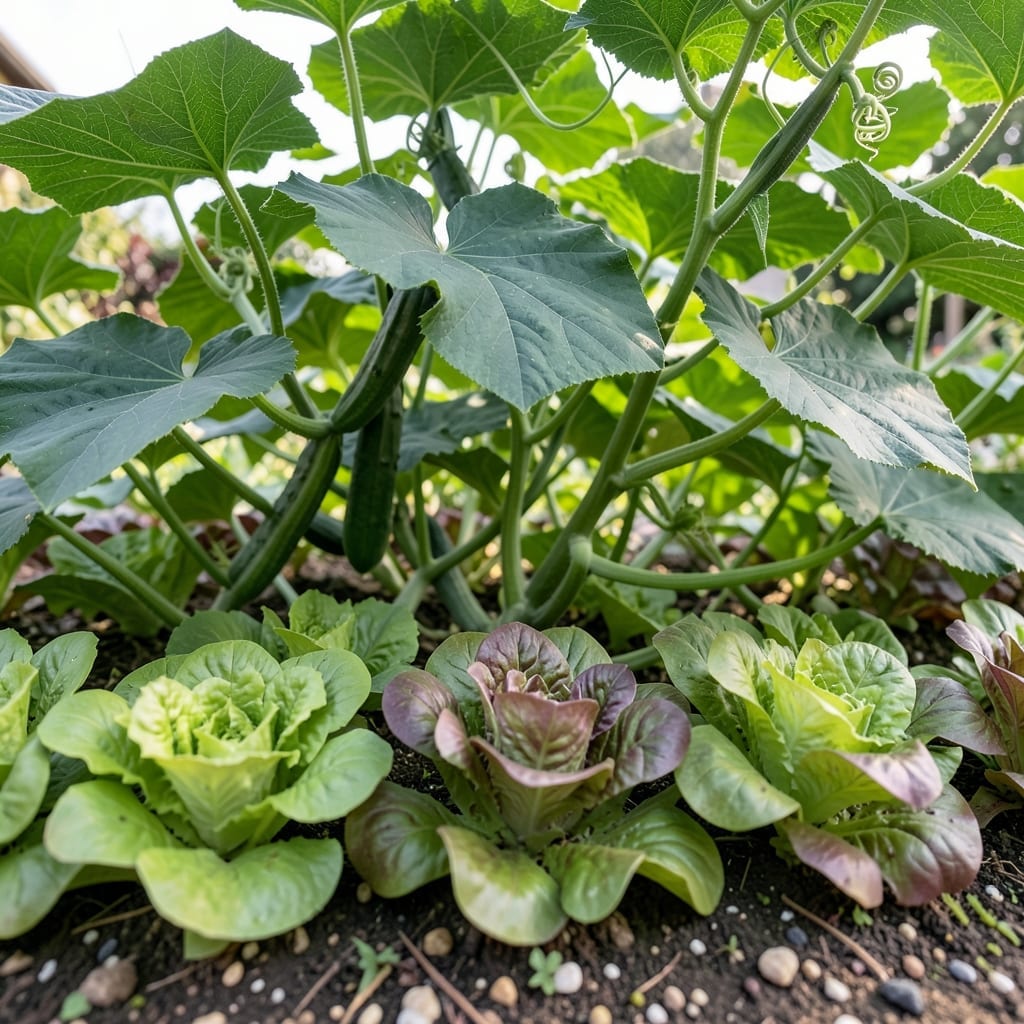
Make the most of every square inch by planting butterhead or leaf lettuce beneath your cucumber vines. These shallow-rooted greens thrive in the dappled shade cast by cucumber leaves, using space that would otherwise go to waste.
Since lettuce roots stay near the surface, they won’t compete with cucumbers for nutrients or water. This pairing works especially well in raised beds or containers where space is limited. Harvest outer lettuce leaves as needed to keep production going all season.
Urban gardeners and those with small plots will love this space-saving combo that delivers two crops from one footprint. 🌱
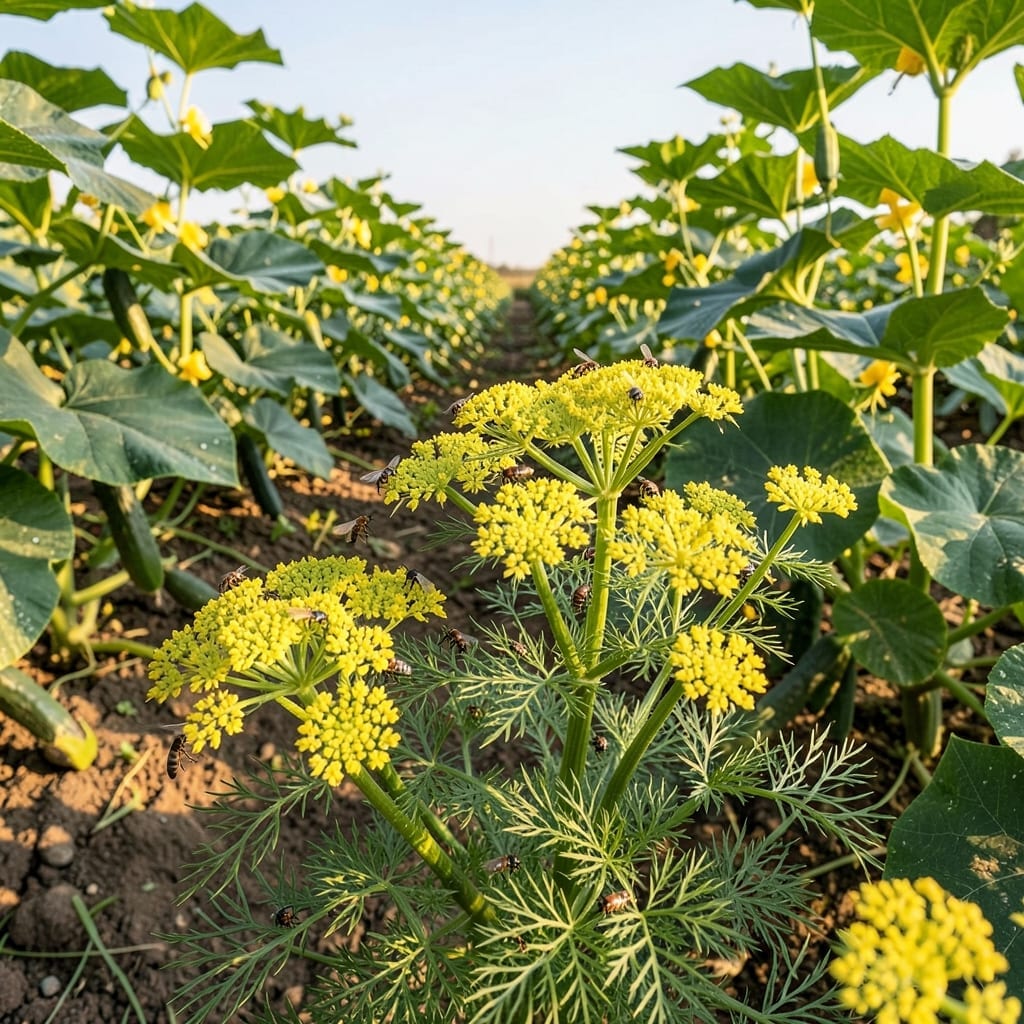
Want to turn your cucumber patch into a pollinator paradise? Plant dill nearby to attract hoverflies and parasitic wasps—nature’s own pest control squad that preys on cucumber beetles and aphids.
As dill matures, its yellow umbel flowers become a beacon for beneficial insects, while its fern-like foliage adds texture to your garden. Bonus: many gardeners report that cucumbers grown near dill have a more complex, aromatic flavor.
This pairing is ideal for organic gardeners seeking natural pest management without chemicals. 🌿
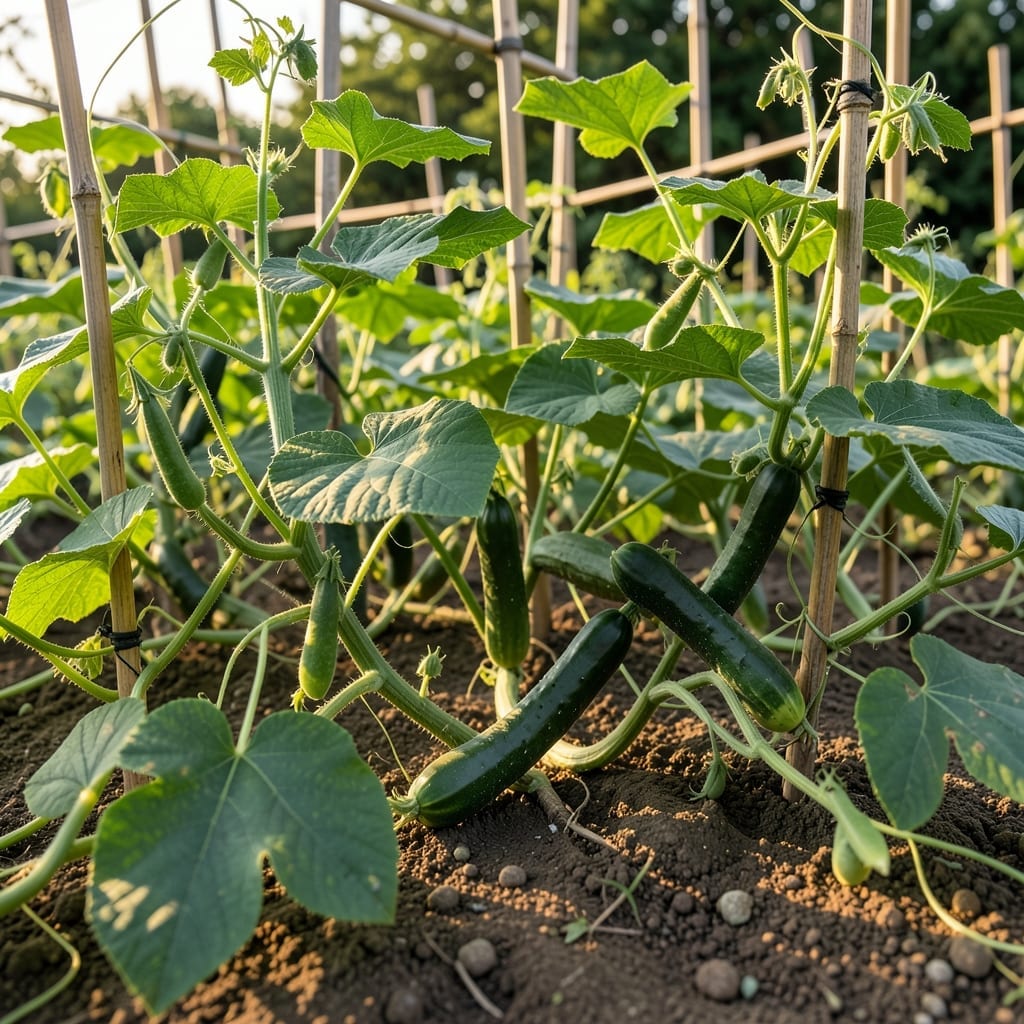
Need a natural way to feed your cucumbers’ heavy nitrogen needs? Plant peas alongside them to create a self-fertilizing system that benefits both plants.
Peas form a symbiotic relationship with soil bacteria that fix nitrogen from the air, converting it into a form cucumbers can use. Their climbing habit also means they can share the same trellis as cucumbers, saving garden space while improving soil health for future plantings.
This combination works especially well for organic gardeners looking to reduce fertilizer use while maximizing vertical space. 🌱
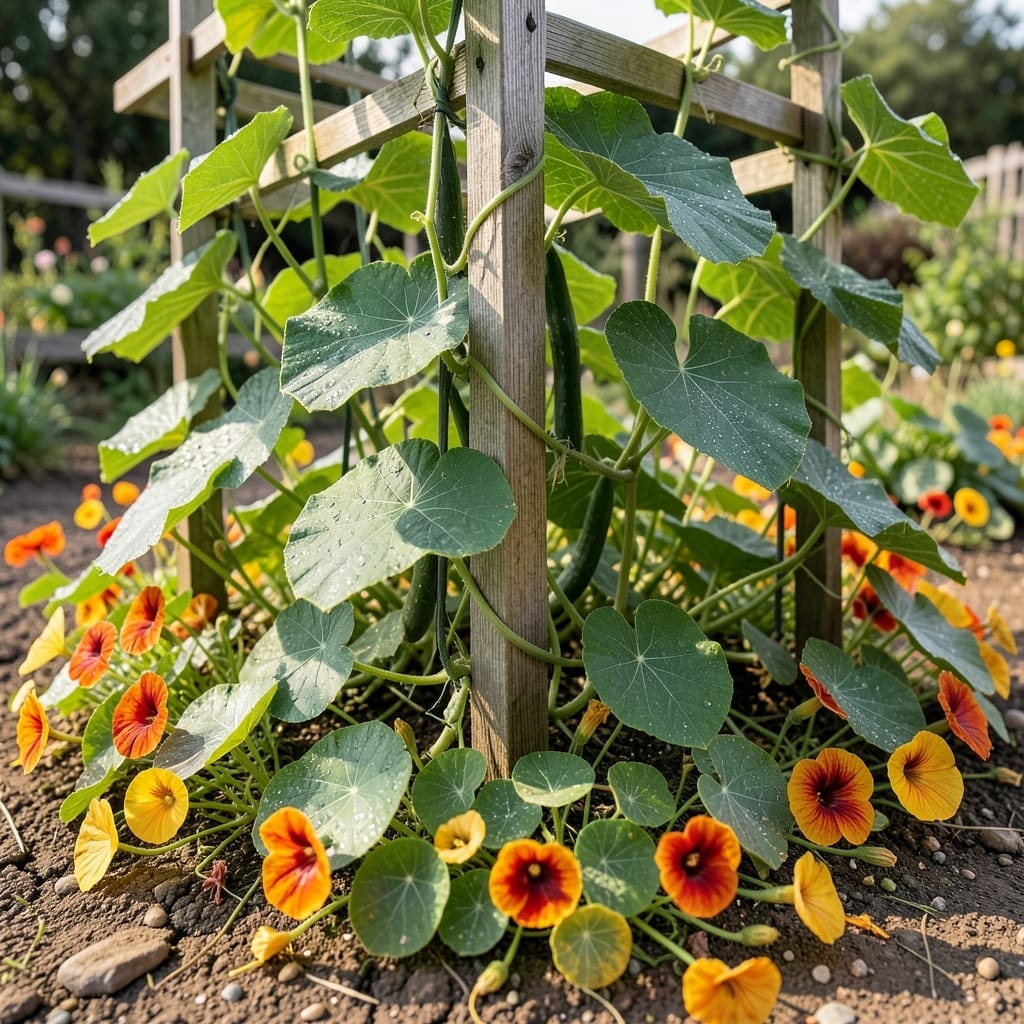
Dealing with aphid invasions on your cucumbers? Plant nasturtiums as a sacrificial decoy—their vibrant blooms and peppery foliage act like a pest magnet, drawing aphids away from your prized cucumber vines.
These easy-to-grow annuals thrive in poor soil and full sun, sprawling happily at the base of cucumber plants. You’ll sacrifice the nasturtiums to pests while your cucumbers stay protected, and you can even harvest the edible flowers for salads.
Perfect for organic gardeners who prefer chemical-free pest control and want to add a pop of color to their veggie patch. 🌻
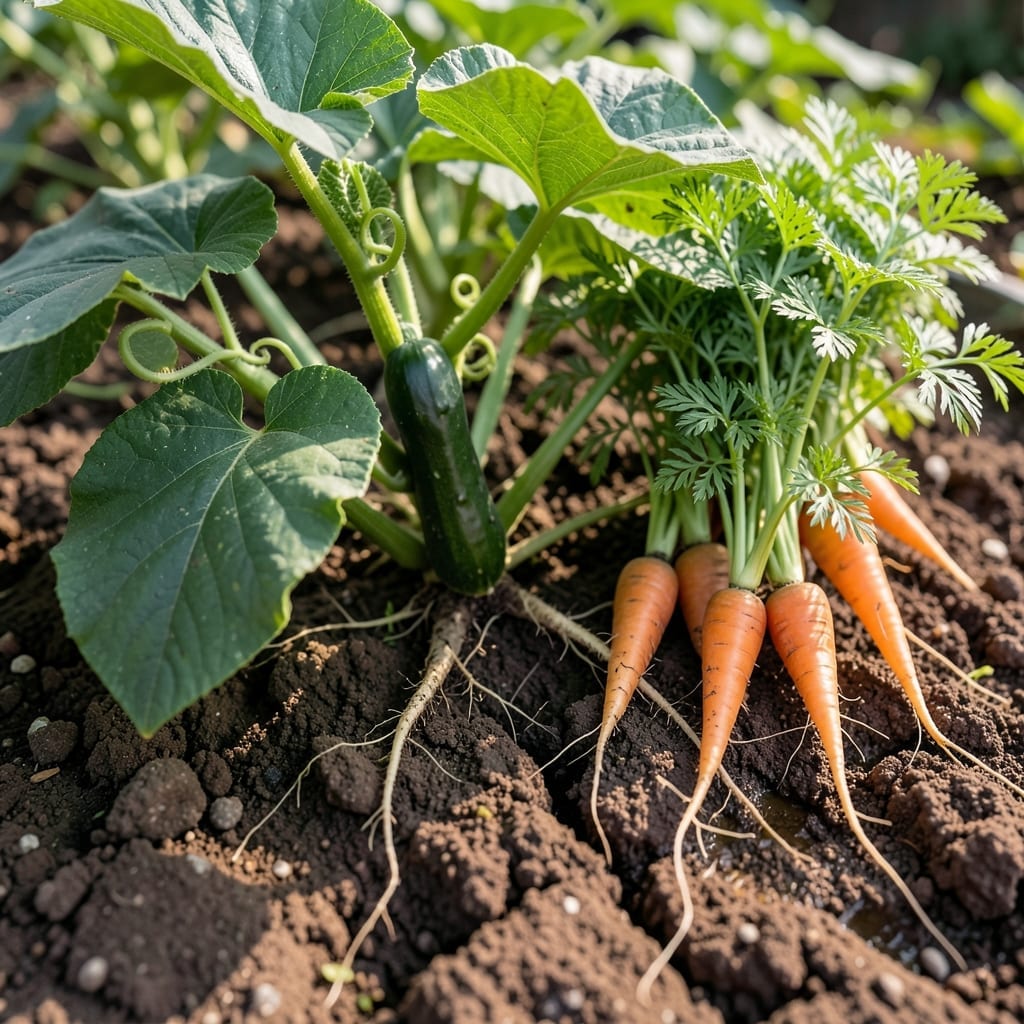
Heavy, compacted soil can suffocate cucumber roots, but carrots act as natural soil aerators with their deep, penetrating taproots that break up dense earth as they grow.
As carrots push through the soil, they create channels that improve drainage and oxygen flow, giving cucumber roots room to expand. Their vertical growth means they won’t compete for space, and you’ll harvest both crops without interference.
Gardeners with clay-heavy soil will see the biggest benefits from this underground teamwork. 🌱
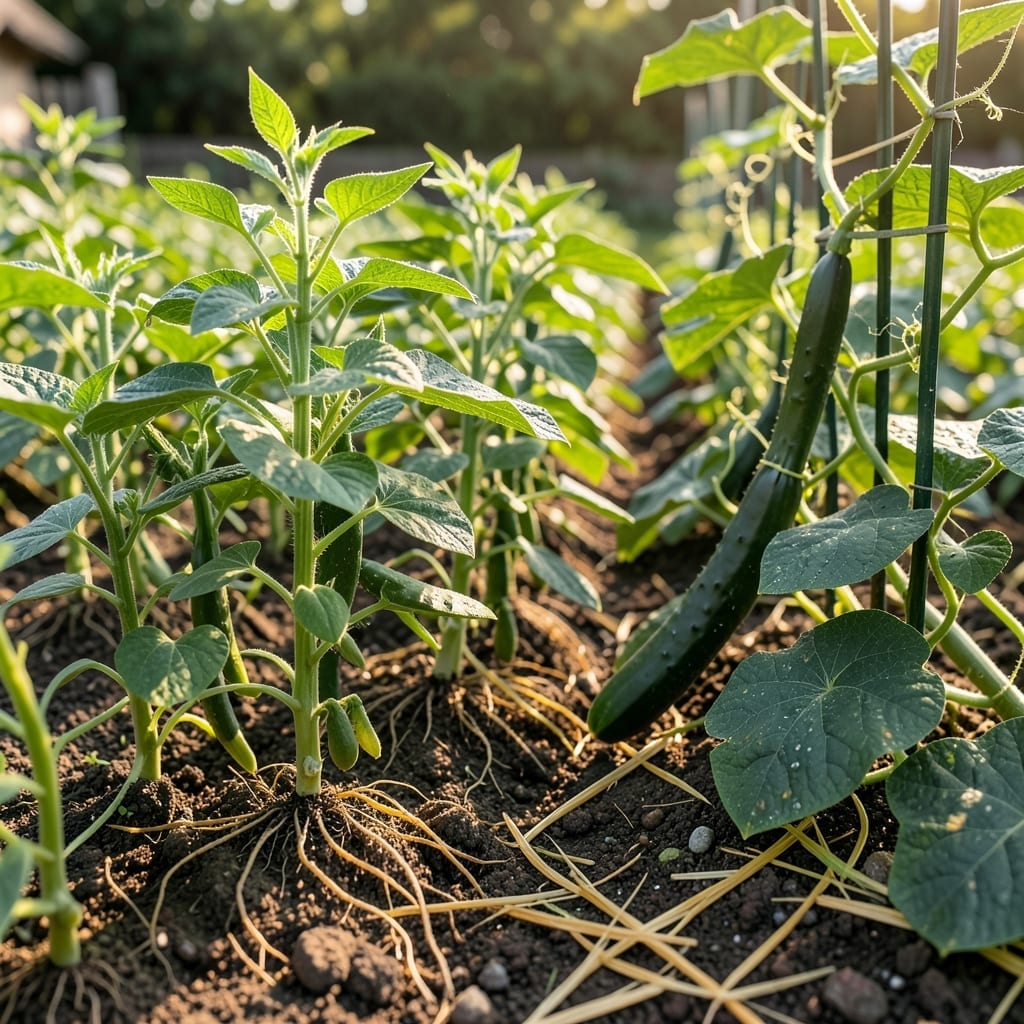
Want a compact plant that gives back to your garden soil? Bush beans form a symbiotic relationship with soil bacteria that fixes nitrogen, naturally fertilizing your cucumbers without any effort on your part.
Unlike pole beans, bush varieties stay neat and contained at 1-2 feet tall while still producing abundant pods. The cucumber vines provide light shade that beans appreciate during the hottest part of the day, creating a perfect growing environment for both plants.
This dynamic duo is ideal for gardeners who want to improve soil health while maximizing their harvest in limited space. 🌱