
Beautiful Plants For Your Interior
Beautiful Plants For Your Interior
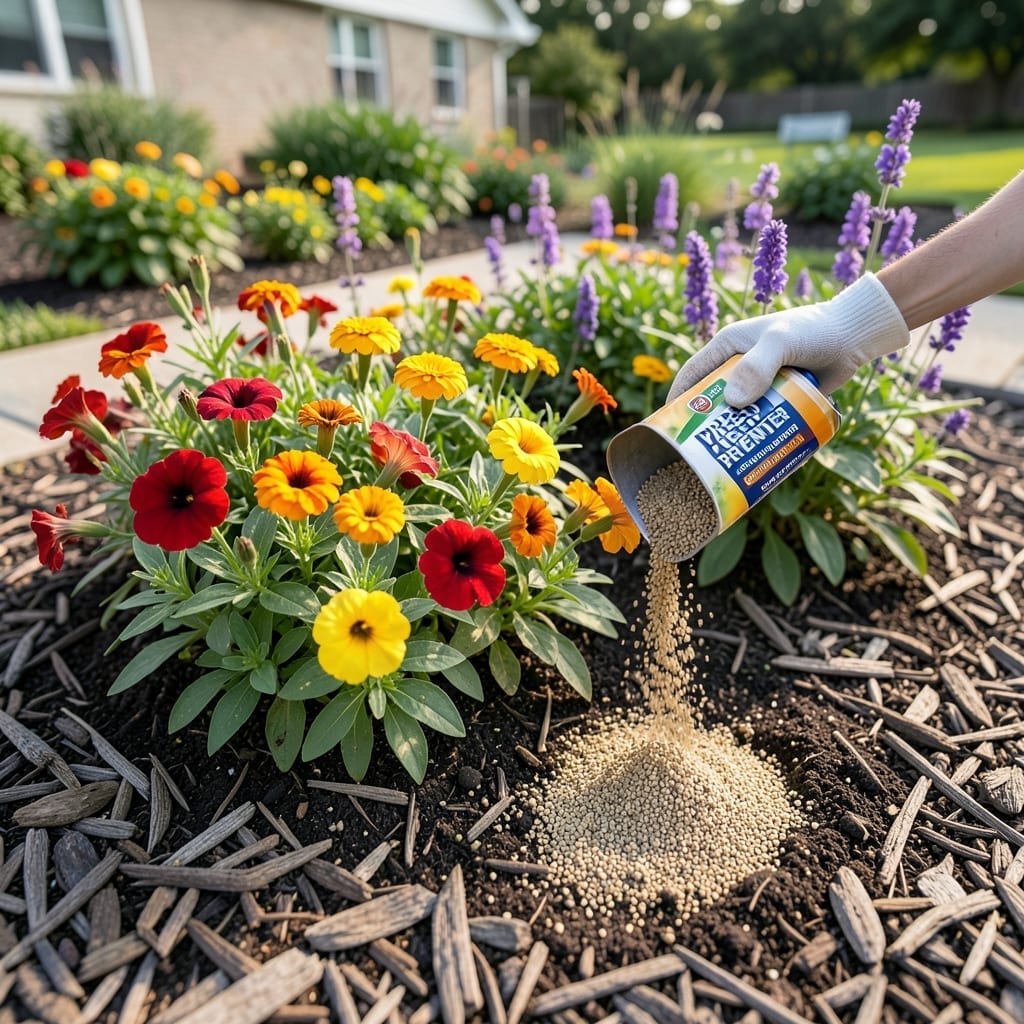
Preen is a pre-emergent herbicide used to prevent weeds from germinating in gardens, flower beds, and landscapes without harming existing plants when applied correctly.
I love how this product creates an invisible shield in the soil that stops weed seeds from sprouting. It’s perfect for keeping flower beds and vegetable patches clean without the backbreaking work of pulling weeds later. 💫
From my experience, timing is everything—apply it early in the season before weeds have a chance to emerge for the best results.
💡 In This Article
Preen’s active ingredient, trifluralin, creates a chemical barrier in the top 1-2 inches of soil. This invisible shield interrupts cell division in germinating weed seeds, preventing root and shoot development. The beauty is that established plants with deeper roots remain unaffected because their growth points are below this zone. 🌱
The barrier works best in moist soil with temperatures between 55-85°F. In these conditions, the herbicide binds to soil particles, forming a protective layer that lasts 8-12 weeks. It’s particularly effective against annual weeds like crabgrass and chickweed, which are common in vegetable gardens and flower beds.
What makes this different from post-emergent herbicides is its preventive nature. While post-emergents kill existing weeds, Preen stops them from ever appearing. This means you’ll see the best results when applying it early spring or fall, before weed seeds begin their growth cycle. ✨
The science behind this involves selective toxicity. The herbicide targets specific enzymes in germinating seeds that established plants no longer rely on. This selectivity is why you can safely use it around perennials, shrubs, and trees without causing harm to these mature plants.
For maximum effectiveness, the soil should be undisturbed after application. Any digging or tilling breaks the chemical barrier, allowing weed seeds to germinate. That’s why it’s crucial to apply Preen after planting your garden but before weeds have a chance to emerge. 💫
Yes, but only for established vegetable plants. Apply 2.5 pounds per 1,000 square feet around existing crops. Never use it where you plan to direct-sow seeds, as it will prevent them from sprouting.
Wait at least 8-12 weeks before planting new flowers. The chemical barrier needs time to break down naturally. For faster results, till the soil to disrupt the barrier before planting.
No, Preen only prevents new weeds from growing. For existing weeds, you’ll need a post-emergent herbicide or manual removal. It’s designed to stop seeds from germinating, not kill mature plants.
Preen is safe for established trees and shrubs. Apply it within the drip line but keep it 6 inches away from the trunk to avoid direct contact with the bark.