
Beautiful Plants For Your Interior
Beautiful Plants For Your Interior
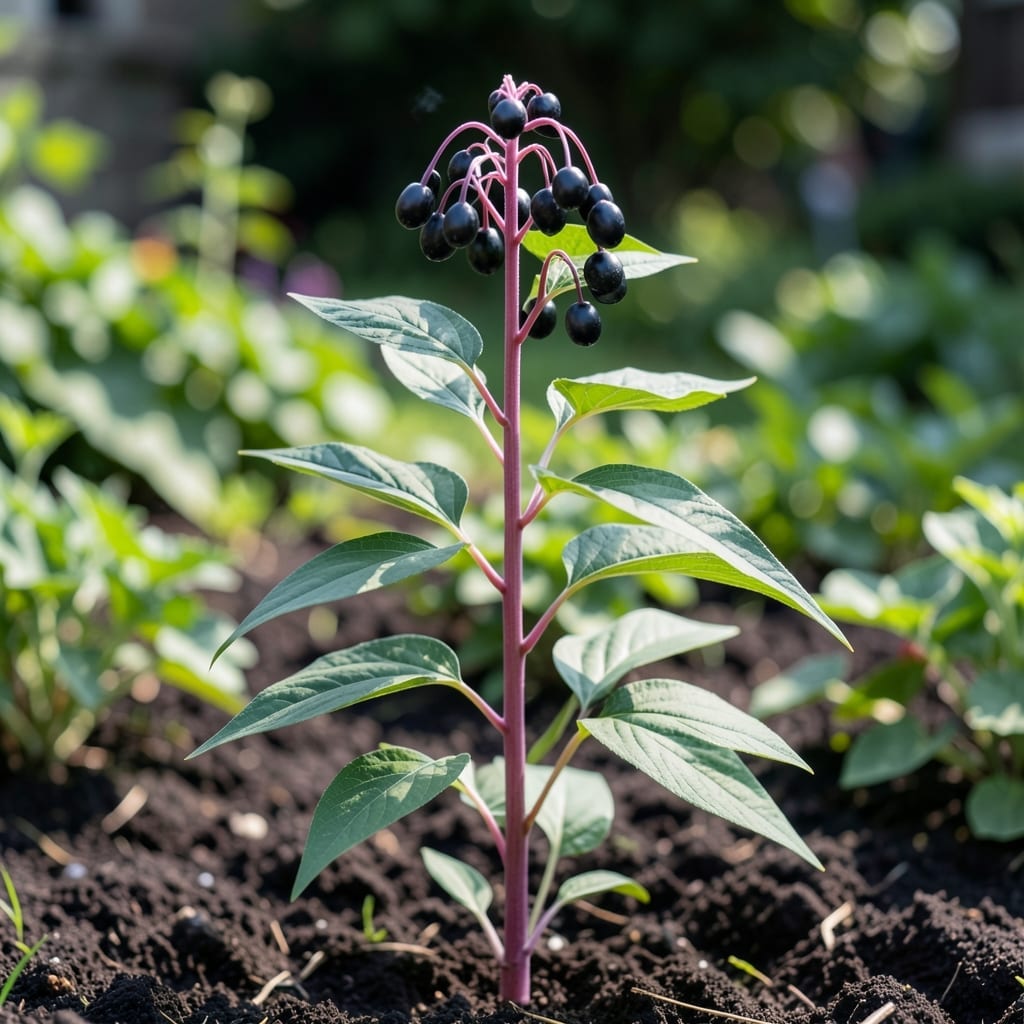
Pokeweed is a tall, toxic perennial plant with dark purple berries, smooth stems, and lance-shaped leaves. All parts are poisonous if ingested, especially the roots and seeds.
I’ve encountered this plant in many gardens, and its striking appearance often masks its danger. The berries may look tempting, but they contain toxins that can cause severe stomach issues, or worse. Even handling the plant without protection can lead to skin irritation, so I always wear gloves when removing it. 🔥
💡 In This Article
Pokeweed stands out with its smooth, purple-red stems that can grow 4-10 feet tall. The leaves are lance-shaped, 8-12 inches long, and have a slightly wavy edge. Early in the season, they’re deep green, but turn reddish as they mature. This color shift is a key identifier. 🔥
In late summer, pokeweed produces clusters of dark purple-black berries that hang from pinkish-green stalks. Each berry is about 1/4 inch wide and contains 10-12 seeds. The berries’ juice stains skin and clothing purple, which is another telltale sign. These berries are particularly attractive to birds, which helps spread the plant. ✨
The root system is another distinguishing feature. Pokeweed has a large, fleshy taproot that can weigh several pounds. When cut, the root oozes a reddish-purple sap. This sap is highly toxic and can cause skin irritation on contact. The root’s size and color make it unmistakable when unearthed. 💫
Pokeweed thrives in disturbed areas, often appearing along fences, in wooded edges, or near compost piles. It prefers moist, fertile soil and can quickly colonize an area if left unchecked. The plant’s rapid growth—sometimes several inches per day in ideal conditions—makes it a formidable invader. 🌟
Young pokeweed shoots can resemble edible plants like asparagus, which has led to accidental poisonings. However, the reddish stem and smooth texture of young pokeweed differ from asparagus’s green, ridged stalks. Always verify plant identity before consumption. ⚡
No, the sap can cause skin irritation and allergic reactions. Always wear gloves and long sleeves when handling. Wash skin immediately if contact occurs.
Birds have different digestive systems and can process the toxins without harm. They spread the seeds through their droppings, which helps the plant propagate.
Look for the reddish stem and smooth texture. Unlike asparagus, young pokeweed lacks ridges and has a distinct purple tint at the base.
Yes, but it’s risky. The plant’s large taproot needs deep containers, and toxins can still pose dangers. Not recommended for home gardens.