
Beautiful Plants For Your Interior
Beautiful Plants For Your Interior
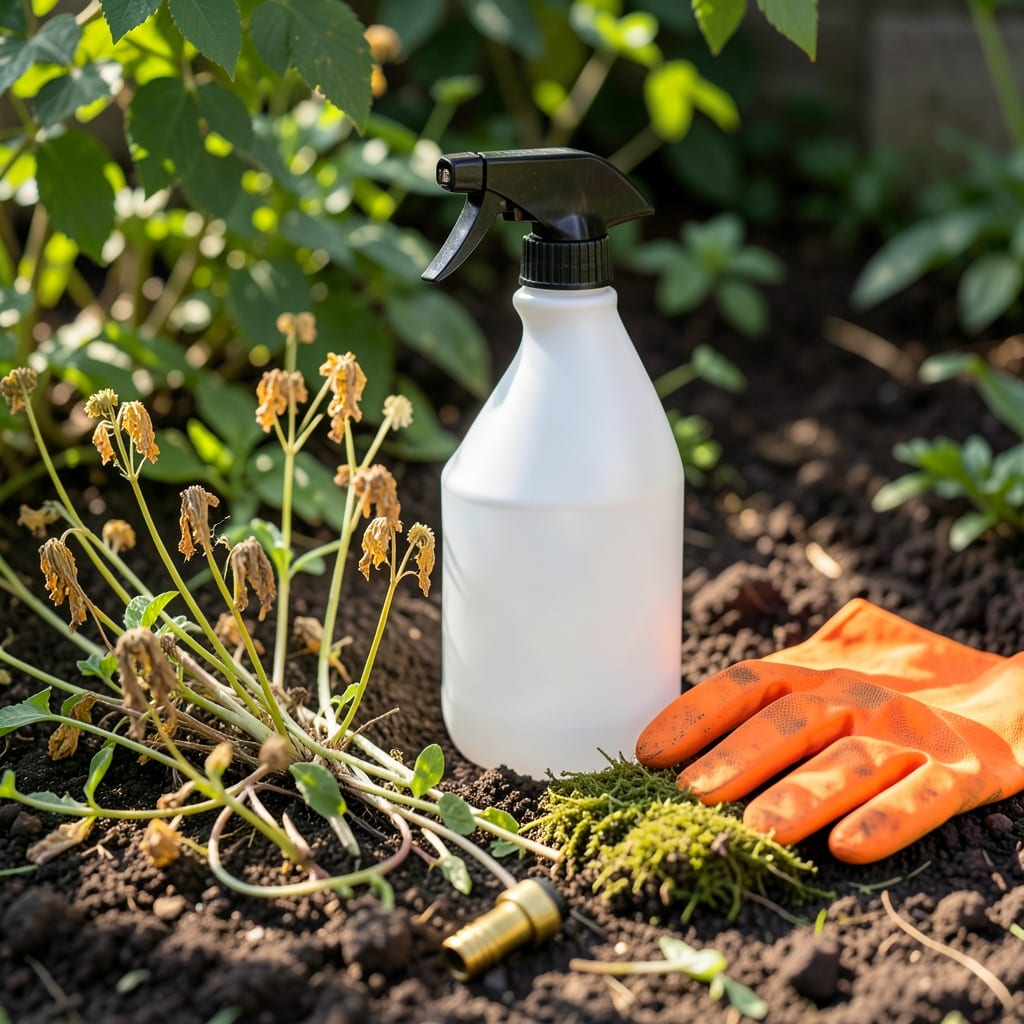
Non selective herbicides kill all plant types they contact, targeting no specific weeds or crops. They contain active ingredients like glyphosate that disrupt essential growth processes in plants.
I’ve seen these work firsthand in driveways and fence lines where complete vegetation control is needed. 🔥 The active compounds like glyphosate move through the plant’s system, blocking protein synthesis at the cellular level. This makes them incredibly effective for clearing large areas, but also demands careful application to avoid harming wanted plants nearby.
💡 In This Article
Here’s what’s actually happening at the cellular level: glyphosate, the most common active ingredient, blocks an enzyme called EPSPS that plants need to produce three critical amino acids. Without these building blocks, the plant can’t grow new tissues or repair itself.
This disruption happens within 24-48 hours of application, though visible wilting may take 5-14 days. ✨
What sets these herbicides apart is their systemic action. Unlike contact herbicides that only damage the plant parts they touch, systemic versions like glyphosate move through the entire plant. They’re absorbed through leaves and roots, then transported via the plant’s vascular system to growth points and storage organs.
This means even deep roots will be affected. 🔥
The absorption process is fascinating. Glyphosate enters through the leaf cuticle and moves with the plant’s sap flow. For maximum effectiveness, applications should be made when plants are actively growing (typically spring through early fall). Temperature matters too—ideal conditions are 60-85°F with no rain forecast for 6-24 hours after application. 💫
Other active ingredients work differently. Glufosinate disrupts photosynthesis by inhibiting an enzyme that would normally protect plant cells from light damage. Pelargonic acid, a contact herbicide, destroys cell membranes on contact, causing rapid desiccation. Each has its ideal use cases, but all share the non-selective nature that makes them so powerful for total vegetation control.
⚡
This systemic approach explains why you’ll often see complete browning of treated plants within 1-2 weeks. The herbicide doesn’t just kill the visible parts—it targets the entire organism, including underground rhizomes and tubers that might otherwise regrow. That’s why it’s so effective for persistent weeds like dandelions or Bermuda grass. 🌟
Visible wilting typically appears within 5-14 days, though cellular disruption begins in 24-48 hours. Complete browning occurs in 1-2 weeks as the herbicide works through the entire plant system.
Use extreme caution. Even small amounts can damage desirable plants through drift or root absorption. Always maintain a buffer zone and apply on calm days to prevent accidental contact.
Systemic versions like glyphosate move through the entire plant, while contact types (like pelargonic acid) only affect the parts they touch. Systemic works better for deep-rooted weeds but takes longer to show results.
Wait at least 7-14 days after application before planting. Some products may require longer – always check the label. This ensures the herbicide has fully decomposed in the soil.