
Beautiful Plants For Your Interior
Beautiful Plants For Your Interior
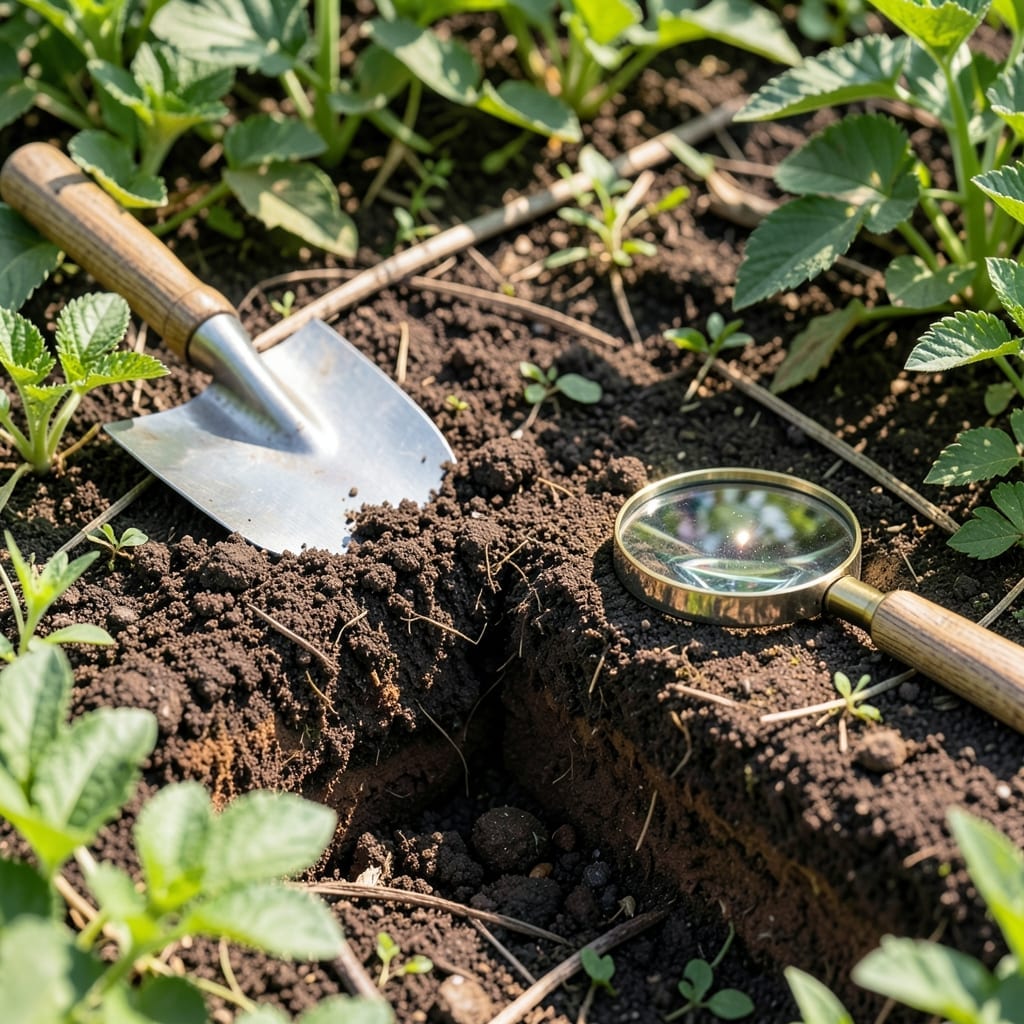
The magic happens at the microscopic level. Sand particles, the largest at 0.05-2mm, create air pockets for root respiration. Silt, at 0.002-0.05mm, holds moisture while still allowing drainage. Clay, the smallest at <0.002mm, binds nutrients but can compact. Together, they form a matrix where each component compensates for the others’ weaknesses. ✨
This perfect trio creates 25-50% porosity, meaning half your soil is actually empty space. That space holds air, water, and microorganisms—all essential for healthy roots. The sand prevents compaction, silt retains water-soluble nutrients, and clay acts like a natural fertilizer reservoir. 💫
You can test this yourself with a simple jar test. Fill a clear jar 1/3 with soil, add water, shake, and let settle. Sand drops first, then silt, then clay. The ideal loam shows nearly equal layers of sand and silt with a thin clay layer on top.
This visual proof shows why the 40-40-20 ratio works so well. 🔥
What most gardeners don’t realize is that this structure also supports beneficial microbes. The diverse pore sizes create habitats for bacteria, fungi, and protozoa that break down organic matter into plant-available nutrients. It’s like having a tiny ecosystem working overtime for your plants.
This natural balance explains why loamy soil requires 30% less watering than sandy soil and 50% less amendment than clay soil over time. The physical structure does most of the work, while the biological activity handles the rest. ⚡
The color often appears dark brown, a sign of rich organic content. This isn’t just aesthetic—it indicates high humus content, which helps buffer pH levels between 6.0-7.0, the sweet spot for most vegetables and flowers. The dark hue also absorbs more sunlight, warming the soil faster in spring.
Try the simple jar test. Fill a clear jar 1/3 with soil, add water, shake, and let it settle for 24 hours. Loamy soil will show nearly equal layers of sand, silt, and a thin clay layer on top.
Most vegetables, fruits, and flowers thrive in loam. It’s ideal for tomatoes, carrots, and roses. The balanced texture supports root systems while retaining moisture and nutrients.
Loam holds moisture better than sand and drains better than clay. Its 25-50% porosity provides air, water, and nutrients for roots, making it the gold standard for gardening.
Yes! Mix 40% sand, 40% silt, and 20% clay with plenty of compost. This blend mimics natural loam and gives your plants the perfect growing environment.