
Beautiful Plants For Your Interior
Beautiful Plants For Your Interior
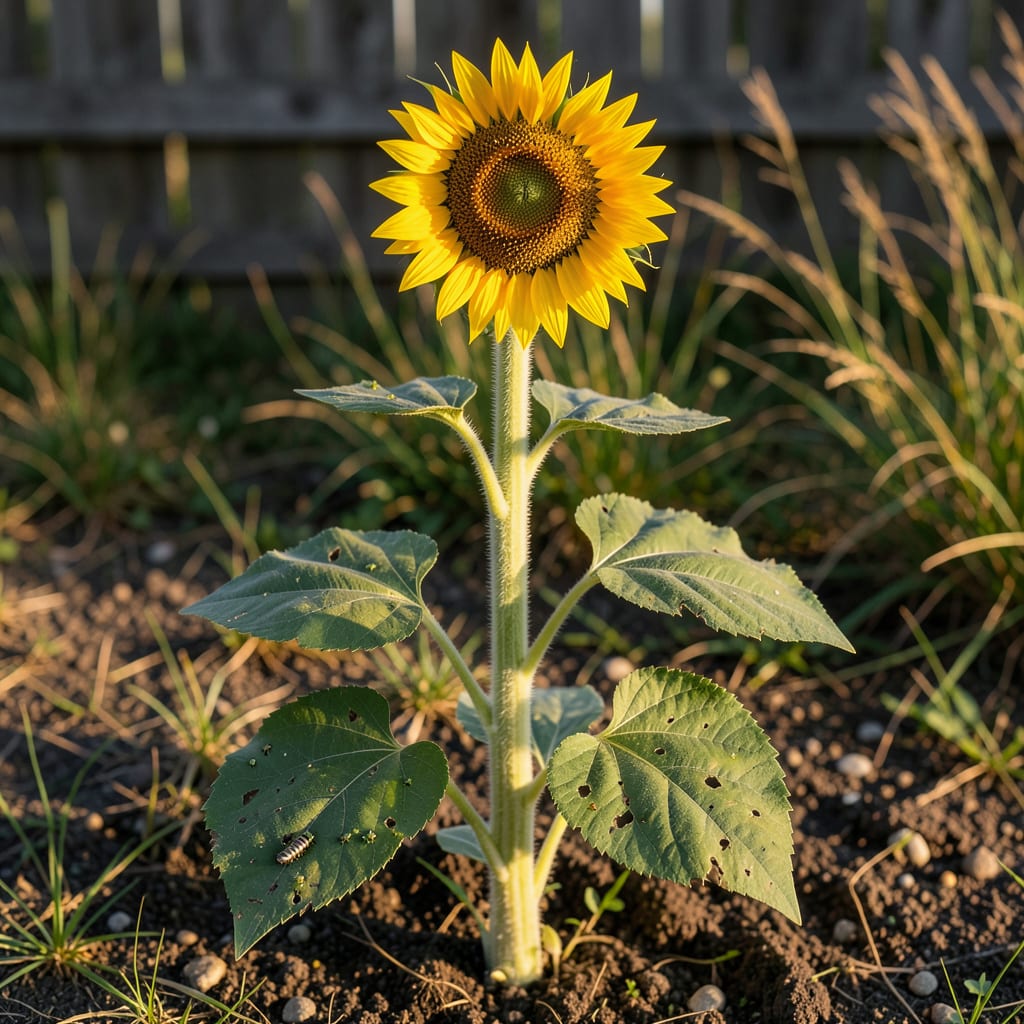
Sunflower leaves are commonly eaten by slugs, snails, caterpillars, grasshoppers, and beetles. Look for jagged edges, holes, or slimy trails to identify the culprit and act quickly to prevent further damage.
These pests aren’t just random visitors—they’re drawn to sunflowers for specific reasons. 🌱 Slugs and snails thrive in moist conditions, often attacking after rain or heavy watering. Caterpillars like the sunflower moth larvae burrow into leaves, while beetles (such as the sunflower beetle) skeletonize foliage by eating between veins. Grasshoppers leave ragged, irregular holes as they chew through leaves in search of moisture and nutrients.
What’s critical is understanding their feeding patterns—this helps you target solutions effectively. For example, slimy trails mean mollusks, while chewed edges often point to grasshoppers. The sooner you spot these signs, the faster you can intervene before damage spreads to stems or flowers. ✨
💡 In This Article
Each pest leaves a unique “signature” on sunflower leaves, and recognizing these patterns is your first defense. Slugs and snails create irregular, smooth-edged holes—often with a telltale slimy residue trail that glistens in morning light. They feed at night or after rain when humidity exceeds 70%, targeting tender new growth first.
Their rasping mouthparts scrape tissue rather than cut cleanly, leaving a ragged appearance.
Caterpillars like the sunflower moth larvae (Homoeosoma electellum) tunnel through leaves, creating large, irregular holes with frass (insect droppings) nearby. These pests feed continuously for 2-3 weeks during their larval stage, consuming up to 50% of a leaf’s surface in severe infestations.
Their chewing pattern differs from beetles because they consume entire sections rather than just surface layers. 🐛
Beetles—particularly the sunflower beetle (Zygogramma exclamationis)—produce a distinctive “skeletonized” effect by eating tissue between veins. Adults lay eggs on leaf undersides in early summer, and larvae emerge within 5-7 days, feeding voraciously for 3 weeks. Grasshoppers, meanwhile, create jagged, half-moon shaped bites along leaf edges, often jumping away when disturbed.
Their damage appears suddenly because they can consume their body weight in foliage daily.
The biology behind these patterns matters: slugs rely on moisture to move, caterpillars need protein for metamorphosis, and beetles target specific leaf structures. For example, sunflower beetles avoid veins because they contain defensive compounds like phenolic acids.
Grasshoppers prefer younger leaves with higher nitrogen content (3-5% vs. 1-2% in mature leaves), which explains their edge-chewing habit.
Timing reveals clues too. Slug damage appears overnight, while beetle skeletonization develops over 3-5 days as larvae mature. Caterpillar holes expand rapidly during their final instar stage (last 72 hours before pupation). Pro tip: Check leaf undersides with a 10x magnifier—you’ll often spot tiny eggs or young larvae before major damage occurs. 🔍
Here’s what most gardeners miss: damage location indicates pest preferences. Lower leaves with holes? Likely slugs or snails. Upper leaves with skeletonization? Beetles. Random edge bites? Grasshoppers. This vertical pattern occurs because pests have different mobility—slugs can’t climb well, while grasshoppers leap between plants.
Understanding these habits lets you target treatments precisely where they’ll be most effective.
Look for slimy silver trails—that’s the giveaway for slugs. Caterpillars leave behind dark green droppings (frass) and often create large, irregular holes in leaves. Slug damage appears overnight, while caterpillar holes expand rapidly during their final growth stage.
Coffee grounds can deter slugs and snails when sprinkled around plants—the caffeine is toxic to them. However, they’re less effective against beetles or grasshoppers. For best results, mix with diatomaceous earth and reapply after rain. The grounds also add nitrogen to soil as they decompose.
Create a flour-molasses bait (1 cup flour + 2 tbsp molasses + 1/4 cup water). Grasshoppers eat it but can’t digest the flour. For immediate action, spray leaves with garlic or hot pepper solution—they hate the taste. Physical barriers like row covers work too if applied early.
A mild dish soap solution (1 tsp per gallon of water) can smother soft-bodied pests like aphids or young caterpillars. However, it’s ineffective against beetles or grasshoppers. Always spray in early morning to avoid harming bees, and test on a few leaves first to check for plant sensitivity.
Pests target stressed plants first—those with inconsistent watering or poor soil nutrition. Younger sunflowers with tender leaves are more vulnerable than mature plants. Varieties with fuzzy leaves (like ‘Moulin Rouge’) often resist pests better. Healthy plants produce more defensive compounds that deter feeding.
