
Beautiful Plants For Your Interior
Beautiful Plants For Your Interior
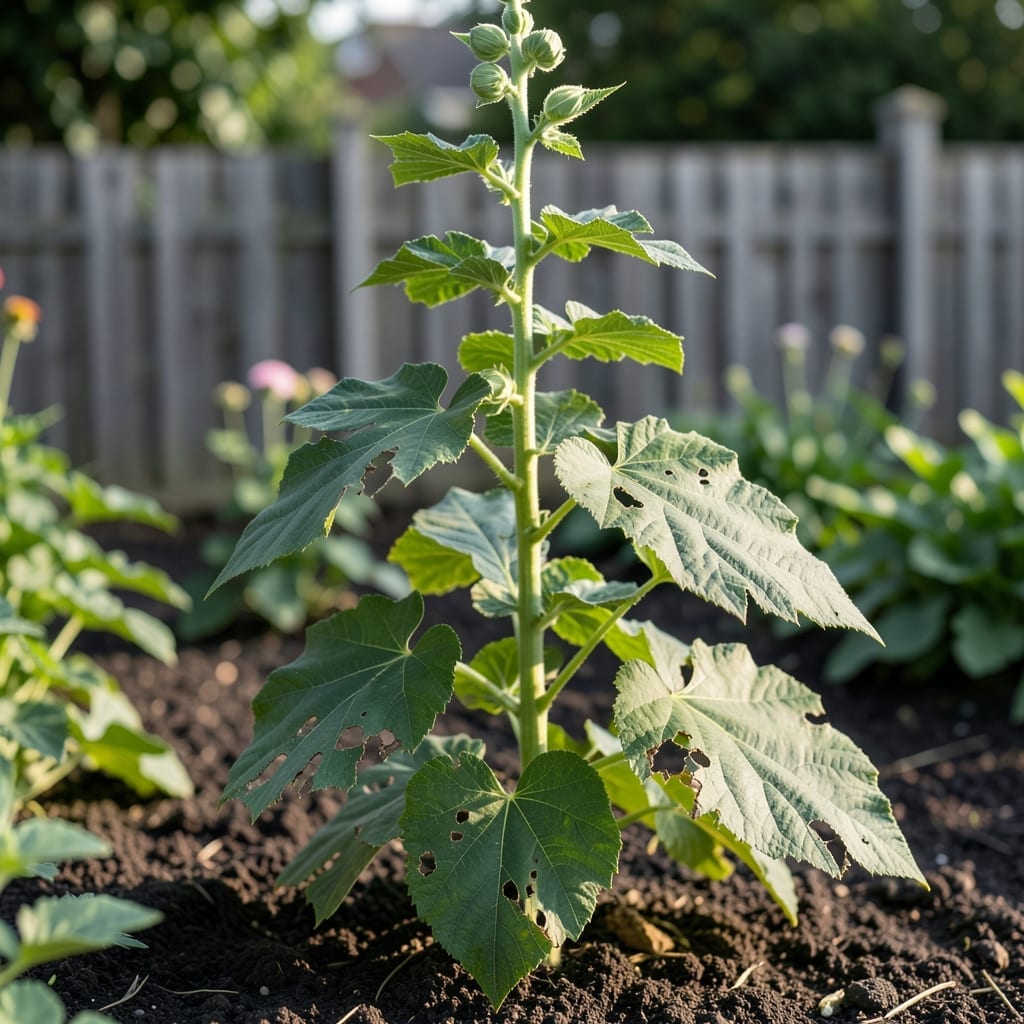
Japanese beetles, sawfly larvae, and slugs are the most common culprits. Look for ragged edges, skeletonized leaves, or slimy trails to identify the pest.
I notice these pests target hollyhocks because their tender leaves provide easy access to nutrients. Japanese beetles often leave lacy patterns, while sawfly larvae create window-like holes as they feed between leaf surfaces. 🔥
Early morning inspections help catch slugs in action, as they prefer cool, moist conditions. The damage patterns are distinct, making identification straightforward once you know what to look for. ✨
💡 In This Article
Japanese beetles create a distinctive lacy appearance by chewing leaf tissue between the veins. They’re most active on warm, sunny days, often skeletonizing entire leaves within 24-48 hours of infestation. 🔥
Sawfly larvae leave window-like holes as they consume the soft leaf tissue between the upper and lower epidermis. These green caterpillar-like pests often congregate in groups on the undersides of leaves, where they can defoliate a plant in 1-2 weeks if left unchecked. ✨
Slugs leave irregular, ragged holes along leaf edges and a telltale silvery slime trail. They prefer feeding at night or during damp conditions, making early morning the best time to spot their damage. A single slug can consume up to 40 times its body weight in foliage overnight. ⚡
The pests target hollyhocks because their large, soft leaves offer abundant moisture and nutrients. The plants’ vertical growth habit also provides easy access for climbing insects like beetles and sawfly larvae, while the dense foliage creates a humid microclimate that attracts slugs. 💫
For precise identification, examine the undersides of leaves with a magnifying glass. Japanese beetles leave metallic green and copper bodies, sawfly larvae have multiple prolegs, and slugs leave a shiny mucus trail. This close inspection often reveals the culprits still feeding during their active periods. 🌟
Look for leaves with a lacy, skeletonized appearance where only the veins remain. Japanese beetles feed between the veins, often on warm sunny days, and can destroy leaves within 24-48 hours.
Inspect your hollyhocks early in the morning when slugs are most active. Look for irregular, ragged holes along leaf edges and shiny slime trails as telltale signs.
Yes, sawfly larvae can defoliate other garden plants too. They often feed in groups on the undersides of leaves, creating window-like holes. Remove them with a strong jet of water for quick control.
Marigolds repel Japanese beetles, while herbs like rosemary confuse pests with their strong scent. Plant these near hollyhocks for a natural, chemical-free defense.