
Beautiful Plants For Your Interior
Beautiful Plants For Your Interior
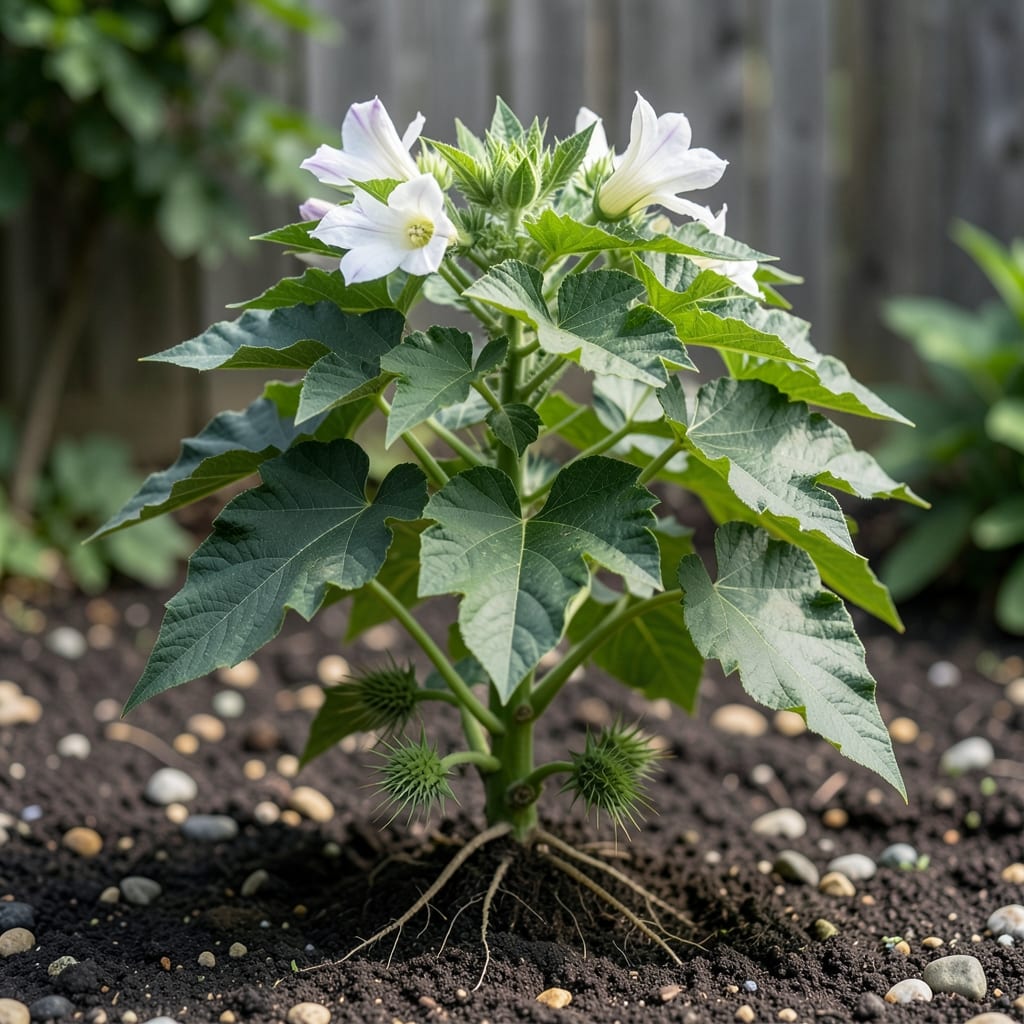
Datura is a genus of toxic, hallucinogenic plants known for its trumpet-shaped flowers and potent alkaloids like scopolamine and atropine, causing severe health risks if ingested.
I’ve encountered these plants in wild gardens, and their beauty masks serious danger. Scopolamine and atropine disrupt the nervous system, leading to hallucinations, dilated pupils, or even coma in severe cases. 💫 Many cultures historically used datura in rituals, but modern science warns against any consumption due to unpredictable toxicity levels.
💡 In This Article
Datura plants belong to the Solanaceae family, sharing relatives with tomatoes and potatoes. Their large, white or purple trumpet-shaped flowers can grow up to 8 inches long, releasing a strong, sweet fragrance at night to attract pollinators like moths.
The leaves are broad with toothed edges, and the spiky seed pods split open when mature, releasing numerous black seeds. 🌟
The plant’s toxicity comes from tropane alkaloids, primarily scopolamine and atropine. These compounds act as anticholinergics, blocking acetylcholine receptors in the nervous system. This disruption affects both the central and peripheral nervous systems, leading to symptoms like dilated pupils, rapid heartbeat, and confusion.
The concentration varies wildly—0.1% to 0.6% of the plant’s dry weight—making dosage impossible to predict. ✨
What makes these alkaloids particularly dangerous is their rapid absorption. Ingesting even small amounts can cause effects within 30-60 minutes, peaking at 2-4 hours. The liver metabolizes them slowly, so symptoms can persist for 24-48 hours. Unlike some toxins that target specific organs, these alkaloids affect multiple systems simultaneously, from vision to muscle control. 🔥
All parts of the plant are toxic, but the seeds contain the highest concentration. Just 10-15 seeds can be lethal for an adult. The toxins remain potent even when dried, and smoking the leaves—a practice in some traditional rituals—can cause the same dangerous effects as ingestion.
Even honey made from datura nectar has been known to cause poisoning. 💫
Datura’s effects aren’t just physical. The hallucinations it produces are often described as terrifying rather than pleasant, with users reporting complete detachment from reality. This, combined with the physical risks like seizures or respiratory failure, makes it one of the most hazardous plants in the nightshade family.
The unpredictability of its potency means there’s no safe way to experiment with it. ⚡
Tropane alkaloids like scopolamine and atropine disrupt nervous system function. Even 10-15 seeds can cause hallucinations, seizures, or worse within 30-60 minutes.
Yes, but wear protective gloves and place it far from pets/children. Never compost trimmings—burn or seal in bags. Remove seed pods before they split to prevent spread.
Seeds contain the highest concentration, but leaves and flowers are also dangerous. Toxicity remains even when dried, and smoking leaves carries the same risks as eating them.
Seek emergency medical help immediately. Do not induce vomiting unless instructed by poison control. Symptoms can escalate quickly and last 24-48 hours.