
Beautiful Plants For Your Interior
Beautiful Plants For Your Interior
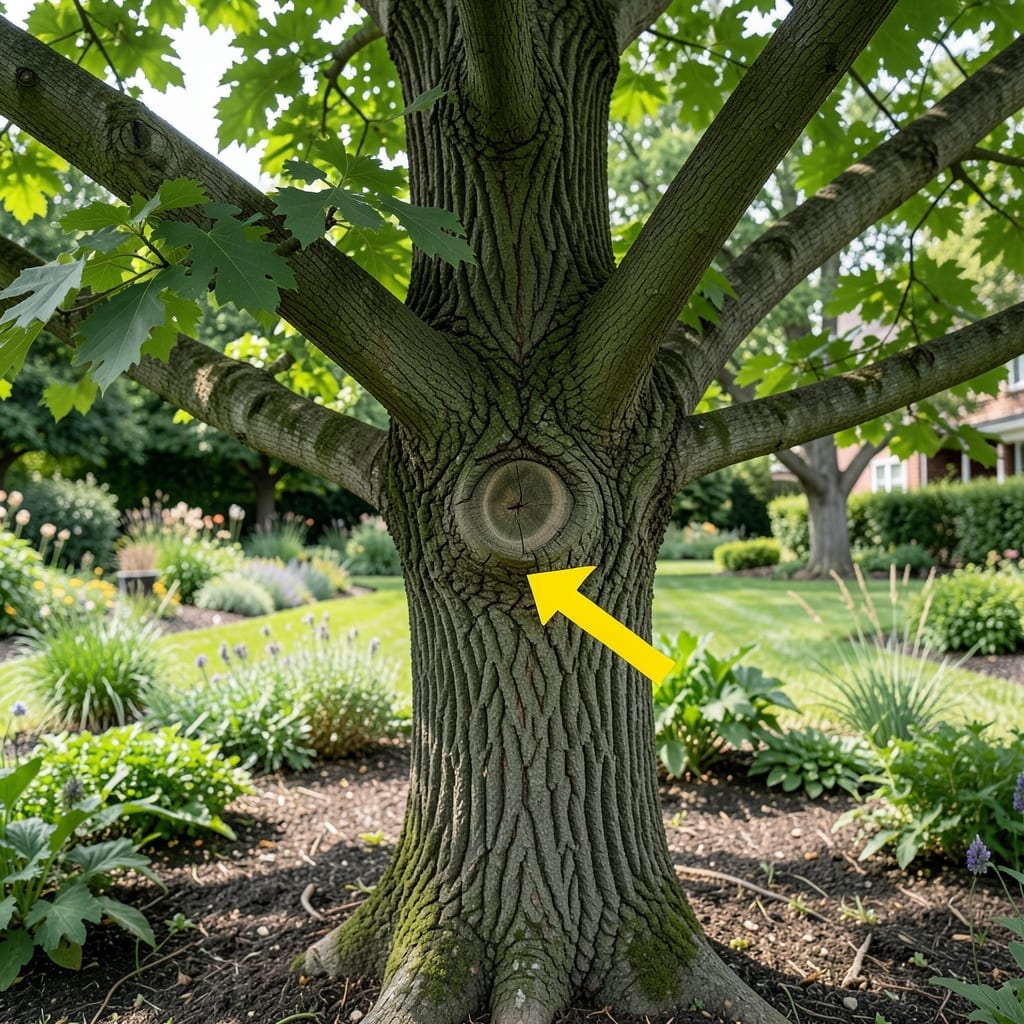
The branch collar is the swollen area where a branch meets the trunk, containing specialized cells that help compartmentalize wounds and prevent decay in trees.
I think of this as nature’s built-in bandage for trees—it’s packed with callus cells that kick into action when a branch is cut. 🌟 These cells form a protective barrier, sealing off the injury from fungi and bacteria. In my experience, leaving the collar intact during pruning gives trees the best shot at healing properly. It’s a small but mighty feature that often goes unnoticed until you see how well trees recover when it’s preserved.
💡 In This Article
The branch collar develops as a natural reinforcement at the junction where branches meet the trunk. This swelling forms from layers of callus tissue and xylem cells that create a biological barrier. It acts like a tree’s immune system, ready to spring into action when damage occurs. 🌟
When a branch is injured or pruned, the collar’s specialized cells rapidly divide to form a protective callus. This process, called compartmentalization, isolates the wound from the rest of the tree. The collar contains high concentrations of tannins and phenolic compounds that resist fungal and bacterial invasion.
You’ll notice the collar is often slightly darker or rougher than surrounding bark. This textural difference comes from its dense cellular structure, designed to withstand environmental stressors. The collar’s width typically ranges from 1-3 inches depending on tree species and branch size. 🔥
In deciduous trees like oaks or maples, the collar is particularly pronounced because these species invest heavily in wound sealing. Evergreens develop a similar structure, though it may appear less obvious to the naked eye. The collar’s effectiveness depends on its intact state—damage to this area can compromise the tree’s entire defense mechanism.
This natural protection system explains why trees can live for centuries despite losing branches. The collar’s ability to compartmentalize damage prevents the spread of decay through the trunk. Proper pruning that respects this structure maintains the tree’s long-term health and structural integrity. ✨
It acts as a natural defense mechanism, containing cells that seal wounds and prevent disease spread. Without it, trees would be vulnerable to infections after pruning or branch loss.
Look for a swollen, often slightly darker area where the branch meets the trunk. Run your fingers along the union—you’ll feel the raised collar tissue. It’s typically 1-3 inches wide depending on tree size.
Cutting into it removes the tree’s natural healing barrier, increasing decay risk. Always make your cut just outside the collar’s swollen edge to preserve its protective function.
Most do, but some evergreens have subtler collars. Deciduous trees like oaks and maples display them most clearly. Even if less obvious, the tissue is always present and critical for wound recovery.