
Beautiful Plants For Your Interior
Beautiful Plants For Your Interior
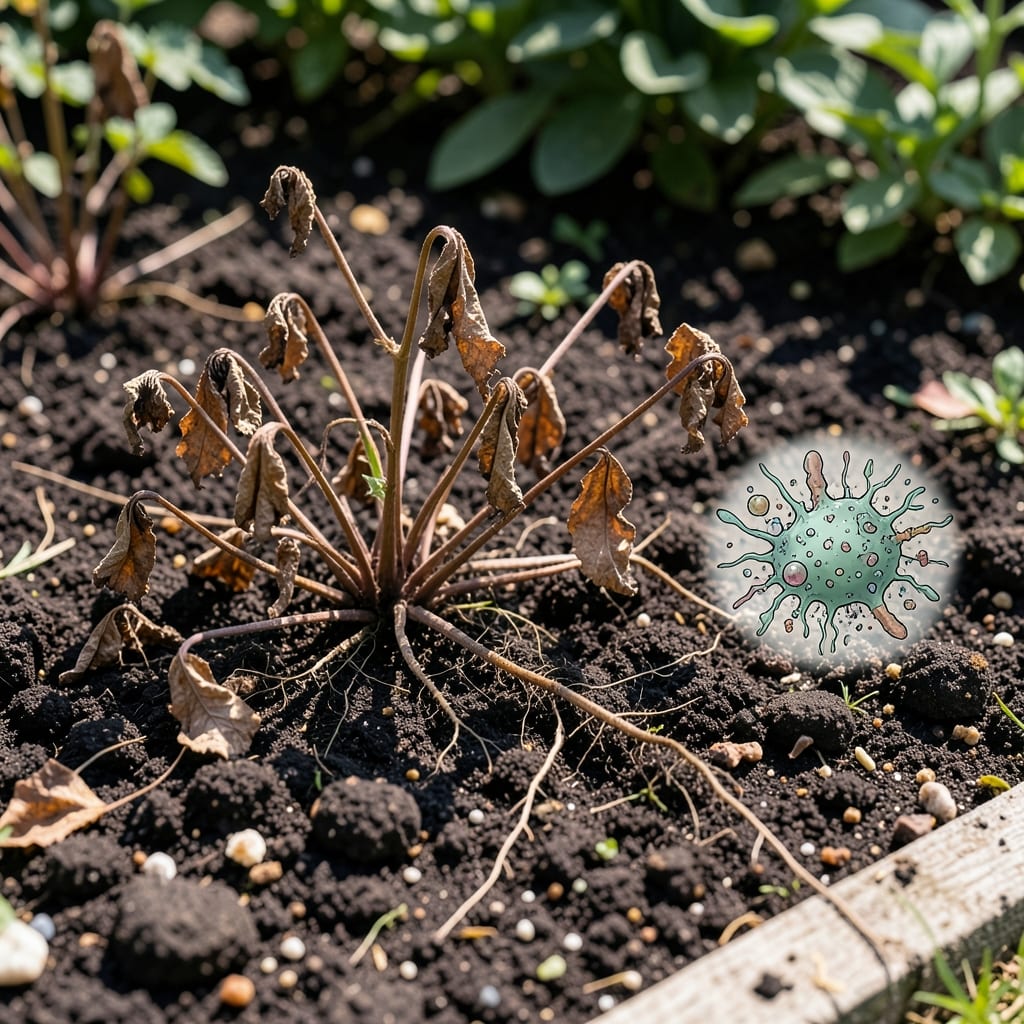
When a plant dies, soil microbes spring into action within hours. Bacteria and fungi begin breaking down complex organic nitrogen in leaves, stems, and roots into simpler compounds. This process, called mineralization, converts proteins and nucleotides into ammonia (NH3) through enzymatic action. The speed depends on temperature, moisture, and oxygen levels in the soil. 🔥
Ammonia doesn’t stay in that form for long. Specialized bacteria, like Nitrosomonas, oxidize ammonia into nitrites (NO2-), which are still toxic to plants. Then Nitrobacter converts nitrites into nitrates (NO3-), the form most plants absorb through their roots. This two-step process, called nitrification, typically completes within 2-4 weeks in healthy soil. ✨
What’s fascinating is how efficiently this system works. In a well-balanced ecosystem, up to 90% of a plant’s nitrogen can be recycled this way. The remaining 10% might be lost to the atmosphere as nitrogen gas through denitrification or taken up by other soil organisms.
This natural recycling is why forests and prairies can maintain fertility for centuries without human intervention. 🌟
You can actually see this process in action. After harvest, if you leave plant residues on the soil surface, you’ll notice the material darkens and softens within days as decomposition begins. The nitrogen becomes available to the next generation of plants, creating a continuous cycle that’s been operating for millions of years.
This is nature’s original fertilizer program, far more sophisticated than anything humans have created. ⚡
The key players in this process are often invisible but vital. A single gram of healthy soil can contain thousands of species of bacteria and fungi, each playing a specific role. Some specialize in breaking down tough plant fibers, while others focus on nitrogen conversion.
This microbial diversity ensures that nearly all organic material eventually returns to the soil food web. 💫
Decomposition begins within hours, with microbial breakdown of nitrogen compounds starting immediately. The full conversion to plant-available nitrates typically takes 2-4 weeks in healthy soil with proper moisture and temperature.
In ideal conditions, up to 90% of a plant’s nitrogen can be recycled through decomposition. The remaining 10% may be lost to the atmosphere as gas or consumed by other soil organisms.
Slow decomposition delays nitrogen release, often due to cold temperatures, dry conditions, or lack of oxygen. This can temporarily reduce soil fertility until conditions improve and microbes become active again.
No, decomposition varies by plant type. Soft, nitrogen-rich plants like legumes break down faster than woody stems or leaves with high carbon content. This affects how quickly nitrogen becomes available for new growth.