
Beautiful Plants For Your Interior
Beautiful Plants For Your Interior
Maximize your garden space and yield by planting these companion plants with cucumbers. These strategic pairings deter pests, improve flavor, and create a thriving ecosystem in your vegetable patch.
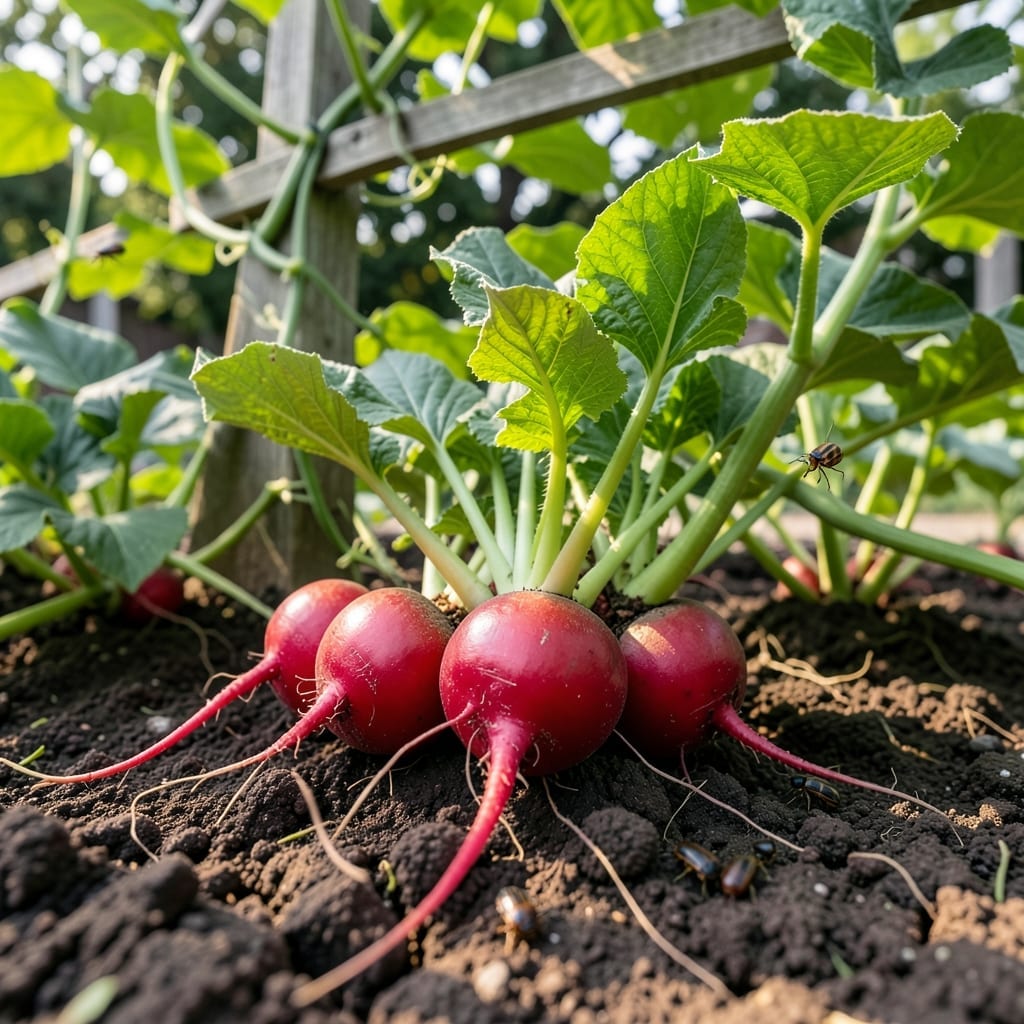
Struggling with cucumber beetles ruining your harvest? Plant radishes as your secret weapon. These quick-growing roots naturally repel pests while breaking up compacted soil with their deep taproots.
Radishes mature in just 3-4 weeks, giving you an early harvest while their strong scent confuses beetles. They also improve soil aeration for cucumber roots, making them perfect for organic gardeners. Plant them between cucumber hills for maximum effect.
This combo works especially well for those avoiding chemical pesticides. 🌱
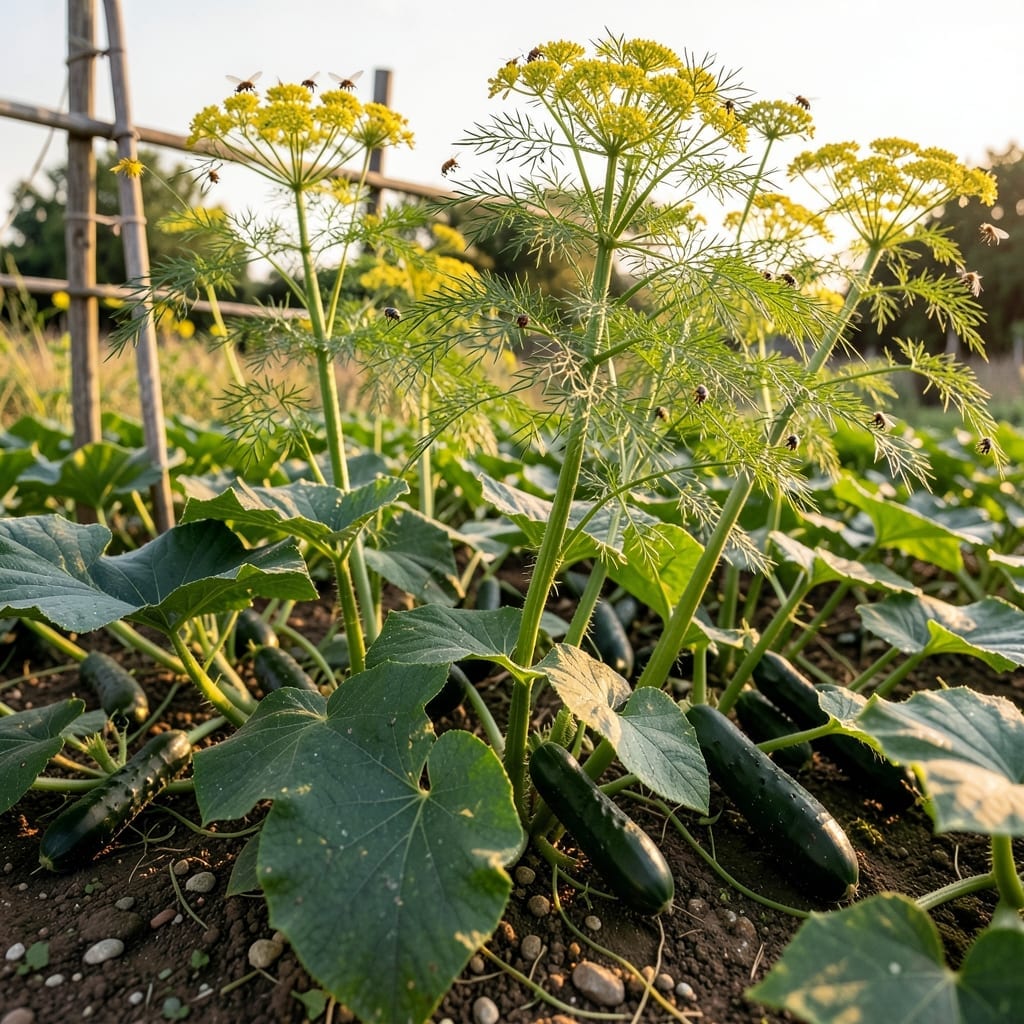
Want to turn your cucumber patch into a pollinator paradise? Dill is your go-to companion, drawing in bees and beneficial wasps that naturally control cucumber pests like aphids and cucumber beetles.
Its tall, feathery foliage and bright yellow umbel flowers act as a beacon for predatory insects, while its strong scent confuses harmful pests. Plant dill near cucumbers to create a balanced ecosystem where good bugs keep bad ones in check.
Bonus: If you love pickles, growing these together enhances cucumber flavor. Perfect for organic gardeners who want a low-maintenance pest solution. 🌿
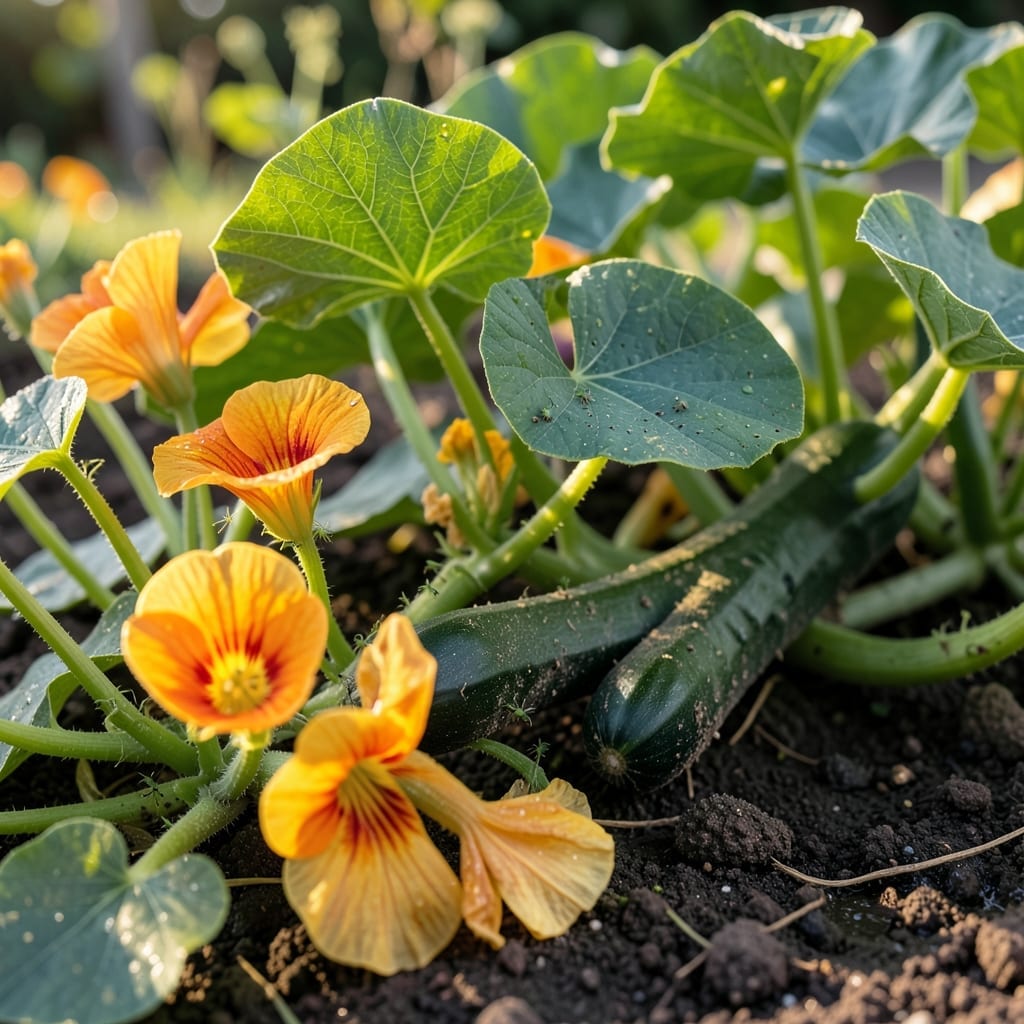
Tired of watching aphids turn your cucumber leaves into Swiss cheese? Nasturtiums are the ultimate decoy, acting as a trap crop that aphids find irresistible.
Plant these vibrant flowers near your cucumbers, and pests will flock to them instead of your main crop. The bonus? You get edible blooms that add color to salads while your cucumbers grow undisturbed. They’re low-maintenance and thrive in poor soil, making them perfect for busy gardeners.
This method works especially well for organic growers looking for chemical-free pest control. 🌻
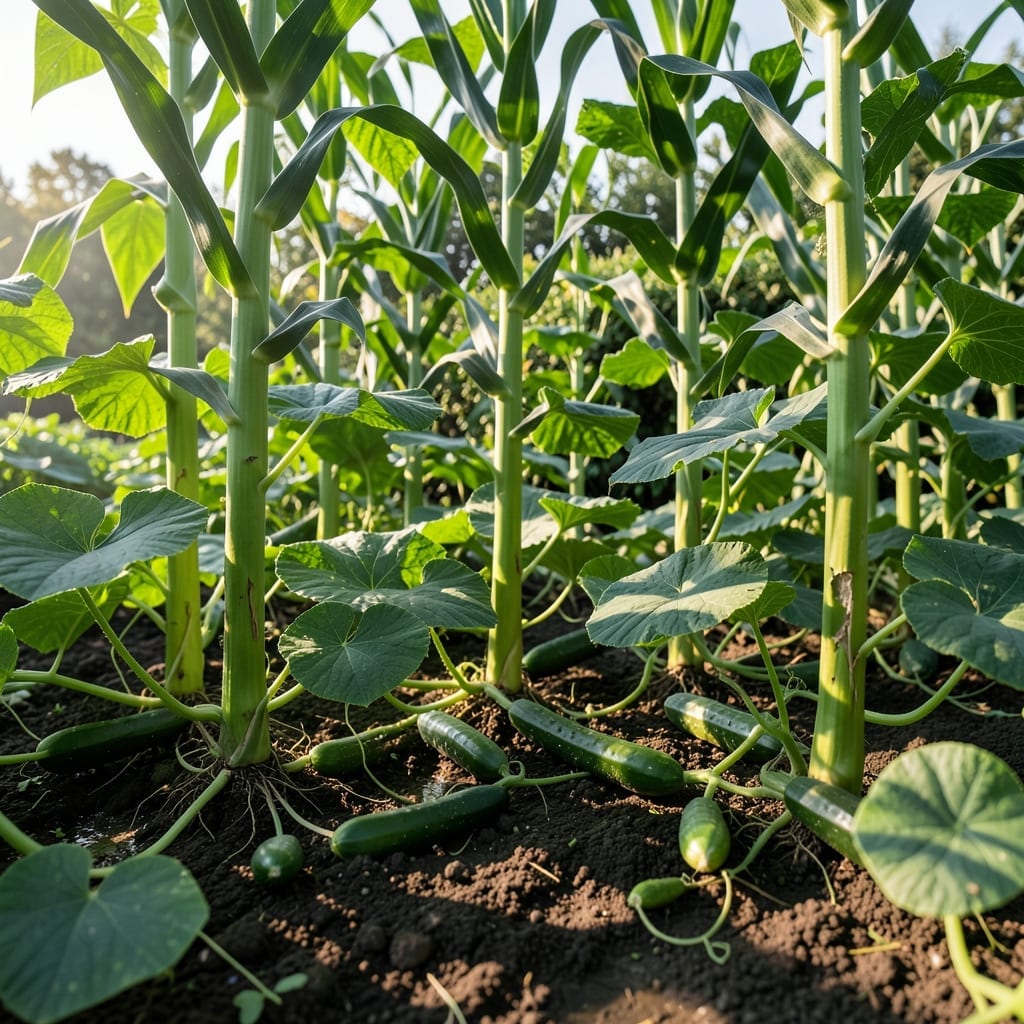
Struggling with cucumbers wilting in hot afternoon sun? Plant corn as a living sunshade. Its tall stalks cast cooling shadows that protect cucumber vines during peak heat, while the cucumbers’ ground cover helps retain moisture for corn roots.
This mutually beneficial pairing works especially well in southern climates where intense sunlight can scorch cucumber leaves. Space corn plants about 1 foot from cucumber hills to allow airflow while maximizing shade coverage.
Gardeners in warm regions will see healthier cucumber plants and potentially larger corn harvests from this simple pairing. 🌱
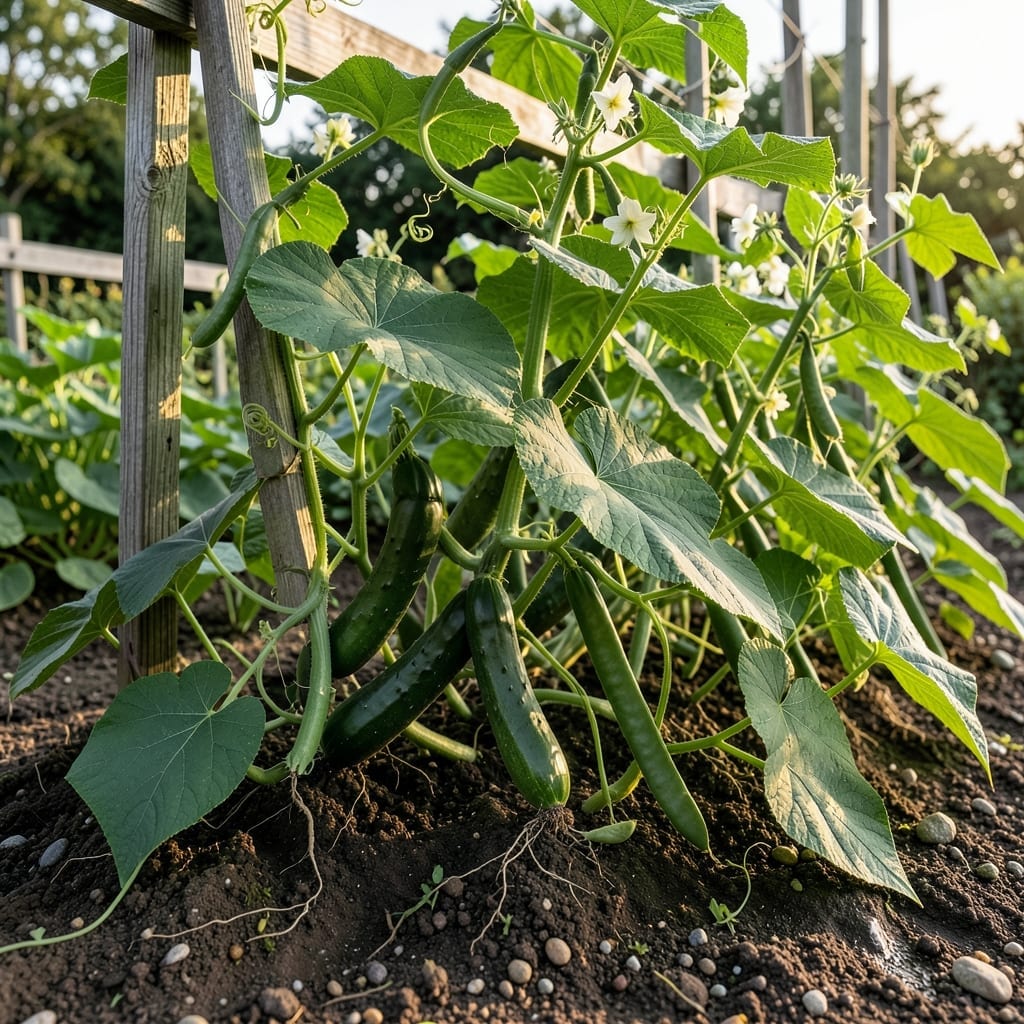
Want to give your cucumbers a natural growth boost? Plant beans alongside them to harness the power of nitrogen fixation. These legumes form a symbiotic relationship with soil bacteria that converts atmospheric nitrogen into a plant-usable form.
Cucumbers are heavy nitrogen feeders, and beans provide a steady supply right at their roots. This means you can skip synthetic fertilizers, creating a more sustainable garden while still getting a bumper crop. Bush beans work particularly well, as they won’t compete for space.
This pairing is perfect for organic gardeners looking to improve soil health long-term. 🌱
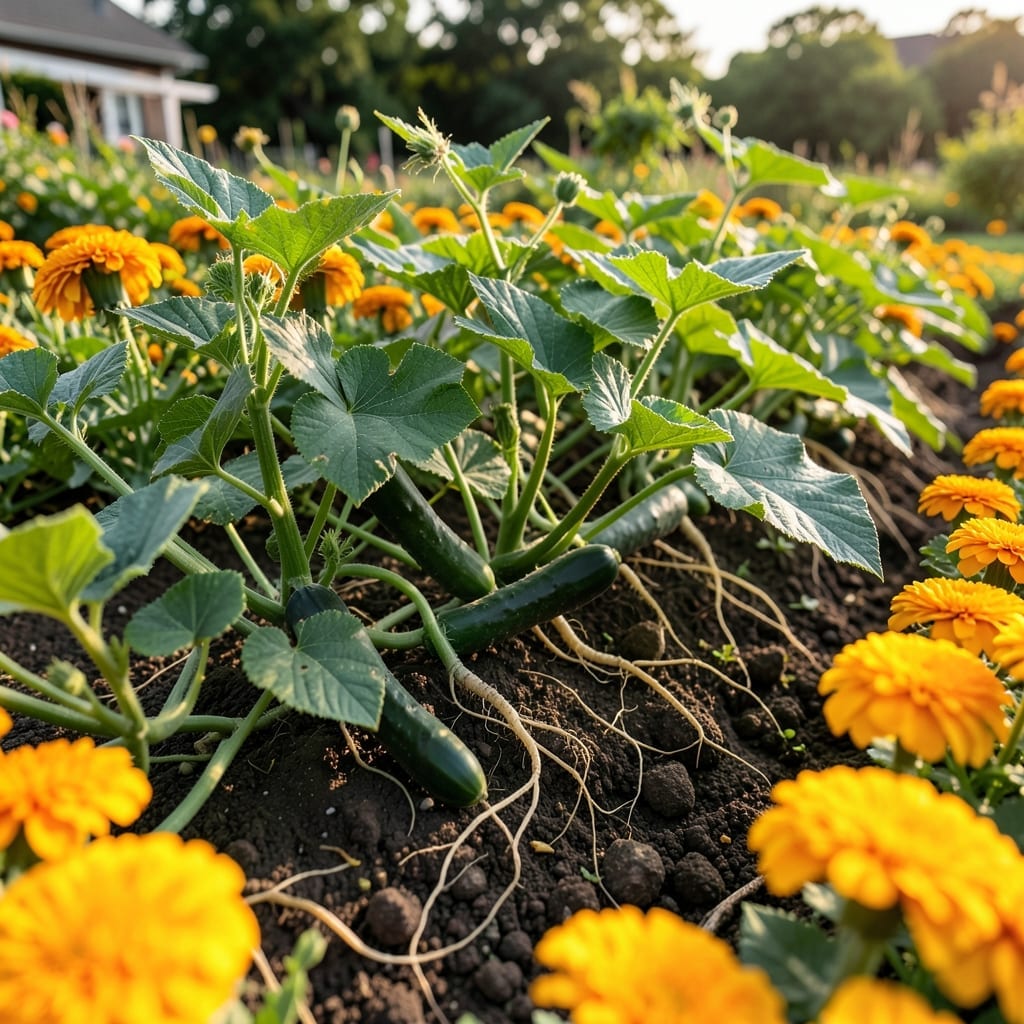
Invisible enemies like root-knot nematodes can devastate your cucumber crop before you even notice. French marigolds are your underground shield, releasing natural compounds that repel these microscopic soil pests.
Plant a border of marigolds around your cucumber patch to create a protective barrier. Their bright orange and yellow blooms not only deter nematodes but also add vibrant color to your garden. The effect is strongest when marigolds have been growing for at least 2-3 months before cucumbers are planted.
This pairing is ideal for gardeners struggling with poor soil health or those seeking a chemical-free pest solution. 🌻
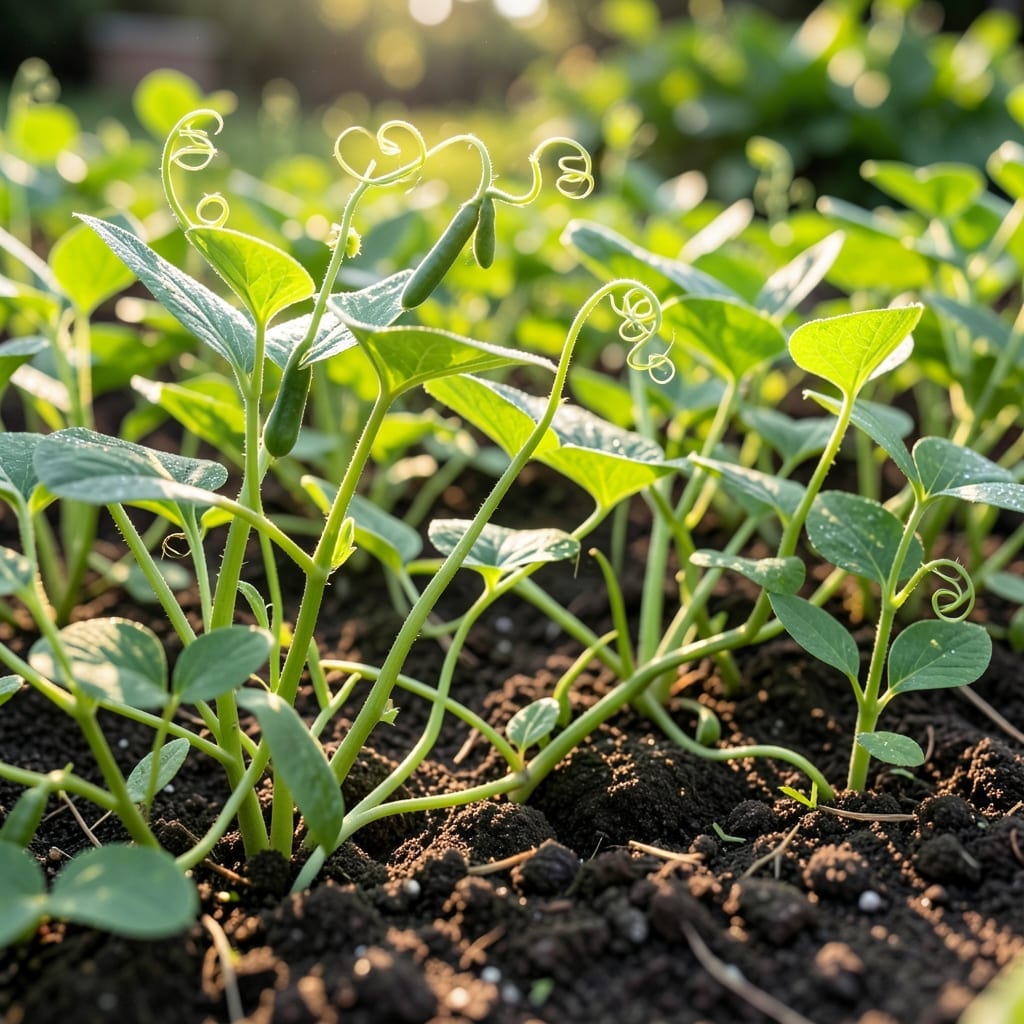
Looking to get a head start on your cucumber season? Cool-weather peas are your perfect early companion. They thrive in spring temperatures and can be planted weeks before cucumbers go in the ground.
As peas grow, their vines create a living mulch that shades the soil, conserving moisture and suppressing weeds. This is especially helpful for cucumbers, which need consistent hydration. Plus, peas fix nitrogen in the soil, giving your cucumbers a nutrient boost as they establish.
Early birds will love this pairing for extending the growing season naturally. 🌱
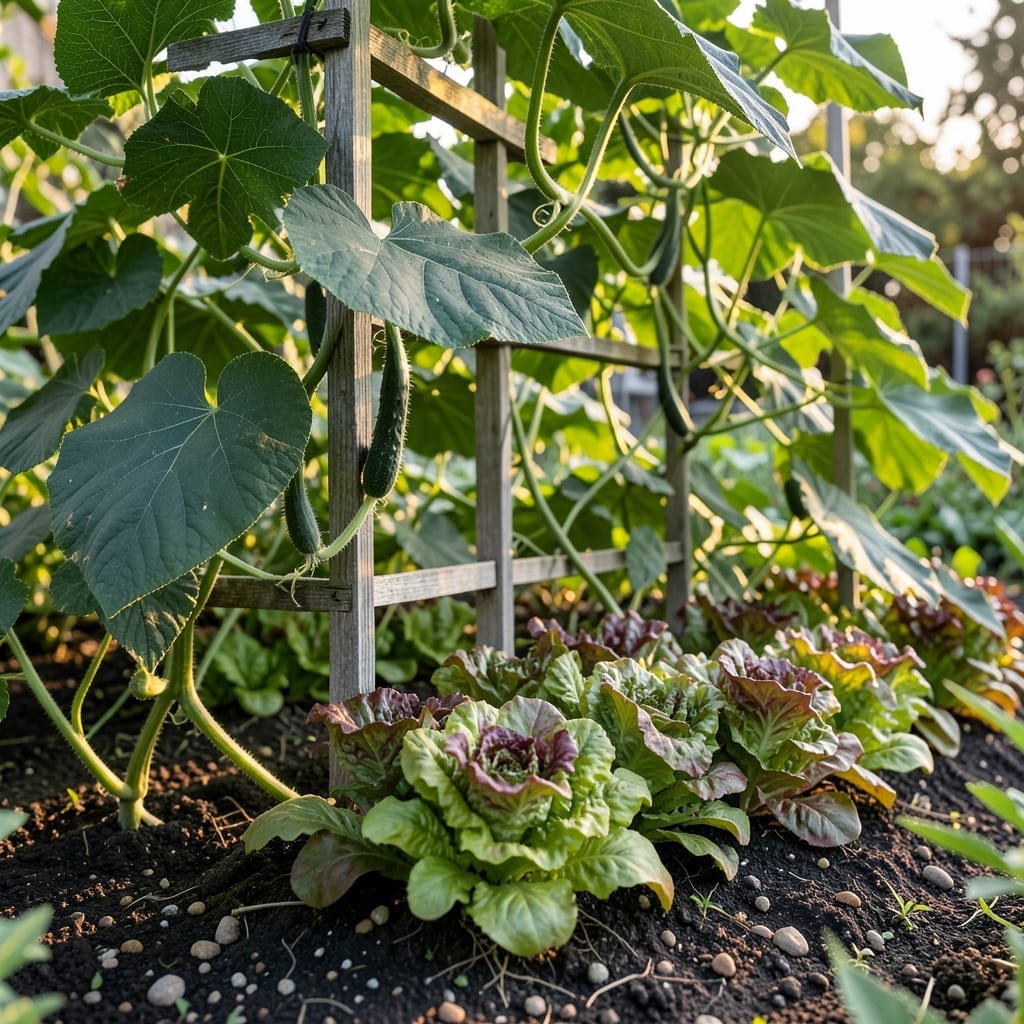
Running out of garden space but want to grow more? Lettuce is your perfect understory plant for cucumbers, thriving in the gentle shade cast by their sprawling leaves.
With shallow roots, lettuce won’t compete with cucumbers for nutrients while making the most of vertical space. This pairing works especially well for raised beds or small gardens where every square inch counts. Try loose-leaf varieties for continuous harvests.
Urban gardeners and container growers will love this space-saving combo for doubling their harvest. 🌿
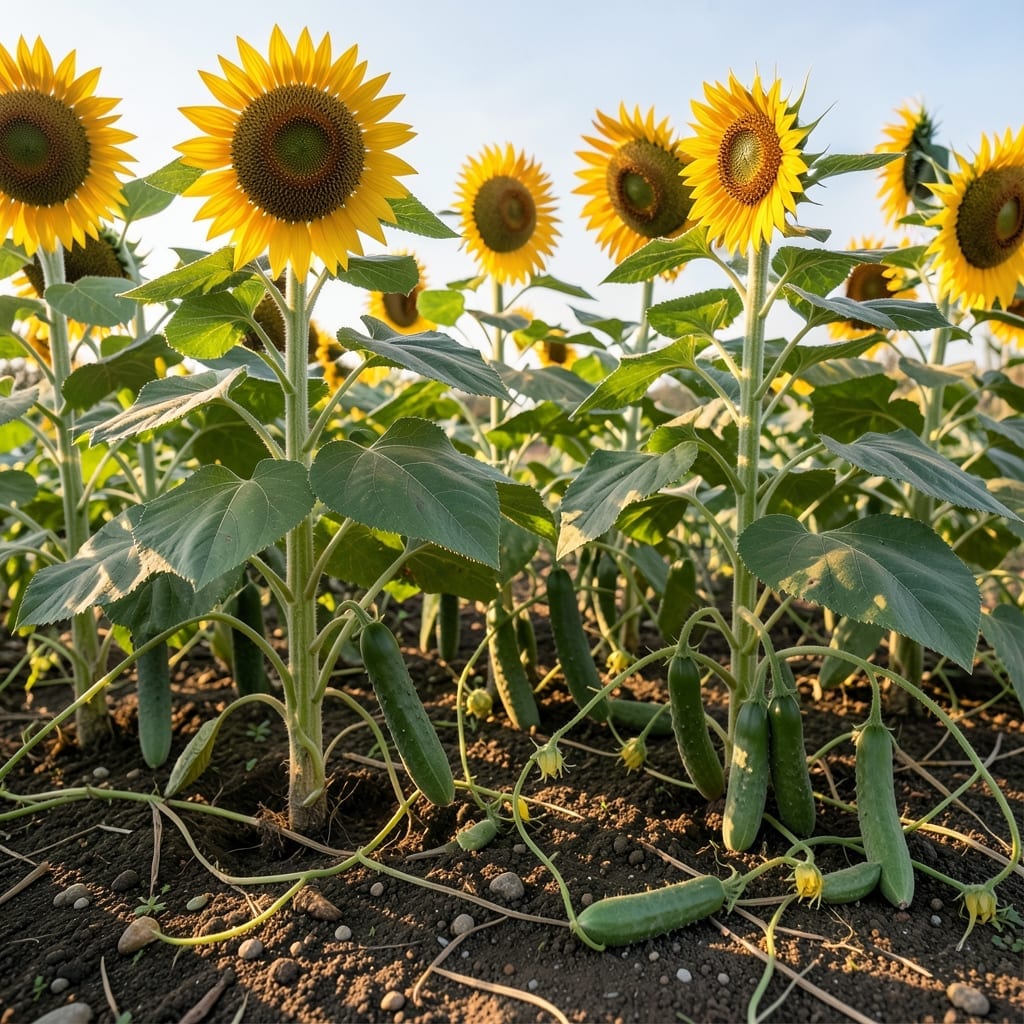
Windy conditions can damage delicate cucumber vines and reduce pollination success. Towering sunflowers create the perfect natural barrier, shielding your crop from gusts while adding architectural beauty to your garden.
Plant sunflowers on the windward side of your cucumber patch, spacing them about 2 feet apart for maximum wind protection. Their bright blooms also attract bees and other pollinators, which will visit your cucumbers too, boosting fruit set and yield.
This pairing is ideal for gardeners in open or breezy locations who want to protect their cucumbers while supporting local pollinators. 🌻
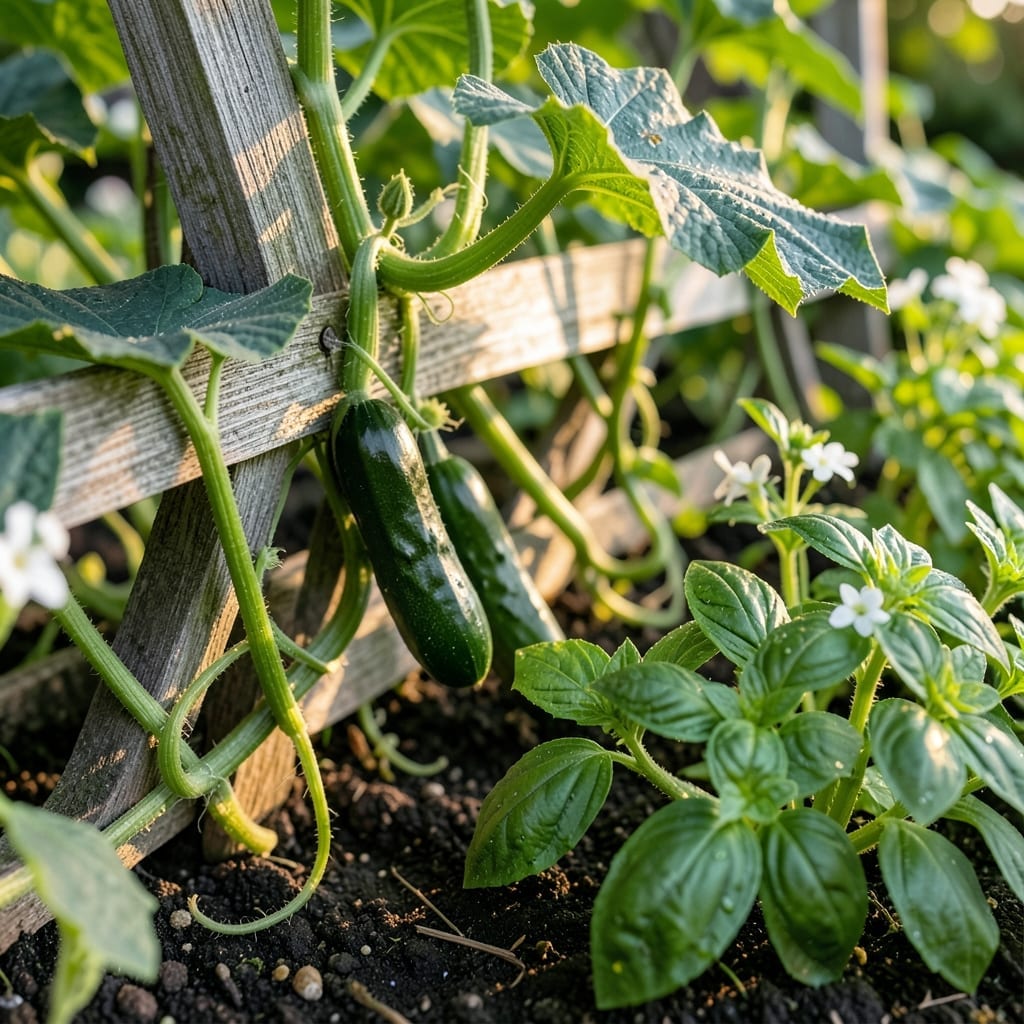
Want to elevate your cucumbers’ taste while keeping pests at bay? Basil is the perfect companion, naturally enhancing cucumber flavor through its aromatic compounds while deterring troublesome thrips with its strong scent.
Plant sweet basil about 12 inches from cucumber vines for optimal air circulation. Its dense foliage also provides light shade, helping retain soil moisture. You’ll get a dual harvest: crisp cucumbers with improved taste and fresh herbs for your table.
This pairing is ideal for gardeners who want to maximize both flavor and function in their vegetable patch. 🌿