
Beautiful Plants For Your Interior
Beautiful Plants For Your Interior
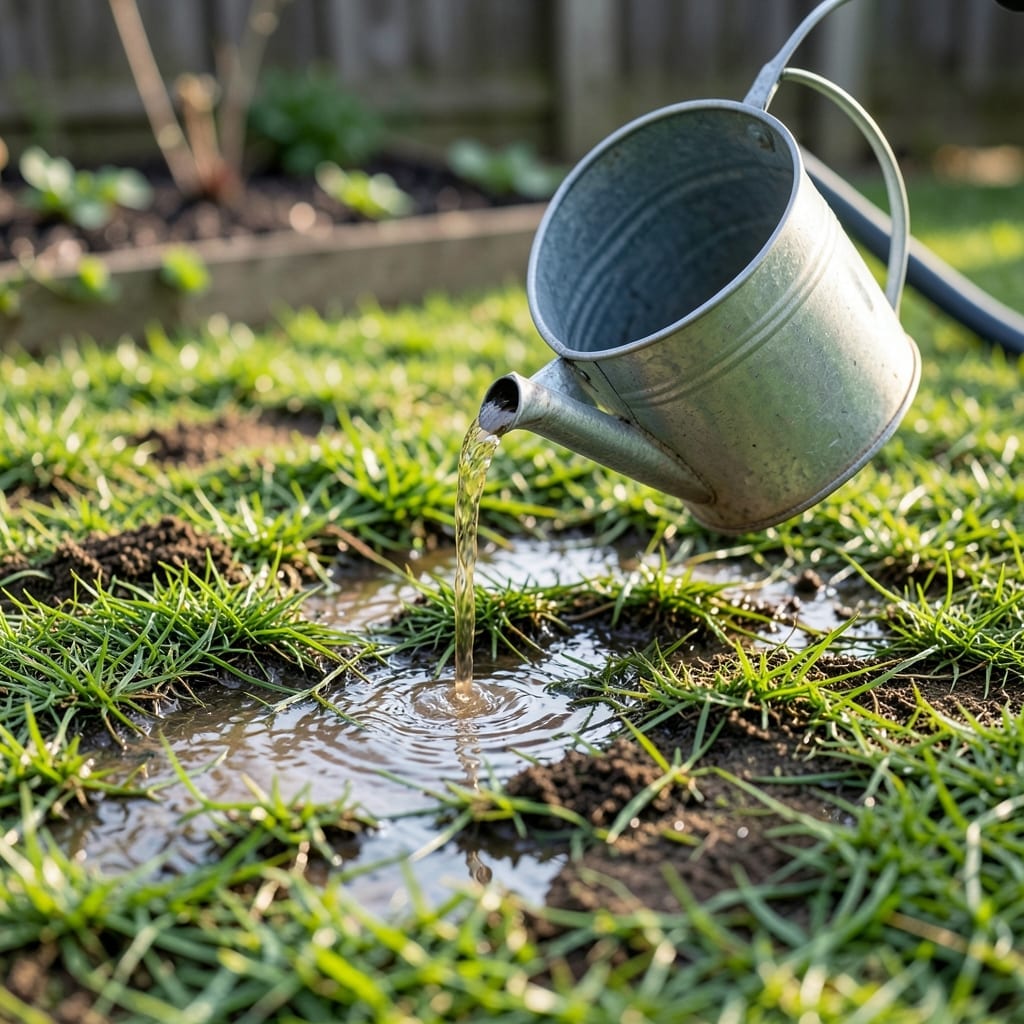
Your new sod shouldn’t feel like a soaked sponge. I learned this the hard way after ruining a section of my lawn last summer.
Overwatered sod gives itself away with yellowing blades, a squishy texture underfoot, and sometimes even a funky smell. The grass pulls up easily, roots and all, because they’re drowning, not growing.
Left too long, you’ll see mold creeping in or water pooling on the surface. It’s a heartbreaking sight after all the work of laying fresh turf.
The fix starts with backing off the hose and letting the soil dry out. Here’s how to spot the signs early and reset your watering schedule.
Overwatering sod isn’t just about giving it too much love—it’s often the result of misunderstanding its needs or environmental factors working against you. Here’s why it happens, broken down by the most common causes:
Sod thrives in well-draining soil, but if your yard has compacted soil or clay-heavy substrates, water pools at the surface instead of seeping through. This suffocates the roots, preventing oxygen uptake and leading to waterlogged conditions. Actionable fix: Aerate the soil before laying sod or amend it with sand or compost to improve drainage.
New sod requires consistent moisture to establish, but overwatering after rooting (typically 2–3 weeks) drowns the grass. Many homeowners stick to a rigid “daily soak” routine, not realizing that 1–1.5 inches of water per week (including rainfall) is usually enough for mature sod. Pro tip: Use a rain gauge or the “footprint test”—if grass springs back slowly after stepping on it, it’s overwatered.
In regions with high humidity or frequent rain, natural precipitation can exceed the sod’s needs. Combined with manual watering, this creates a saturated environment where fungal diseases (like Pythium or Rhizoctonia) thrive. Actionable fix: Adjust irrigation systems seasonally and pause watering after heavy rainfall.
Laying sod over uneven or poorly prepped soil can create low spots where water collects. Similarly, overlapping sod pieces trap moisture against the stems, promoting rot. Prevention: Grade the soil evenly and butt sod edges tightly (without overlapping) to encourage uniform water flow.
Once you’ve spotted the signs, it’s time to act. Here’s how to reverse the damage and get your lawn back on track, cause by cause.
If your sod is drowning, pause watering immediately for 2–3 days to let the soil dry. Then, switch to deep, infrequent watering: 1–1.5 inches per week, split into 2–3 sessions. Use a rain gauge or tuna can to measure. Early morning is ideal—it reduces evaporation and fungal risks.
Prevention tip 💡: Install a soil moisture sensor or check the soil 2–3 inches down—if it’s damp, skip watering.
If water pools on the surface, your soil may be compacted or clay-heavy. Aerate the lawn with a core aerator to create channels for water to drain. For severe cases, mix in compost or sand to loosen the soil. If the area is low-lying, consider grading or adding a French drain.
Prevention tip 🎯: Test drainage by digging a 6-inch hole, filling it with water, and timing how long it takes to empty. If it’s over 4 hours, drainage needs work.
Fungus thrives in soggy conditions. If you see mushrooms or slimy patches, reduce watering and apply a fungicide labeled for lawns (follow package instructions). Rake up debris to improve airflow. For organic solutions, try neem oil or baking soda sprays (1 tbsp baking soda + 1 tsp dish soap per gallon of water).
Prevention tip ✨: Mow regularly (never remove more than ⅓ of the blade) and bag clippings if fungus is present to avoid spreading spores.
Overwatering can suffocate roots. To help them recover, reduce foot traffic for a few weeks and fertilize lightly with a balanced, slow-release product (e.g., 10-10-10). Avoid high-nitrogen fertilizers, which can stress sod further. If bare spots appear, resod or overseed once the soil is workable.
Prevention tip 🌱: Choose drought-tolerant sod varieties (like Bermuda or Zoysia) for future lawns if overwatering is a recurring issue.
Step on the grass—if it feels spongy or leaves a lasting footprint, it’s overwatered. Healthy sod springs back quickly. Also check for water pooling on the surface after rain or irrigation.
Yellowing often means roots are drowning from excess moisture. Other signs include a foul odor or grass pulling up easily. Reduce watering for 2-3 days to let the soil dry out.
Yes! Stop watering immediately, aerate compacted areas, and improve drainage. If fungus appears, apply a lawn-safe fungicide. Most sod recovers within 1-2 weeks with proper care.