
Beautiful Plants For Your Interior
Beautiful Plants For Your Interior
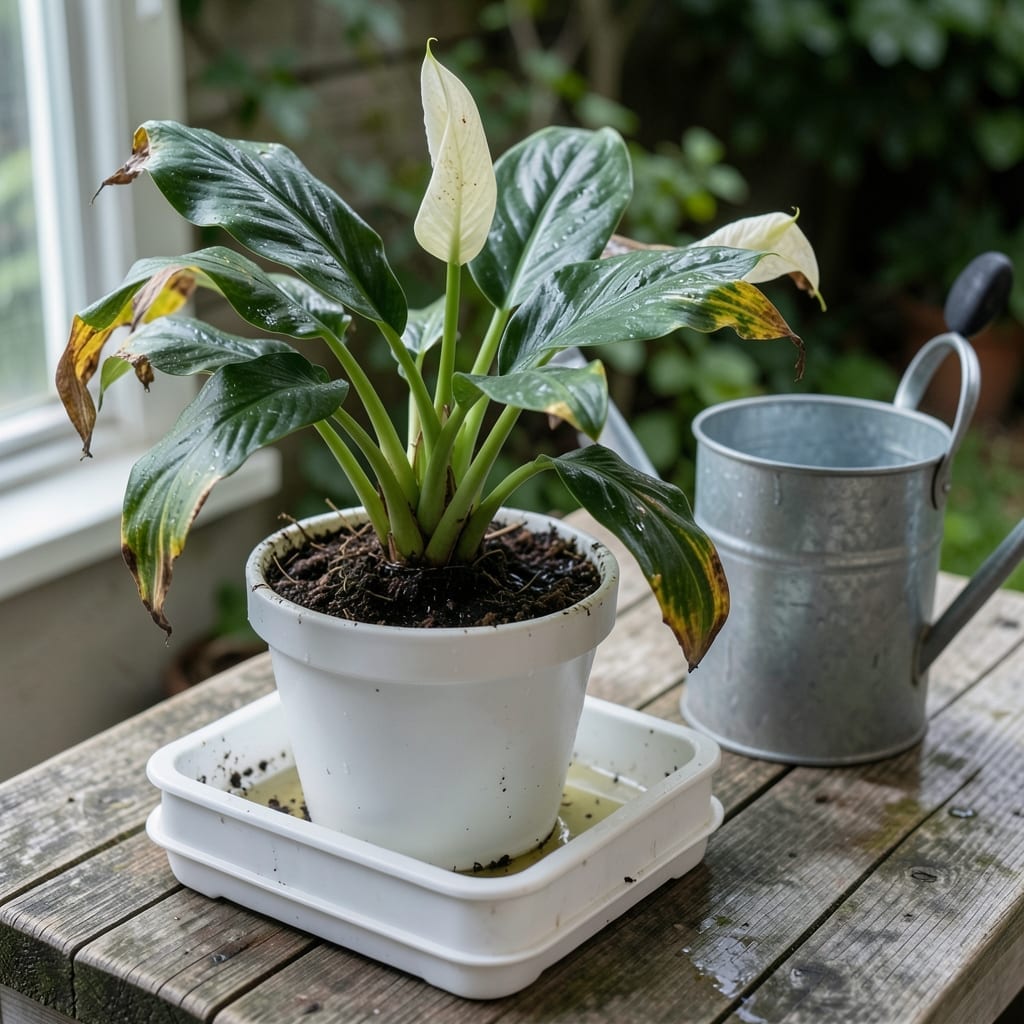
Yellow leaves and drooping stems are your peace lily screaming for help. I’ve seen this happen too many times—what looks like thirst is often the exact opposite.
The soil stays soggy days after watering, and the pot feels heavy. Roots turn mushy and dark instead of firm and white. Even the new growth looks weak, not vibrant.
This isn’t just unsightly—it’s suffocating your plant. Too much water blocks oxygen from reaching the roots, creating the perfect environment for rot.
Here’s the thing—most people overwater out of love. The fix is simpler than you think: let the soil dry between waterings and ensure your pot has drainage holes.
Overwatering a peace lily (Spathiphyllum) disrupts its natural balance, leading to visible distress. Here’s why it happens, broken down by cause:
Peace lilies thrive in moist but well-draining soil. When watered too frequently, the soil becomes waterlogged, suffocating the roots. This anaerobic environment (lack of oxygen) prevents root respiration, causing root rot—a fungal or bacterial infection that decimates healthy root tissue. Without functional roots, the plant can’t absorb nutrients, leading to yellowing leaves, wilting, and drooping.
Even with moderate watering, pots without drainage holes or compacted soil trap excess moisture. Stagnant water at the bottom of the pot creates a breeding ground for pathogens like Phytophthora or Pythium. These organisms attack the roots, turning them mushy and brown. Over time, the plant’s vascular system collapses, starving the leaves of water and nutrients.
Many gardeners mistake dry air or low humidity for thirst, prompting overwatering. Peace lilies prefer 40-60% humidity—when indoor air is drier (e.g., from HVAC systems), their leaves may brown at the tips. Instead of watering more, the solution is to mist the leaves or use a humidity tray. Overwatering in response to these cues only exacerbates the problem.
Heavy, clay-rich, or dense potting mixes retain too much moisture. Peace lilies need a light, airy blend (e.g., peat moss, perlite, and pine bark) to allow water to drain quickly. Without proper aeration, roots drown even if you’re watering “correctly.” Amending the soil with coarse materials can prevent future overwatering issues.
If your peace lily is showing signs of overwatering, act quickly to revive it. Here’s how to tackle the most common issues:
If the soil feels waterlogged, stop watering immediately. Remove the plant from its pot and let excess water drain. Place it in a dry spot with good airflow to help the soil dry out faster. For severe cases, gently squeeze out excess moisture from the root ball with a clean towel.
Prevention tip: 💡 Always check the top inch of soil—if it’s damp, wait a few days before watering again.
Yellow leaves are a classic overwatering symptom. Use sterilized scissors to trim affected foliage at the base. If the stems are mushy, the rot may have spread—remove those too. Healthy leaves can stay, but monitor them closely.
Prevention tip: ✨ Water only when the soil is dry to the touch, and ensure your pot has drainage holes.
If roots are brown, mushy, or smell foul, your plant has root rot. Repot it immediately: Remove all old soil, trim rotten roots, and replant in fresh, well-draining potting mix. Choose a clean pot with drainage holes to prevent future issues.
Prevention tip: 🎯 Use a mix with perlite or orchid bark to improve drainage.
If your peace lily is wilting but the soil is soggy, it’s likely suffocating. Move it to a brighter, breezier spot (but avoid direct sun). A small fan can help circulate air and speed up drying. Avoid fertilizing until the plant recovers.
Prevention tip: 🌡️ Group plants loosely to allow airflow between them.
With proper care, mild cases show improvement in 1-2 weeks. Severe root rot may take 3-4 weeks to bounce back. Be patient and avoid overwatering during recovery.
If the stems are mushy and brown, the plant may be too far gone. However, if some stems remain firm, trim the rotten parts and repot in fresh soil. There’s still hope!
Brown tips often signal low humidity, not overwatering. Try misting the leaves or using a humidity tray. Overwatering causes yellowing, not just tip browning.
Water when the top 1-2 inches of soil feel dry. This usually means every 7-10 days, but always check the soil first. Drainage is key!