
Beautiful Plants For Your Interior
Beautiful Plants For Your Interior
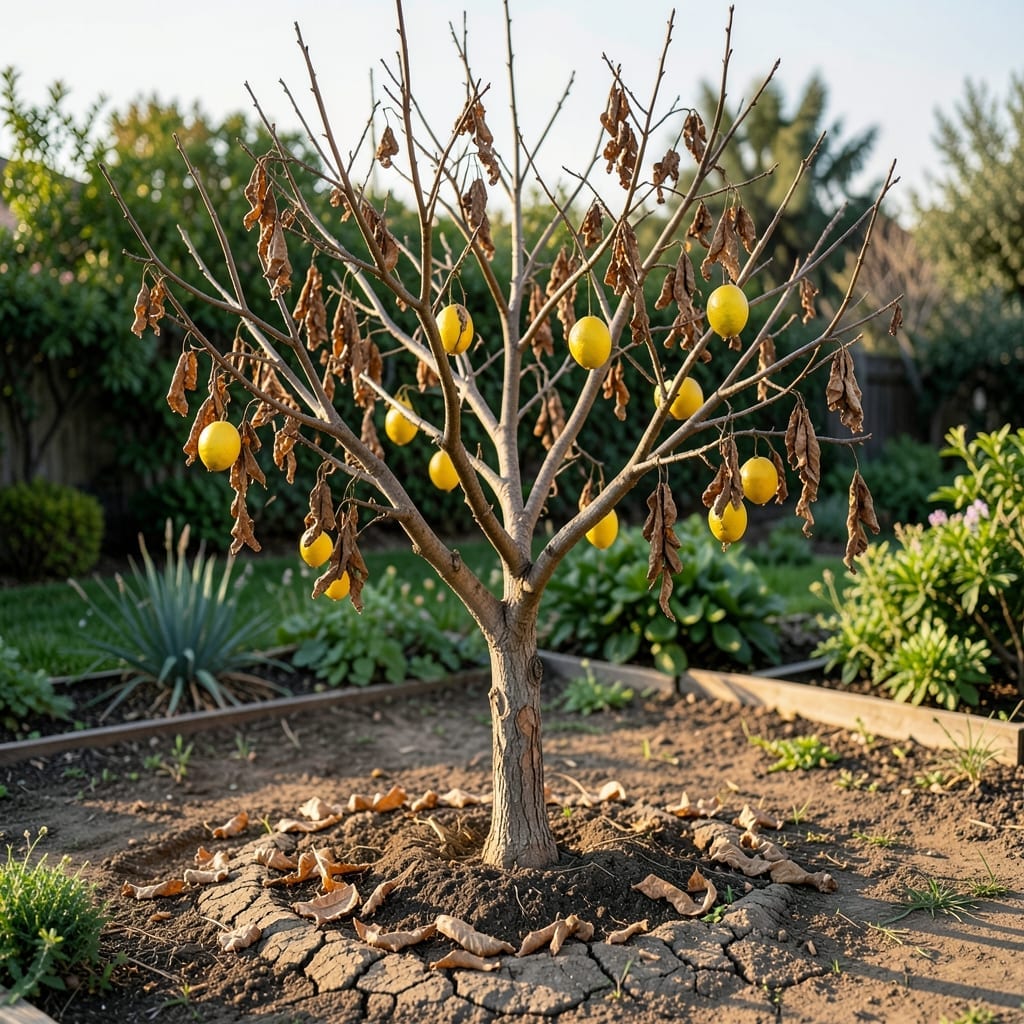
That sinking feeling hits when your lemon tree stops responding. I’ve stood in my yard staring at branches that looked fine yesterday, wondering if they were gone for good.
Dead lemon trees don’t always announce themselves dramatically. The leaves turn brittle and brown, but sometimes they just disappear overnight. The branches snap easily when bent, and the bark becomes dry and cracked.
You might notice no new growth during the growing season, or the wood underneath the bark turns brown instead of green. The entire tree can look sad and lifeless, even in warm weather.
Before you give up hope, check for these signs. Sometimes a tree that looks dead is just dormant, and with the right care, it might surprise you.
A dead lemon tree rarely happens overnight. It’s usually the result of one or more stress factors that weaken the tree over time. Below are the most common causes, each with a clear scientific explanation:
Lemon trees thrive in USDA zones 9–11. Exposure to temperatures below 20°F (-7°C) can freeze the sap, rupturing cell walls and killing branches or the entire tree. Conversely, heat above 100°F (38°C) accelerates water loss, leading to drought stress and leaf scorch.
Both overwatering and underwatering disrupt the tree’s vascular system. Overwatering suffocates roots by depleting oxygen in the soil, causing root rot (Phytophthora or Fusarium fungi). Underwatering, meanwhile, prevents nutrient uptake, starving the tree of essential potassium and magnesium.
Pests like citrus leafminers and scale insects weaken the tree by damaging leaves and stems. Diseases such as citrus greening (HLB) and citrus canker block nutrient transport in the phloem, leading to decline. A severely infested tree may die within 2–3 years if untreated.
Lemon trees require well-draining, slightly acidic soil (pH 6.0–7.0). Compacted or alkaline soil restricts root growth and nutrient absorption. A lack of nitrogen, phosphorus, or iron manifests as yellowing leaves (chlorosis), stunted growth, and eventual death.
Mechanical injuries—from lawnmowers, improper pruning, or girdling roots—disrupt the tree’s ability to transport water and nutrients. Even a small wound can invite fungal infections, accelerating decline.
If your lemon tree looks lifeless, don’t lose hope yet! Here’s how to diagnose and fix common issues, along with prevention tips to keep it thriving. 🌱
Yellowing leaves or premature leaf drop often signal nutrient deficiencies, especially nitrogen, iron, or magnesium. Fix it: Apply a citrus-specific fertilizer rich in these nutrients. For iron deficiency (common in alkaline soil), use chelated iron or amend the soil with sulfur to lower pH. Prevention: Fertilize every 4-6 weeks during growing season and test soil pH annually (aim for 6.0-7.0).
Overwatering or underwatering can cause branches to dry out and snap easily. Fix it: Check soil moisture 2 inches deep—it should be damp but not soggy. Water deeply once a week (more in extreme heat), and ensure good drainage. If root rot is suspected, trim affected roots and repot in fresh, well-draining soil. Prevention: Use mulch to retain moisture and avoid wetting the trunk.
Scale, aphids, or spider mites sap a tree’s strength, leading to wilting or blackened leaves. Fix it: Spray with neem oil or insecticidal soap, focusing on leaf undersides. For severe cases, prune heavily infested branches. Prevention: Inspect leaves weekly and introduce beneficial insects like ladybugs. Keep the area free of debris where pests breed.
Brown, shriveled leaves after a cold snap? Your tree may have frostbite. Fix it: Prune dead wood in spring (not winter) to encourage new growth. Prevention: Cover young trees with frost cloth or move potted lemons indoors when temps dip below 30°F. Plant in a sunny, sheltered spot.
Pro tip: 💡 Always sterilize pruning tools with rubbing alcohol to avoid spreading disease!
Scratch a small section of bark on a branch. If it reveals green tissue underneath, the tree is still alive. Try this on several branches to confirm.
Early signs include yellowing leaves, leaf drop, and brittle branches. You may also notice cracked or peeling bark and a lack of new growth during the growing season.
It depends on the cause. If the browning is from drought stress, proper watering may revive it. But if the branches are dry and snap easily, the tree is likely beyond recovery.