
Beautiful Plants For Your Interior
Beautiful Plants For Your Interior
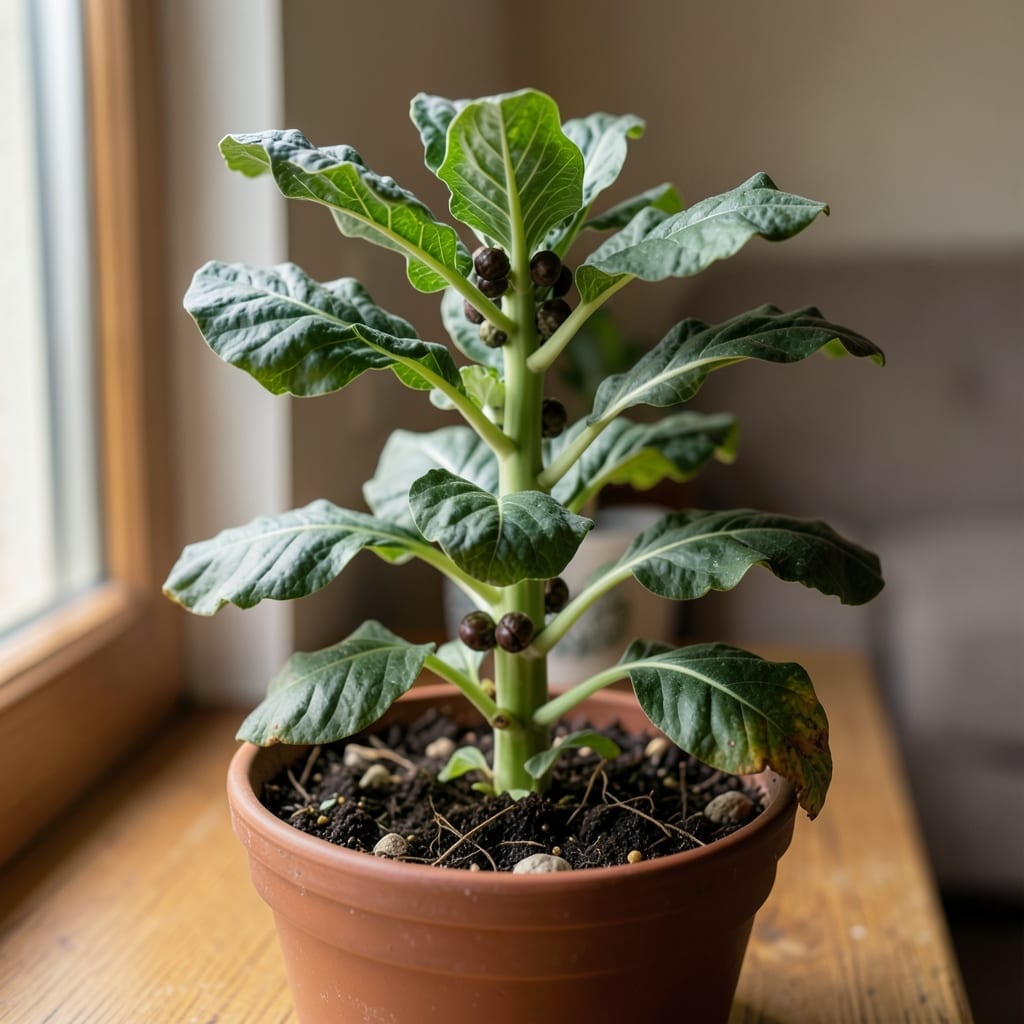
Tiny, dark, and perfectly round—that’s your first clue. Brussels sprout seeds look like miniature beads, usually deep brown or black, with a smooth, slightly glossy finish that catches the light just right.
They’re small but not dust-like: expect them to measure about 1/16 of an inch across. Hold one between your fingers and you’ll feel a subtle weight, a sign of the potential packed inside.
I’ve sown hundreds of these little powerhouses, and the best ones always come uniform in size and color. Any odd shapes or pale tones usually mean poor quality or old stock.
When you’re ready to plant, remember these tiny beads need shallow soil—just 1/4 inch deep—and consistent moisture to wake up and start growing.
The way a Brussels sprout seed looks can change based on several natural and environmental factors. These tiny, round beads aren’t always identical, and understanding why can help gardeners identify healthy seeds and troubleshoot issues. Below are the key reasons for variations in appearance.
Brussels sprout seeds, like all plant seeds, come from different cultivars and heirloom varieties. Genetic differences can lead to subtle changes in size, color, and texture. For example, some seeds may appear slightly darker or lighter brown, or even have a matte vs. glossy finish. This is nature’s way of ensuring diversity in the species.
The stage at which seeds are harvested plays a role in their appearance. Fully mature seeds, collected from dry, brown pods, tend to be darker and harder. If harvested too early, seeds may look lighter, softer, or even greenish. Properly timed harvesting ensures the classic small, round, and dark brown seed most gardeners recognize.
Weather and growing conditions impact seed development. Excessive rain or drought can cause seeds to form irregularly, leading to variations in size or surface texture. For instance, seeds from plants stressed by drought might appear smaller or more wrinkled. Ideal conditions produce uniform, plump seeds.
After harvest, seeds undergo cleaning and drying processes. How they’re handled can affect their final look. Over-drying may cause seeds to shrink or darken excessively, while insufficient drying can leave them with a dull or uneven color. Commercial seed suppliers often use controlled methods to maintain consistency.
If you’re struggling to recognize Brussels sprout seeds or facing problems with germination, here’s how to solve common issues and ensure success in your garden. 🌱
Cause: Brussels sprout seeds are small (about 1–1.5 mm), dark brown, and round, resembling tiny beads. They can be easy to overlook or confuse with soil particles.
Fix: Use a white tray or plate to contrast the dark seeds, making them easier to spot. A magnifying glass can also help with identification. For planting, mix seeds with fine sand to distribute them evenly.
Prevention: Purchase seeds from reputable suppliers to avoid low-quality or mislabeled batches.
Cause: Old seeds, improper planting depth, or inconsistent moisture can prevent sprouting.
Fix: Test seed viability by placing a few in a damp paper towel for 5–7 days. If they don’t sprout, replace them. Plant seeds ¼ inch deep in well-draining soil and keep the soil consistently moist (not soggy). Use a spray bottle to avoid disturbing the seeds.
Prevention: Store seeds in a cool, dry place and check the expiration date before use.
Cause: Overcrowding, lack of light, or nutrient-poor soil can lead to weak seedlings.
Fix: Thin seedlings to 6–8 inches apart once they have 2–3 true leaves. Provide 14–16 hours of light daily using grow lights if natural sunlight is insufficient. Fertilize lightly with a balanced, water-soluble fertilizer.
Prevention: Start seeds in seed-raising mix for better nutrition and drainage.
💡 Pro Tip: Label your seed trays to track planting dates and varieties—this helps avoid mix-ups and ensures timely care!
Use a white plate or tray to create contrast. The seeds’ dark brown, round shape will stand out. A magnifying glass helps confirm their tiny bead-like appearance.
Lighter seeds were likely harvested too early before full maturity. Greenish tones suggest immaturity or improper drying. Fully mature seeds are dark brown and hard.
Wrinkled seeds often indicate age or poor storage conditions. Test a few in damp paper towels for 5-7 days to check viability before planting.
Keep them in a cool, dry place in the original packet or an airtight container. Proper storage maintains viability for up to 3-5 years.